Book Summary
Narrator: Ethan
Summary Preview
In May 1910, nine kings rode together in a single funeral procession. They came from across Europe—Germany, Austria, Russia, Denmark, Greece, Belgium, Bulgaria, Portugal, and Spain—to bury King Edward VII of England. Seventy nations sent representatives. The streets of London were lined with mourners in black. Big Ben tolled nine times as the cortege left the palace.
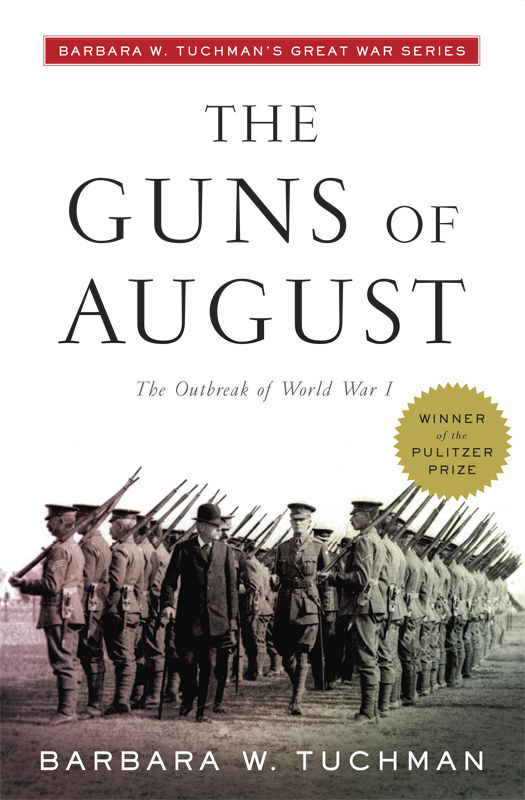
Barbara Tuchman opens The Guns of August at this funeral for a reason. She calls it "the greatest assemblage of royalty and rank ever gathered in one place, and, of its kind, the last." Then she delivers the line that sets everything in motion: "on history's clock it was sunset, and the sun of the old world was setting in a dying blaze of splendor never to be seen again."
These kings did not know it yet, but they were attending their own farewell party. The intricate web of family ties, personal grudges, and carefully maintained alliances that held Europe together was about to snap.
Edward VII had been called "the Uncle of Europe." He was literally the uncle of Kaiser Wilhelm II of Germany and, through marriage, of Czar Nicholas II of Russia. He had nieces and nephews on thrones across the continent. More importantly, he was a skilled diplomat who soothed old wounds—especially in France, where memories of German occupation still burned. He had traveled to Rome, Vienna, Lisbon, Madrid, and Russia, quietly building relationships that Wilhelm viewed as a conspiracy of encirclement. The Kaiser called Edward "a Satan."
At the funeral, Wilhelm rode in the procession alongside the man he hated. Archduke Franz Ferdinand of Austria was also there. So were representatives from Japan, China, Italy, and Sweden. They all gathered to honor the "Peacemaker"—a title Edward had earned through decades of careful diplomacy. Four years later, most of their
In May 1910, nine kings rode together in a single funeral procession. They came from across Europe—Germany, Austria, Russia, Denmark, Greece, Belgium, Bulgaria, Portugal, and Spain—to bury King Edward VII of England. Seventy nations sent representatives. The streets of London were lined with mourners in black. Big Ben tolled nine times as the cortege left the palace.
Barbara Tuchman opens The Guns of August at this funeral for a reason. She calls it "the greatest assemblage of royalty and rank ever gathered in one place, and, of its kind, the last." Then she delivers the line that sets everything in motion: "on history's clock it was sunset, and the sun of the old world was setting in a dying blaze of splendor never to be seen again."
These kings did not know it yet, but they were attending their own farewell party. The intricate web of family ties, personal grudges, and carefully maintained alliances that held Europe together was about to snap.
Edward VII had been called "the Uncle of Europe." He was literally the uncle of Kaiser Wilhelm II of Germany and, through marriage, of Czar Nicholas II of Russia. He had nieces and nephews on thrones across the continent. More importantly, he was a skilled diplomat who soothed old wounds—especially in France, where memories of German occupation still burned. He had traveled to Rome, Vienna, Lisbon, Madrid, and Russia, quietly building relationships that Wilhelm viewed as a conspiracy of encirclement. The Kaiser called Edward "a Satan."
At the funeral, Wilhelm rode in the procession alongside the man he hated. Archduke Franz Ferdinand of Austria was also there. So were representatives from Japan, China, Italy, and Sweden. They all gathered to honor the "Peacemaker"—a title Edward had earned through decades of careful diplomacy. Four years later, most of their nations would be at war.
Tuchman uses this scene to introduce her central argument: World War I was not caused by economic inequality or resource disputes. It was caused by hubris, nationalism, and the rigid plans of men who refused to see the world changing around them.
Consider what was happening in the years just before the war. In 1910, a book called The Great Illusion by Norman Angell argued that war had become obsolete. European economies were so intertwined, he wrote, that any conflict would destroy both victor and loser. It seemed logical. Trade bound the continent together. Banks in London financed railways in Germany. French wine flowed into Berlin while German steel built factories in France.
But Angell missed something. Logic does not stop men who believe they are destined for greatness. The very next year, German General Friedrich von Bernhardi published a book arguing that Germany must start a war—as a necessity, not a choice. Germany had won its position, he wrote, "through the sharpness of our sword, not the sharpness of our mind." This was the prevailing ideology: that war was not just possible but glorious, a test of national worth.
Tuchman shows us how both sides trapped themselves in their own myths. Germany believed in its superiority. Its generals had drunk deeply from the writings of von der Goltz, who taught that Germany was chosen by Providence for supreme place in history. Its war plan—the Schlieffen Plan—called for a massive sweep through neutral Belgium to crush France in six weeks. The plan was rigid, precise, and utterly dependent on everything going exactly right.
France, meanwhile, still lived under "the Shadow of Sedan." In 1870, Germany had humiliated France, annexing Alsace-Lorraine, marching through Paris, and extracting five billion francs in reparations. For forty years, the thought of "Again" drove French policy. France's answer was Plan 17—a doctrine of pure offense built on the belief that French fighting spirit, or élan, would overcome any obstacle. French generals ignored intelligence suggesting Germany would attack through Belgium because accepting that information would mean abandoning their cherished offensive.
Both sides prepared for the last war, not the next one. Both believed in decisive victory. Both were wrong.
This is the book's deeper argument: that the first month of World War I was shaped not by material necessity but by human arrogance, miscalculation, and the momentum of plans that could not be changed. Tuchman traces how individual actions—a garbled telegram, a general's hesitation, a king's resentment—rippled outward to shape history. She contrasts the courage of ordinary soldiers with the incompetence of the leaders who sent them to die.
The funeral procession ends with Lord Esher, a close friend of the late king, writing in his diary: "All the old buoys which marked the channel of our lives seem to have been swept away." With Edward gone, the careful boundaries of acceptable behavior that had kept Europe's powers in check simply vanished. What remained was fear, pride, and the belief that war could solve problems that diplomacy could not.
Tuchman covers only the first month of the war—from the funeral in 1910 through the first battles of August 1914 to the pivotal moment at the Marne. But in that month, she argues, the trap was set. The nations stumbled into a conflict that would destroy a generation, topple empires, and reshape the world. None of it had to happen. And that, perhaps, is the most haunting truth of all.
As we watch the kings ride through London, as we feel the weight of that dying splendor, we have to ask: How many times since then have leaders made the same mistakes? How many more funerals will mark the end of worlds we thought would last forever?
Who Should Listen?
History buffs who want to understand how World War I's first month shaped the entire 20th century, not just the battles but the fatal decisions behind them.
Military strategists and leaders who study how rigid plans and overconfidence can cause catastrophic failure, even against a weaker opponent.
Readers of narrative nonfiction who love vivid, character-driven storytelling about flawed leaders like Kaiser Wilhelm, General von Kluck, and General Joffre.
Anyone fascinated by how small mistakes—a garbled telegram, a general's hesitation—ripple outward to change the course of history.