In Cold Blood
Book Summary
Narrator: Ethan
Timeline
Summary Preview
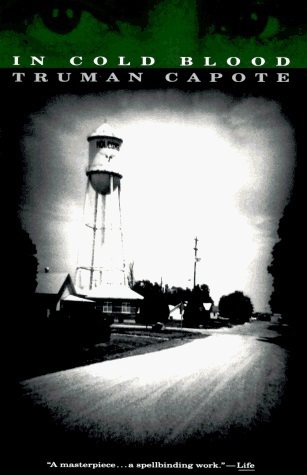
In 1959, the town of Holcomb, Kansas, was the kind of place where people didn't lock their doors. A small farming community on the high western plains, it had two churches, a post office, a grain elevator, and a café called Hartman's where locals gathered to gossip. The soil was rich, the wheat harvests were plentiful, and the biggest news most years involved the 4 H club's prize winning livestock. Holcomb was, in Truman Capote's words, a place where prosperity and security seemed guaranteed to those who worked hard enough to earn them.
Then, on the morning of November 15, 1959, four bodies were discovered inside a farmhouse on the edge of town. The Clutter family—Herbert, his wife Bonnie, and their teenage children Nancy and Kenyon—had been bound with rope and shot in the head at close range. Herbert's throat had also been cut. The killers had left almost nothing behind: a few footprints, some rope fibers, a spent shotgun shell. They had stolen a radio, a pair of binoculars, and roughly forty dollars.
The discovery shattered Holcomb's sense of safety overnight. Neighbors who had never bothered locking their doors began eyeing each other with suspicion. The town's postmistress, Myrtle Clare, summed up the mood when she said, "All we've got out here are our friends. There isn't anything else." And now even those friends looked like strangers.
In Cold Blood is Truman Capote's account of these murders and their aftermath. But calling it a "true crime book" doesn't capture what it actually is. Capote called it a "nonfiction novel"—a term he invented to describe a work that combined the factual accuracy of journalism with the literary techniques of fiction. He spent six years researching the case, conducting thousands of interviews, and reconstructing conversations and inner thoughts that no reporter
In 1959, the town of Holcomb, Kansas, was the kind of place where people didn't lock their doors. A small farming community on the high western plains, it had two churches, a post office, a grain elevator, and a café called Hartman's where locals gathered to gossip. The soil was rich, the wheat harvests were plentiful, and the biggest news most years involved the 4-H club's prize-winning livestock. Holcomb was, in Truman Capote's words, a place where prosperity and security seemed guaranteed to those who worked hard enough to earn them.
Then, on the morning of November 15, 1959, four bodies were discovered inside a farmhouse on the edge of town. The Clutter family—Herbert, his wife Bonnie, and their teenage children Nancy and Kenyon—had been bound with rope and shot in the head at close range. Herbert's throat had also been cut. The killers had left almost nothing behind: a few footprints, some rope fibers, a spent shotgun shell. They had stolen a radio, a pair of binoculars, and roughly forty dollars.
The discovery shattered Holcomb's sense of safety overnight. Neighbors who had never bothered locking their doors began eyeing each other with suspicion. The town's postmistress, Myrtle Clare, summed up the mood when she said, "All we've got out here are our friends. There isn't anything else." And now even those friends looked like strangers.
In Cold Blood is Truman Capote's account of these murders and their aftermath. But calling it a "true crime book" doesn't capture what it actually is. Capote called it a "nonfiction novel"—a term he invented to describe a work that combined the factual accuracy of journalism with the literary techniques of fiction. He spent six years researching the case, conducting thousands of interviews, and reconstructing conversations and inner thoughts that no reporter could have witnessed. The result was a book that read like a novel but claimed to be true.
The book's central question is deceptively simple: How could ordinary evil destroy an ideal family? The Clutters were not just any family. Herbert Clutter was a self-made man who had built a prosperous farm through sheer determination. He didn't drink, smoke, or gamble. He paid his workers well and distributed bonuses. His wife Bonnie struggled with depression but was gentle and devout. Nancy was a straight-A student, a 4-H champion, a talented musician who tutored younger girls in baking and sewing. Kenyon was quiet and handy, building furniture and tinkering with machinery. They were, in the words of one neighbor, "everything people hereabouts really value and respect."
The men who killed them were two ex-convicts named Perry Smith and Dick Hickock. They had never met the Clutters. They drove to Holcomb because a former cellmate had told Dick that Herbert Clutter kept a safe containing ten thousand dollars in his home office. There was no safe. The cellmate had lied. But by the time they realized this, they had already bound and terrorized an entire family. And then they killed them anyway.
Capote's achievement was to make readers understand both the victims and the killers as fully human. He showed the Clutters not as saints but as ordinary people living ordinary lives. He showed Perry and Dick not as monsters but as damaged men shaped by poverty, neglect, trauma, and a society that had left them behind. The book raises uncomfortable questions: What does it mean to be evil? Can a person be held fully responsible for actions they may not have been able to control? And if the American Dream is real for some but impossible for others, what happens to those who are locked out?
The opening pages of In Cold Blood describe Holcomb as a peaceful, prosperous farming community where people never lock their doors. It's a place where the biggest excitement is the annual county fair, where children grow up expecting to inherit their parents' land, where the future seems as predictable as the seasons. Then, in a single night, that world ends. The Clutter bodies are discovered bound and shot in their own home. The doors were not locked that night either. But they might as well have been.
What follows is a story that moves from the idyllic to the horrific, from the courtroom to Death Row, from the search for justice to the question of whether justice is even possible. It's a story about a crime that made no sense, committed by men who themselves could not fully explain why they did it. And it leaves readers with a haunting thought: if a family like the Clutters could be destroyed so senselessly, what does that say about the world we live in—and the bargains we make with ourselves about safety, virtue, and the promise of a better life?
How do you explain a murder that wasn't personal, wasn't profitable, and wasn't even planned by the man who pulled the trigger?
About the Book
Truman Capote's groundbreaking nonfiction novel reconstructs the 1959 murders of the Clutter family in Holcomb, Kansas, and the subsequent investigation, trial, and execution of the killers. Blending journalism with literary fiction, Capote explores the collision between an ideal American family and two damaged ex-convicts, raising haunting questions about evil, responsibility, justice, and the resilience of life in the face of senseless tragedy.
Key Takeaways
The American Dream is a fragile promise, not a guarantee.
The Clutter family embodied the ideal of prosperity through hard work, yet their brutal murder shattered the illusion that virtue and effort ensure safety. The book reveals that the American Dream is a bargain that can be broken without warning, leaving even the most deserving vulnerable to senseless tragedy.
Evil often emerges from the collision of trauma and shame.
Perry Smith's murder of Herbert Clutter was triggered not by malice but by the overwhelming shame of crawling on his knees for a stolen silver dollar. The book suggests that extreme violence can arise when deep psychological wounds are compounded by a moment of unbearable humiliation, turning a person into a stranger to themselves.
The line between victim and killer is thinner than we believe.
Capote draws subtle parallels between the Clutters and their murderers—Herbert and Perry both never drank coffee, Nancy and Dick both took pride in their work. These connections imply that the forces that shape a life (poverty, neglect, opportunity) can determine whether a person becomes a pillar of the community or its destroyer.
Justice is an incomplete answer to the problem of human suffering.
After five years of investigation and execution, Detective Dewey felt only emptiness, realizing that hanging Perry and Dick did not restore the Clutters or answer the question of why the murders happened. The book argues that legal justice can punish but rarely heals, leaving a void that no verdict can fill.
The mask of normalcy can hide profound brokenness.
Dick Hickock presented himself as a 'normal' all-American man, but his obsession with appearing masculine concealed deep insecurity, brain damage, and a predatory nature. The book warns that society's most dangerous individuals are often those who wear the mask of ordinariness most convincingly.
Resilience is the only meaningful response to senseless tragedy.
The book ends not with a moral lesson but with the image of Susan Kidwell, Nancy Clutter's best friend, continuing her life and studies. Capote suggests that the deepest insight is not about evil or justice, but about the stubborn persistence of life itself—the quiet courage of moving forward when no explanation suffices.
The law cannot measure the full weight of human psychology.
Perry Smith was judged sane under the M'Naghten Rule because he knew murder was wrong, yet psychiatrists believed he killed in a dissociative state triggered by trauma. The book exposes the gap between legal definitions of responsibility and the complex reality of a damaged mind, questioning whether any court can truly judge a broken soul.
Dreams can be both a sanctuary and a prison.
Perry's recurring dream of a yellow bird rescuing him from a snake-guarded tree of diamonds was his only comfort in a brutal childhood, but it also trapped him in a fantasy world that disconnected him from reality. The book illustrates how the same imagination that helps us survive can also lead us to destruction.
Who Should Listen?
True crime enthusiasts who want a deeply psychological, literary account of a shocking murder case rather than a simple whodunit.
Readers fascinated by the dark side of the American Dream and how poverty, trauma, and societal exclusion can shape violent criminals.
Students of journalism or creative nonfiction who want to study Capote's innovative 'nonfiction novel' technique blending fact with narrative artistry.
Anyone grappling with questions about capital punishment, legal responsibility, and whether the state's execution of killers is any less cold-blooded than the murders themselves.