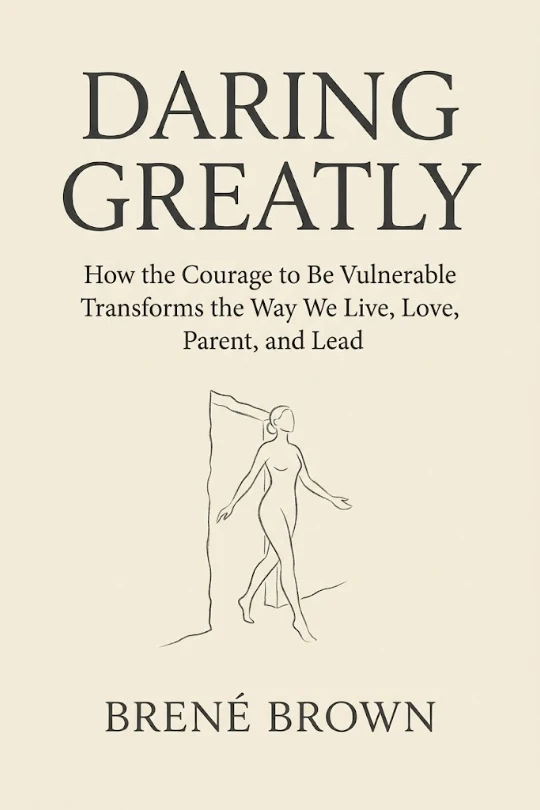
Daring Greatly
How the Courage to Be Vulnerable Transforms the Way We Live, Love, Parent, and Lead
Book Summary
Narrator: Ethan
Timeline
Summary Preview
Brené Brown was giving a talk when someone asked why children today seem so narcissistic. Without thinking, she slipped into a Texas colloquialism: "You can't swing a cat without hitting a narcissist." The audience laughed. But the answer bothered her. Because the real question isn't whether narcissism is on the rise. The real question is what's driving it.
When Brown looked at narcissism through the lens of vulnerability, she saw something different than what the headlines claimed. She saw a shame based fear of being ordinary. She saw people terrified that they would never be extraordinary enough to be noticed, to be loved, to belong. The grandiosity, the need for admiration, the lack of empathy—these weren't signs of too much self love. They were signs of too little. Narcissism, Brown concluded, is a shame based strategy. And telling people they aren't that special doesn't cure shame. It feeds it.
This insight led Brown to ask three diagnostic questions that frame the entire problem. First: What are the messages and expectations that define our culture, and how do they influence our behavior? Second: How are our struggles and behaviors related to protecting ourselves? Third: How are these behaviors, thoughts, and emotions connected to vulnerability and our need for a sense of worthiness?
The answers led her to a single root cause: a culture of scarcity.
Scarcity is the problem of "never enough." Not good enough. Not perfect enough. Not thin enough. Not powerful enough. Not successful enough. Not smart enough. Not certain enough. Not safe enough. Not extraordinary enough. We fixate on what we lack rather than celebrating what we have. We measure ourselves against impossible standards and find ourselves always falling short. The word "scarce" comes from Old Norman French, meaning "restricted in quantity." And in a scarcity culture, everything
Brené Brown was giving a talk when someone asked why children today seem so narcissistic. Without thinking, she slipped into a Texas colloquialism: "You can't swing a cat without hitting a narcissist." The audience laughed. But the answer bothered her. Because the real question isn't whether narcissism is on the rise. The real question is what's driving it.
When Brown looked at narcissism through the lens of vulnerability, she saw something different than what the headlines claimed. She saw a shame-based fear of being ordinary. She saw people terrified that they would never be extraordinary enough to be noticed, to be loved, to belong. The grandiosity, the need for admiration, the lack of empathy—these weren't signs of too much self-love. They were signs of too little. Narcissism, Brown concluded, is a shame-based strategy. And telling people they aren't that special doesn't cure shame. It feeds it.
This insight led Brown to ask three diagnostic questions that frame the entire problem. First: What are the messages and expectations that define our culture, and how do they influence our behavior? Second: How are our struggles and behaviors related to protecting ourselves? Third: How are these behaviors, thoughts, and emotions connected to vulnerability and our need for a sense of worthiness?
The answers led her to a single root cause: a culture of scarcity.
Scarcity is the problem of "never enough." Not good enough. Not perfect enough. Not thin enough. Not powerful enough. Not successful enough. Not smart enough. Not certain enough. Not safe enough. Not extraordinary enough. We fixate on what we lack rather than celebrating what we have. We measure ourselves against impossible standards and find ourselves always falling short. The word "scarce" comes from Old Norman French, meaning "restricted in quantity." And in a scarcity culture, everything feels restricted—love, safety, money, resources, belonging.
This mindset doesn't just make us feel bad. It makes us afraid. Scarcity thrives on fear, comparison, and disengagement. When we believe there isn't enough to go around, we compete rather than connect. We hoard rather than share. We armor up rather than open up. And the most devastating consequence is this: we become terrified of vulnerability.
Here's the contrast Brown discovered. On one side, scarcity thinking. It says: measure yourself constantly. Compare yourself to others. Prove your worth through achievement. Never show weakness. Be extraordinary or be nothing. On the other side, wholeheartedness. It says: you are enough. Vulnerability is courage. Connection matters more than performance. Belonging is unconditional.
Let's pause and let that sink in. The scarcity mindset isn't just a personal problem. It's a cultural framework that shapes how we parent, how we lead, how we love, and how we work. It's the reason we feel anxious when things are going well. It's the reason we chase achievements that leave us empty. It's the reason we hide our struggles and pretend we have it all figured out.
Brown's research revealed something crucial about this dynamic. When she asked people what vulnerability meant to them, the answers ranged from the everyday—asking for help, saying no, initiating sex—to the profound—calling a friend whose child died, waiting for biopsy results, exercising in public. Vulnerability is uncertainty, risk, and emotional exposure. And in a scarcity culture, that feels like an invitation to be wounded.
But here's the paradox. The same people who feared vulnerability also craved it. They wanted to be seen. They wanted to belong. They wanted to love and be loved. The problem wasn't that they didn't want connection. The problem was that they believed they had to be extraordinary to deserve it.
So let me ask you: What would change if you truly believed you were enough—not because of what you've accomplished, but simply because you exist? What would you dare to do if being ordinary wasn't a threat but a starting point?
About the Book
Drawing on twelve years of research, Brené Brown reveals that vulnerability—far from being weakness—is the birthplace of love, belonging, joy, and creativity. She dismantles the myths that keep us armored up, shows how shame and scarcity drive our fear of being ordinary, and offers a transformative path to wholehearted living. This is not about winning or losing; it's about daring to show up and be seen.
Key Takeaways
Embrace vulnerability as the birthplace of courage and connection, not weakness.
Vulnerability—defined as uncertainty, risk, and emotional exposure—is not a sign of weakness but the essential prerequisite for love, belonging, joy, and creativity. To access these desired outcomes, you must consciously choose to show up and be seen, even when you cannot control the outcome.
Build shame resilience by naming your 'gremlins' and sharing your story with empathy.
Shame, the fear of being unworthy of connection, thrives on secrecy and the belief that 'I am bad' (as opposed to guilt's 'I did something bad'). Counteract it by recognizing its physical signs, practicing critical awareness of its triggers, and speaking your shame aloud to a trusted person who responds with empathy, which is the only antidote.
Combat 'foreboding joy' by practicing gratitude for ordinary moments.
Foreboding joy is the habit of rehearsing tragedy to protect yourself from disappointment, which only robs you of present happiness. The antidote is to deliberately practice gratitude for small, everyday joys and refuse to squander moments of happiness by worrying about the future.
Replace perfectionism with healthy striving by focusing on 'the crack' that lets the light in.
Perfectionism is not about high achievement but a defensive armor against shame and judgment, demanding flawlessness to feel worthy. Shift to healthy striving by accepting that mistakes and imperfections are inevitable and valuable, allowing your authentic self to be seen through the cracks.
Close the 'disengagement divide' by auditing the gap between your stated values and your actual actions.
Trust and engagement die in the gap between what you say you value (aspirational values) and what your time, energy, and behavior actually prioritize (practiced values). To close this gap, identify one key value, audit your daily choices, and deliberately align your actions with that value to build integrity and trust.
Foster innovation at work through 'disruptive engagement' and vulnerability-based feedback.
Fear of ridicule is the #1 barrier to creativity; shame cultures kill innovation by punishing risk-taking. To counter this, give feedback by sitting next to the person, framing the problem as a shared enemy, and modeling the vulnerability you expect from them—this creates psychological safety and encourages bold ideas.
Model worthiness for children by allowing them to struggle and removing conditional love.
Children internalize worthiness not from what you teach but from what you model. Stop using measuring sticks and conditional qualifiers on your love; instead, allow your children to struggle and fail, as hope and resilience are built through overcoming obstacles, not by having them removed.
Own your life story to reclaim authorship and write your own ending.
You are constantly living inside a narrative, often written by shame and fear. To change your life, you must first 'catch' the story, then own it fully (without denial), and finally write a new ending—shifting from being a passive subject of your past to an active author of your future.
Who Should Listen?
A manager or team leader who notices that fear of ridicule is stifling creativity and honest feedback in their workplace.
A parent who feels pressured to raise perfect children and wants to model worthiness and resilience instead of achievement.
Someone who struggles with perfectionism, constantly feels 'not enough,' and is ready to replace self-criticism with self-compassion.
A professional in a high-stakes environment (like law, medicine, or tech) who has been taught that vulnerability is weakness and wants to learn how to lead with courage.