Book Summary
Narrator: Ethan
Timeline
Summary Preview
Michelle Alexander first encountered the phrase in the late 1990s. She was the newly installed director of the ACLU's Racial Justice Project in Northern California, deeply concerned about racial bias in the criminal justice system. Then she saw a poster that read: "THE DRUG WAR IS THE NEW JIM CROW."
Her reaction was immediate and visceral. She found it absurd. Hyperbolic. Comparing the current era of mass incarceration to the days of legal segregation, racist voting laws, and systematic second class citizenship? It seemed like the kind of overstatement that undermined serious advocacy, not advanced it.
But the poster stayed with her. And over time, she came to believe something she never expected: the comparison wasn't far fetched at all. It was accurate. Perhaps even understated.
This book is the story of that realization.
The numbers alone forced Alexander to reconsider. Since 1980, the United States prison population had exploded from 300,000 to over 2 million people. Most of that increase came from drug convictions. The incarceration rate had quadrupled, even though crime rates in countries like Finland, Germany, and the United States were roughly equal between 1960 and 1990. In those other countries, incarceration remained steady or declined. In America, it soared.
What made this impossible to ignore was the racial dimension. Black Americans use and sell drugs at roughly the same rates as white Americans. The National Institute on Drug Abuse found that white students use cocaine at seven times the rate of Black students, crack at eight times the rate, and heroin at seven times the rate. Yet the burden of the War on Drugs fell overwhelmingly on Black communities. In seven states, African Americans made up 80 to 90 percent of those imprisoned for drug charges. The incarceration rate for Black drug offenders increased 26 fold
Michelle Alexander first encountered the phrase in the late 1990s. She was the newly installed director of the ACLU's Racial Justice Project in Northern California, deeply concerned about racial bias in the criminal justice system. Then she saw a poster that read: "THE DRUG WAR IS THE NEW JIM CROW."
Her reaction was immediate and visceral. She found it absurd. Hyperbolic. Comparing the current era of mass incarceration to the days of legal segregation, racist voting laws, and systematic second-class citizenship? It seemed like the kind of overstatement that undermined serious advocacy, not advanced it.
But the poster stayed with her. And over time, she came to believe something she never expected: the comparison wasn't far-fetched at all. It was accurate. Perhaps even understated.
This book is the story of that realization.
The numbers alone forced Alexander to reconsider. Since 1980, the United States prison population had exploded from 300,000 to over 2 million people. Most of that increase came from drug convictions. The incarceration rate had quadrupled, even though crime rates in countries like Finland, Germany, and the United States were roughly equal between 1960 and 1990. In those other countries, incarceration remained steady or declined. In America, it soared.
What made this impossible to ignore was the racial dimension. Black Americans use and sell drugs at roughly the same rates as white Americans. The National Institute on Drug Abuse found that white students use cocaine at seven times the rate of Black students, crack at eight times the rate, and heroin at seven times the rate. Yet the burden of the War on Drugs fell overwhelmingly on Black communities. In seven states, African Americans made up 80 to 90 percent of those imprisoned for drug charges. The incarceration rate for Black drug offenders increased 26-fold between 1983 and 2000. For whites, it increased eightfold.
The percentage of Black Americans in prison exceeded that of South Africa during the worst years of apartheid.
Alexander began to see a pattern she hadn't noticed before. Mass incarceration wasn't primarily a crime-fighting tool. It functioned as something else entirely: a system of racialized social control.
Think about what that means. A system designed not to prevent crime, but to manage and contain a population. To mark certain people as permanent outsiders. To create what Alexander calls a "racial undercaste"—a group defined by heredity, branded by the state, and relegated to second-class citizenship for life.
The evidence for this interpretation was everywhere, once she knew to look for it. The War on Drugs was declared in 1982, before drugs were a major public concern—only 2 percent of Americans considered it a serious issue at the time. The crack crisis that devastated urban communities came years later, serving as an ex post facto justification for a war already underway. The financial incentives built into the system—federal cash grants, military equipment transfers, civil asset forfeiture laws that let police keep 80 percent of seized property—transformed local police departments into federal drug warriors. The Supreme Court gutted Fourth Amendment protections against unlawful search and seizure, effectively immunizing the system from claims of racial bias.
"The Court's answer," Alexander writes of one pivotal ruling, "was that racial bias would be tolerated—virtually to any degree—so long as no one admitted it."
The consequences were devastating and deliberate. Alexander describes what happens when someone receives a felony conviction, even for a minor drug offense. They face legal discrimination in employment, housing, welfare benefits, and voting rights. They are barred from public housing, denied food stamps, and often stripped of the right to vote—in some states, permanently. They carry what Alexander calls "the prison label" for the rest of their lives.
"As a criminal," she writes, "you are afforded scarcely more rights, and arguably less respect, than a black man living in Alabama at the height of Jim Crow. We have not ended racial caste in America; we have merely redesigned it."
The redesign was subtle. Unlike slavery and Jim Crow, which were built on explicit racial hostility, mass incarceration operates under the guise of colorblindness. Politicians don't talk about race. They talk about "law and order," "predators," and "welfare queens." They declare wars on drugs, not on people. This plausible deniability makes the system harder to recognize and therefore harder to fight.
But the results are the same. A permanent underclass defined by race, stripped of basic rights, and locked into a cycle of poverty and exclusion.
Alexander writes this book for a specific audience: her fellow civil rights lawyers and activists, who she believes are focusing their energy in the wrong direction. They fight for affirmative action and educational equity while mass incarceration continues to devastate Black communities. She likens this to civil rights activists of the 1950s ignoring segregation as the primary target of reform.
"More than forty years later," she observes, "civil rights advocacy is stuck in a model of advocacy King was determined to leave behind."
The solution, she argues, must begin with an honest reckoning. Any reform movement that refuses to acknowledge the central role of race in mass incarceration will fail. It will simply allow a new caste system to emerge, just as mass incarceration replaced Jim Crow, and Jim Crow replaced slavery.
Standing in front of that poster in the late 1990s, Alexander had no idea she would spend years researching and writing this book. She was skeptical, even dismissive. But the facts kept accumulating. The numbers couldn't be explained away. The patterns were too consistent, the incentives too deliberate, the outcomes too devastating to be accidental.
The War on Drugs, she concluded, is not a war on drugs at all. It is a war on people—specifically, on Black Americans. And it has been remarkably effective at what it was designed to do.
What does it mean for a democracy when millions of its citizens are stripped of basic rights, not for violent crimes, but for the same behaviors that go unpunished in white communities? What kind of justice system produces outcomes that would be impossible to explain without reference to race? And what will it take to dismantle a system that has become so thoroughly normalized that most Americans don't even see it?
About the Book
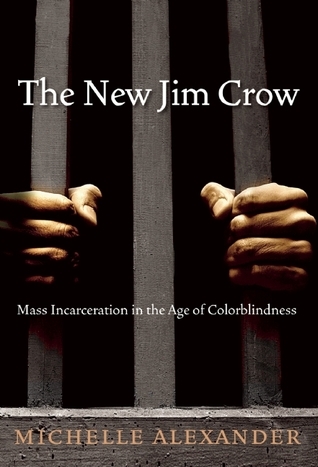
Michelle Alexander reveals how mass incarceration has replaced Jim Crow as a system of racial control, trapping millions in a permanent undercaste. Through startling data and historical analysis, she exposes the War on Drugs as a deliberate mechanism of discrimination—one that operates under the guise of colorblindness while devastating Black communities. A searing indictment of American justice.
Key Takeaways
Racial caste is not an accident of history but a deliberate design by elites.
From Bacon's Rebellion to the War on Drugs, America's racial hierarchies have been intentionally constructed by the wealthy to divide poor whites and Blacks, preventing class solidarity that would threaten elite power.
The racial bribe is the oldest trick in America's political playbook.
Poor whites have repeatedly been offered a psychological wage of racial superiority—land, status, or the role of enforcer—in exchange for accepting their own economic exploitation, a bargain that has sustained caste systems for centuries.
Mass incarceration is not a broken system; it is a system working exactly as designed.
The War on Drugs was declared before drugs were a major public concern, and its purpose was never crime reduction but the creation of a permanent racial undercaste, branded by the state and stripped of basic rights for life.
Colorblindness is the perfect camouflage for a racial caste system.
Unlike Jim Crow's explicit segregation, mass incarceration operates under race-neutral language of 'law and order' and 'criminals,' making it invisible to those who only recognize racism in its most overt forms.
The prison label is a form of civic death more permanent than any sentence.
A felony conviction triggers legal discrimination in voting, housing, employment, and public benefits that follows a person forever, creating a second-class citizenship that rivals the worst days of legal segregation.
The numbers are not ambiguous: white students use crack at eight times the rate of Black students, yet Black men fill the prisons.
When drug use rates are equal or higher among whites, the only explanation for mass Black incarceration is systemic racial bias—a bias the courts have deliberately immunized from challenge.
Mass incarceration may be worse than Jim Crow because it destroys community solidarity.
During Jim Crow, Black communities could find love and support within their own churches and families; today, the stigma of the prison label isolates the formerly incarcerated even from their own neighbors and kin.
The only way forward is to reject the racial bribe and build a multiracial movement for justice.
Any reform that refuses to name race as the central issue will fail, allowing a new caste system to emerge; true liberation requires poor and working-class people of all races to unite against the elites who profit from their division.
Who Should Listen?
Criminal justice reformers and activists who want to understand the systemic racism behind mass incarceration beyond surface-level crime statistics.
Civil rights lawyers and advocates who need a historical framework to shift their focus from affirmative action to dismantling the prison-industrial complex.
White working-class voters who have been courted by 'law and order' politics and need to see how the racial bribe has been used against their own economic interests.
Black Americans personally affected by the criminal justice system—whether through incarceration, family separation, or the stigma of the 'prison label'—seeking a roadmap for collective liberation.