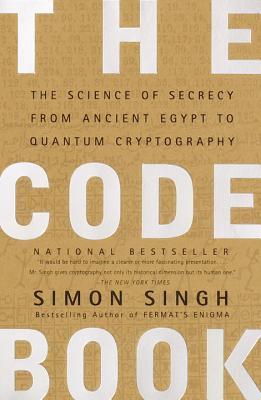
The Code Book
The Science of Secrecy from Ancient Egypt to Quantum Cryptography
Book Summary
Narrator: Ethan
Timeline
Summary Preview
This book has two goals. First, it traces the history of codes and ciphers across thousands of years. Second, it argues that cryptography matters more today than it ever has before. These two aims are woven together through a central idea: codes evolve like living organisms.
Think about how a virus survives. It enters a host, replicates, and spreads. Then the host's immune system develops antibodies to fight it. The virus must mutate, becoming more complex, to survive the attack. The immune system adapts again. The virus mutates again. This cycle of attack and counter attack drives evolution.
Codes follow the same pattern. A cipher is created and put into use. Codebreakers attack it, searching for weaknesses. When they succeed, the cipher becomes useless. The code makers must respond. They create a new, more complex cipher that resists the method that broke the old one. The codebreakers develop new techniques. The cycle continues.
Simon Singh makes this comparison explicit in the introduction. He writes that throughout history, "both sides have drawn upon a diverse range of disciplines and technologies, from mathematics to linguistics, from information theory to quantum theory." Each breakthrough in codebreaking forces an evolutionary leap in encryption. Each new cipher becomes the environment that selects for more sophisticated codebreakers.
This evolutionary arms race has been running for millennia. The earliest known cryptographic techniques were simple. Ancient Greeks shaved a messenger's head, tattooed a message on his scalp, and waited for his hair to grow back before sending him on his way. That's steganography—hiding the existence of the message itself. It worked, but only once. If the enemy knew what to look for, the technique failed.
So cryptography evolved. Instead of hiding the message, practitioners began hiding the meaning. They developed substitution ciphers, replacing letters with other letters. Simple
This book has two goals. First, it traces the history of codes and ciphers across thousands of years. Second, it argues that cryptography matters more today than it ever has before. These two aims are woven together through a central idea: codes evolve like living organisms.
Think about how a virus survives. It enters a host, replicates, and spreads. Then the host's immune system develops antibodies to fight it. The virus must mutate, becoming more complex, to survive the attack. The immune system adapts again. The virus mutates again. This cycle of attack and counter-attack drives evolution.
Codes follow the same pattern. A cipher is created and put into use. Codebreakers attack it, searching for weaknesses. When they succeed, the cipher becomes useless. The code makers must respond. They create a new, more complex cipher that resists the method that broke the old one. The codebreakers develop new techniques. The cycle continues.
Simon Singh makes this comparison explicit in the introduction. He writes that throughout history, "both sides have drawn upon a diverse range of disciplines and technologies, from mathematics to linguistics, from information theory to quantum theory." Each breakthrough in codebreaking forces an evolutionary leap in encryption. Each new cipher becomes the environment that selects for more sophisticated codebreakers.
This evolutionary arms race has been running for millennia. The earliest known cryptographic techniques were simple. Ancient Greeks shaved a messenger's head, tattooed a message on his scalp, and waited for his hair to grow back before sending him on his way. That's steganography—hiding the existence of the message itself. It worked, but only once. If the enemy knew what to look for, the technique failed.
So cryptography evolved. Instead of hiding the message, practitioners began hiding the meaning. They developed substitution ciphers, replacing letters with other letters. Simple substitution gave way to more complex systems. Each time codebreakers found a way in, the codes adapted and grew harder to crack.
The stakes in this evolutionary struggle have always been life and death. Military secrets, political conspiracies, diplomatic communications—all have depended on the strength of codes. The difference today is scale. Encryption no longer protects only generals and spies. It protects everyone.
Consider what happens in a single day for an ordinary person. You check your bank balance online. You send a text message. You make a purchase with a credit card. You log into your email. You use a ride-sharing app. Every one of these actions depends on encryption. Without it, your passwords would be visible to anyone monitoring the network. Your financial transactions would be open for theft. Your private conversations would be public.
This is what Singh means when he says cryptography is more relevant than ever. The digital age has made encryption infrastructure essential to daily life. We have built a world that runs on information, and that information must be protected. The stakes have shifted from the fate of nations to the privacy of every individual.
But this creates a deep tension. The same encryption that protects your personal data also protects criminals and terrorists. Law enforcement agencies argue that strong encryption makes it impossible to catch dangerous people. Civil libertarians respond that weakening encryption for police would leave everyone vulnerable to hackers and surveillance.
This ethical dilemma runs through the entire book. Singh does not resolve it. Instead, he shows how the debate has evolved alongside the technology. The question of privacy versus security has no permanent answer. Public opinion shifts depending on the greatest perceived threat at any given moment. When people fear crime, they accept more surveillance. When they fear government overreach, they demand stronger privacy protections.
The history of cryptography is the history of this struggle. Each generation invents new ways to keep secrets. Each generation finds new ways to uncover them. The codes grow more complex. The codebreakers grow more sophisticated. The cycle continues.
Singh writes that if there is a Third World War, it may be called "the mathematicians' war." This is because information—gathered digitally and algorithmically—would determine outcomes faster than ever before. The evolution of codes has reached a point where the battlefield is no longer physical. It is informational.
What makes this book compelling is not just the technical details of how codes work. It is the human drama behind each cryptographic breakthrough. The code makers and codebreakers were real people with real motivations. Some were geniuses. Some were traitors. Some were ordinary people caught in extraordinary circumstances.
The evolutionary metaphor helps explain why cryptography has become so central to modern life. Just as biological organisms grow more complex over time in response to environmental pressures, codes have grown more complex in response to codebreakers. The result is a system of encryption that would have seemed like magic to previous generations.
Yet even this system is not secure forever. The evolutionary arms race continues. New technologies—quantum computing, artificial intelligence—threaten to break today's strongest ciphers. And new ciphers will emerge to meet those threats.
This raises a question that the book explores across thousands of years of history: What happens when the code makers finally create something unbreakable? Is that even possible? Or is the cycle of creation and destruction destined to continue forever?
The answer, as we will see, may lie not in mathematics, but in the fundamental laws of physics themselves.
About the Book
From Mary Queen of Scots to quantum encryption, this book traces the epic struggle between code makers and code breakers. It reveals how cryptography evolved like a virus, adapting to survive, and why it now protects everything from your texts to global finance. A gripping history of secrecy that explains why your privacy hangs in the balance today.
Key Takeaways
Secrecy is an evolutionary arms race, not a destination.
Cryptography evolves like a living organism, where each new cipher provokes a more sophisticated attack, and each breakthrough in codebreaking forces an evolutionary leap in encryption—a cycle with no final victory, only the next move.
The human element is the weakest link in any security system.
No matter how mathematically perfect a cipher is, the people using it—through predictable habits, lazy passwords, or repeated phrases—create the vulnerabilities that allow geniuses like Turing to crack the 'unbreakable' Enigma.
Privacy is a mass-market necessity, not a luxury for the powerful.
The digital age transformed encryption from a tool for generals and spies into an essential infrastructure for daily life—protecting bank balances, text messages, and medical records for every ordinary person.
The strongest code may be a language no one else speaks.
The Navajo code talkers proved that a living, unwritten language can be a more effective cipher than any machine, because its security came not from complexity but from cultural isolation and human memory.
Key distribution is the ancient curse that public-key cryptography finally broke.
For millennia, the fundamental problem was that two people needed to share a secret before they could exchange a secret—until RSA solved it by creating a system where a public lock could be used by anyone, but only the owner held the private key.
The battle for encryption is a battle over who we fear more: criminals or the state.
Phil Zimmermann's fight over PGP revealed an unresolved ethical dilemma—strong encryption protects both activists and terrorists, and society's answer shifts like a pendulum between demanding security from crime and demanding privacy from surveillance.
Quantum mechanics may finally end the cycle by making eavesdropping detectable.
Unlike all previous ciphers that relied on mathematical difficulty, quantum encryption uses the laws of physics themselves—any attempt to intercept the key destroys it, offering the first system where you can know with certainty if you've been compromised.
The next war will be fought with algorithms, not armies.
As cryptography becomes the foundation of modern civilization, the battlefield shifts to the informational realm—where the most powerful weapon is a secret, and the ability to keep or uncover secrets will determine the outcome of conflicts.
Who Should Listen?
History buffs who love dramatic true stories of espionage, betrayal, and high-stakes courtroom drama.
Tech enthusiasts curious about how encryption actually works, from the Enigma machine to quantum computing.
Privacy-conscious individuals worried about digital surveillance and who want to understand the fight for public encryption.
Cybersecurity professionals or students seeking a compelling narrative foundation for modern cryptographic principles.