Book Summary
Narrator: Ethan
Timeline
Summary Preview
Chimamanda Ngozi Adichie was fourteen years old when a childhood friend named Okoloma called her a feminist. She didn't know what the word meant. But she could tell from his tone that it was not a compliment.
The two were arguing about something—Adichie can't remember what—when Okoloma dropped the label like an accusation. She let it pass in the moment. Later, she looked it up in a dictionary. The definition she found was simple: a feminist is a person who believes in the social, political, and economic equality of the sexes.
But the gap between that definition and the way Okoloma said the word stayed with her. It became the seed of an essay that would eventually reach millions of people around the world.
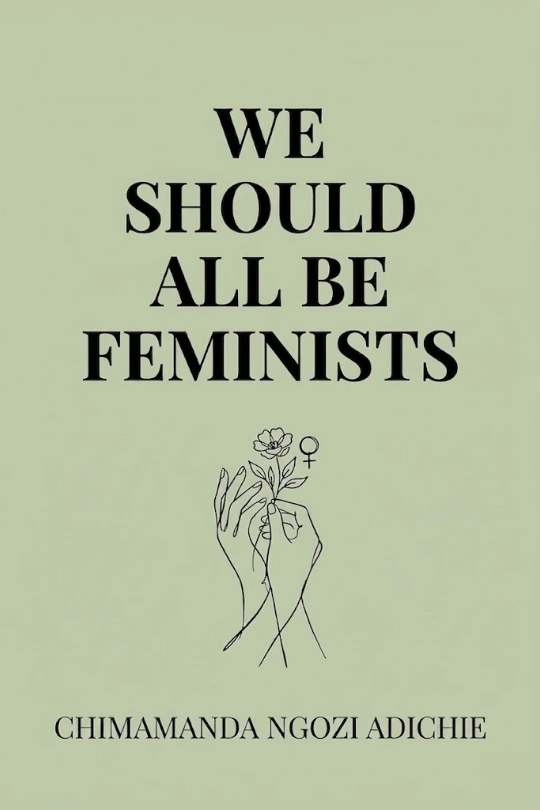
That essay is We Should All Be Feminists . Adapted from Adichie's 2012 TEDx talk, it is a slim, powerful manifesto that aims to do one thing: challenge the stereotypes that have made the word "feminist" feel like an insult rather than a statement of belief in equality.
Okoloma died in a plane crash in 2005. Adichie still mourns him. But his dismissal of feminism—the assumption that calling someone a feminist was a way to put them down—represents exactly the problem the essay seeks to address. The word carries so much negative baggage that its actual meaning gets buried.
Adichie's core argument is disarmingly straightforward. A feminist is simply someone who believes men and women should be equal. That's it. No more, no less. And if we accept that gender equality is a worthy goal, then the logical conclusion is in the title: we should all be feminists.
But getting to that simple conclusion requires clearing away the noise. Throughout the essay, Adichie uses personal stories to show how gender inequality operates in everyday life—not just
Chimamanda Ngozi Adichie was fourteen years old when a childhood friend named Okoloma called her a feminist. She didn't know what the word meant. But she could tell from his tone that it was not a compliment.
The two were arguing about something—Adichie can't remember what—when Okoloma dropped the label like an accusation. She let it pass in the moment. Later, she looked it up in a dictionary. The definition she found was simple: a feminist is a person who believes in the social, political, and economic equality of the sexes.
But the gap between that definition and the way Okoloma said the word stayed with her. It became the seed of an essay that would eventually reach millions of people around the world.
That essay is We Should All Be Feminists. Adapted from Adichie's 2012 TEDx talk, it is a slim, powerful manifesto that aims to do one thing: challenge the stereotypes that have made the word "feminist" feel like an insult rather than a statement of belief in equality.
Okoloma died in a plane crash in 2005. Adichie still mourns him. But his dismissal of feminism—the assumption that calling someone a feminist was a way to put them down—represents exactly the problem the essay seeks to address. The word carries so much negative baggage that its actual meaning gets buried.
Adichie's core argument is disarmingly straightforward. A feminist is simply someone who believes men and women should be equal. That's it. No more, no less. And if we accept that gender equality is a worthy goal, then the logical conclusion is in the title: we should all be feminists.
But getting to that simple conclusion requires clearing away the noise. Throughout the essay, Adichie uses personal stories to show how gender inequality operates in everyday life—not just in obvious forms like workplace discrimination, but in the small, repeated moments that tell women they matter less.
The memory of Okoloma frames the entire book. It opens with his accusation and closes with Adichie reclaiming the word he used against her. She writes that Okoloma was right to call her a feminist—but for the wrong reasons. He meant it as a dismissal. She now wears it as a badge of clarity.
This section introduces the central conflict of the essay: the distance between what feminism actually means and what people think it means. It also establishes why the conversation matters. Gender inequality is not a thing of the past. It persists in how children are raised, how workplaces are structured, how strangers treat women in restaurants and taxis. And it harms everyone—men and women alike.
Adichie does not lecture. She tells stories. She invites the reader into her world—a childhood in Nigeria, a friendship with Okoloma, the moment she first encountered the word that would come to define so much of her public life. That approach makes the essay feel like a conversation rather than a sermon.
The question she leaves us with is this: If the word "feminist" simply means believing in equality, why does it still provoke such strong reactions? And what would it take to reclaim it?
About the Book
In this personal and urgent manifesto, Chimamanda Ngozi Adichie dismantles stereotypes surrounding feminism, revealing how gender inequality harms both women and men. Through vivid anecdotes from her childhood and daily life in Nigeria, she shows that feminism is simply a belief in equality—and why we all need to embrace it.
Key Takeaways
The word 'feminist' has been buried under false associations that hide its true meaning.
Adichie shows how stereotypes—that feminists are angry, man-hating, or un-African—have turned a simple belief in equality into a label people avoid, forcing women to apologize for the word before they can even explain what they mean.
Inequality is taught in the invisible moments of childhood.
When a nine-year-old Adichie was denied the role of class monitor because 'it had to be a boy,' she learned that gender hierarchy is enforced not by cruelty but by repetition, making assumptions so normal they become invisible.
Everyday sexism is a thousand small cuts, not a single blow.
From waiters ignoring women to parking attendants thanking the man for a woman's money, these tiny dismissals accumulate into a constant background hum of invisibility that exhausts women while men often fail to notice it at all.
We raise boys in a cage of hardness and girls in a trap of likability.
Boys are taught never to cry or show vulnerability, creating fragile egos, while girls are taught to shrink themselves, sell their houses, and pretend to enjoy cooking—all to avoid threatening the very masculinity that was never allowed to be soft.
The same behavior is judged differently depending on who performs it.
A man who is tough is called a strong leader, but a woman who does the same is called aggressive; a man's idea is praised while a woman's identical idea is ignored—the workplace double standard forces women to choose between being effective and being liked.
Culture does not make people; people make culture.
Adichie refutes the argument that gender inequality is 'just our culture' by pointing out that the Igbo people once killed twins at birth—a practice now unthinkable—proving that culture is alive, changeable, and can evolve toward greater justice.
Real power is economic independence, not 'bottom power.'
The idea that women can use sexuality to influence men is a fragile illusion, not genuine power; true power means having your own money, your own voice, and not having to shrink yourself so someone else can feel big.
Feminism is not a battle between men and women—it is a partnership for everyone's full humanity.
Adichie's brother Kene is a feminist because he believes in equality; the rigid roles assigned to both genders harm everyone, and reclaiming feminism means recognizing that we all—men and women—must do better to build a world where no one has to pretend.
Who Should Listen?
Young professionals who have experienced or witnessed gender bias in the workplace and want to understand how to address it.
Men who consider themselves allies but are unsure how everyday sexism still operates and want to see it through a woman's eyes.
Parents raising children of any gender who want practical insights into how to avoid passing on harmful gender stereotypes.
Readers skeptical of feminism due to negative stereotypes who are open to a clear, personal reframing of what the movement truly means.