Book Summary
Narrator: Ethan
Timeline
Summary Preview
One afternoon, Michael Pollan was working in his garden, doing what gardeners do—pulling weeds, watering, checking on his vegetables. And then something strange happened. He looked at the bumblebees bouncing from flower to flower, and he saw himself.
Not literally, of course. But he saw the resemblance. The bee visits a flower, collects nectar, and in the process, carries pollen to the next flower. The bee thinks it's working for itself. But the flower has designed the whole transaction. The bee is serving the plant's evolutionary goals.
Pollan realized he was doing the same thing. He thought he was the master of his garden, choosing which plants to grow, deciding where they would go. But the plants had chosen him just as surely. The potatoes he planted—he wanted them. The apple trees he tended—he desired their fruit. And in satisfying his own wants, he was spreading their genes, helping them multiply across the landscape.
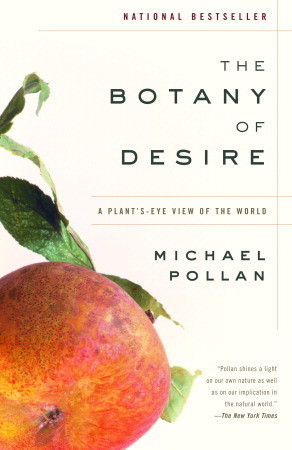
This was the epiphany that became The Botany of Desire . Pollan stepped back from the usual human centered view of nature—the one where we're the active agents and plants are passive objects—and flipped it upside down. What if we looked at the world from the plant's point of view?
From that perspective, the story changes dramatically. Plants, Pollan argues, have been remarkably successful at manipulating animals to do their bidding. They can't move, so they need other creatures to carry their seeds to new ground. Their strategy? Play on animal desires. Sweetness for mammals. Bright colors for bees. Intoxicating chemicals for humans.
And humans are especially useful marks. We're mobile, we're industrious, and we have powerful, often irrational desires. Plants have exploited these desires for thousands of years, getting us to plant them, tend them, protect them, and spread them across the globe. We think
One afternoon, Michael Pollan was working in his garden, doing what gardeners do—pulling weeds, watering, checking on his vegetables. And then something strange happened. He looked at the bumblebees bouncing from flower to flower, and he saw himself.
Not literally, of course. But he saw the resemblance. The bee visits a flower, collects nectar, and in the process, carries pollen to the next flower. The bee thinks it's working for itself. But the flower has designed the whole transaction. The bee is serving the plant's evolutionary goals.
Pollan realized he was doing the same thing. He thought he was the master of his garden, choosing which plants to grow, deciding where they would go. But the plants had chosen him just as surely. The potatoes he planted—he wanted them. The apple trees he tended—he desired their fruit. And in satisfying his own wants, he was spreading their genes, helping them multiply across the landscape.
This was the epiphany that became The Botany of Desire. Pollan stepped back from the usual human-centered view of nature—the one where we're the active agents and plants are passive objects—and flipped it upside down. What if we looked at the world from the plant's point of view?
From that perspective, the story changes dramatically. Plants, Pollan argues, have been remarkably successful at manipulating animals to do their bidding. They can't move, so they need other creatures to carry their seeds to new ground. Their strategy? Play on animal desires. Sweetness for mammals. Bright colors for bees. Intoxicating chemicals for humans.
And humans are especially useful marks. We're mobile, we're industrious, and we have powerful, often irrational desires. Plants have exploited these desires for thousands of years, getting us to plant them, tend them, protect them, and spread them across the globe. We think we domesticated them. But from the plant's perspective, they domesticated us.
Pollan chose four plants to tell this story, each one embodying a different human desire. The apple represents our craving for sweetness. The tulip captures our pursuit of beauty. Marijuana embodies our hunger for intoxication. And the potato reflects our drive for control.
These aren't random choices. Pollan grew each of these plants himself, and he dug into their histories to understand how they shaped human civilization as much as we shaped them. The apple, for instance, didn't just satisfy a sweet tooth—it provided alcohol on the American frontier when water wasn't safe to drink. The tulip sparked a financial frenzy in 17th-century Holland that ruined fortunes. Marijuana altered consciousness and challenged established power structures. The potato fed nations, caused famine, and now raises questions about genetic engineering that touch on the very nature of life itself.
The book's central insight is that human desires are part of natural history. We're not separate from nature, standing outside it and manipulating it. We're embedded in it, co-evolving with the plants we think we control. Our desires—for sweetness, beauty, intoxication, control—are evolutionary forces that shape the world around us.
Pollan calls this a "reciprocal web." We change plants, and plants change us. The apple that evolved to be sweeter got planted by more people, which meant more apple trees, which meant more apples, which meant more sweetness for humans. The relationship isn't one-way. It's a dance.
And here's the thing that stuck with Pollan in his garden that day: we're not the lead dancers. We think we are. We think we're choosing. But the plants have been playing this game much longer than we have. They've had millions of years to perfect their strategies. We've had only a few thousand years of agriculture. The bumblebee doesn't know it's serving the flower's reproductive agenda. Pollan realized he didn't know either—until that moment in his garden.
The book takes what Pollan calls an "upside-down perspective." Instead of asking what humans have done to plants, it asks what plants have done to humans. How have apples shaped our migration across continents? How have tulips influenced our concept of beauty? How has marijuana altered our consciousness and our culture? How has the potato changed our relationship with nature itself?
The answers are surprising. They're also humbling. Because once you start looking at the world from the plant's point of view, you can't go back to thinking of yourself as the master of your garden. You're part of a system. A beautiful, ancient, ongoing system where every creature is both subject and object, both actor and acted upon.
So here's the question that Pollan's garden revelation left him with—and the question that drives the entire book: If we're not the masters of nature, if we're more like bees than we'd like to admit, then what does that mean for how we should think about our relationship with the natural world? And what happens when our desires—for sweetness, beauty, intoxication, and control—collide with the desires of the plants that have been shaping us all along?
About the Book
In this mind-bending exploration, Michael Pollan flips the human-centric view of nature upside down, revealing how four plants—the apple, tulip, marijuana, and potato—have shaped human civilization by exploiting our deepest desires for sweetness, beauty, intoxication, and control. A journey from Johnny Appleseed's cider orchards to Amsterdam's cannabis labs to Monsanto's gene labs.
Key Takeaways
We are not masters of nature, but participants in a reciprocal web of coevolution.
Humans and plants have shaped each other for millennia through a mutual dance of desire and adaptation, where our cravings for sweetness, beauty, intoxication, and control have been exploited by plants to spread their genes, revealing that we are as much acted upon as we are actors.
The most beautiful things in nature may arise from weakness, not strength.
The broken tulips of Holland, whose stunning flames of color were caused by a debilitating virus, teach us that beauty does not always signal health; sometimes what makes something extraordinary is precisely what is wrong with it.
Intoxication is not a flaw but a fundamental human desire for transcendence and presence.
The universal human drive to alter consciousness, from ancient religious rituals to modern marijuana cultivation, stems from a deep need to escape the reducing valve of memory and experience the wonder of the present moment, a desire that plants have learned to exploit.
The desire for control over nature inevitably invites new forms of disorder.
From the Irish potato famine to Monsanto's genetically engineered NewLeaf, every human attempt to master nature through monoculture and genetic uniformity creates vulnerabilities that nature, in the form of blight or resistant pests, will eventually exploit.
Johnny Appleseed embodied the plant's-eye view, understanding coevolution before the word existed.
Unlike the settlers who saw themselves as masters of their orchards, John Chapman traveled with his apple seeds as equals, grasping that his desire for sweetness and purpose was intertwined with the apple's agenda to spread across a continent.
Our deepest desires are evolutionary forces that shape the world around us.
The apple's sweetness, the tulip's beauty, marijuana's intoxication, and the potato's control are not just human preferences but biological strategies that have driven the migration, cultivation, and genetic transformation of entire species across the globe.
The garden is a negotiation, not a command—a place where order and disorder constantly dance.
Every gardener discovers that despite careful planning, nature has its own agenda; the garden reveals that our relationship with the natural world is a dynamic partnership of mutual influence, not a one-way imposition of human will.
Memory is the enemy of wonder, which abides nowhere else but the present.
Psychoactive plants like marijuana disrupt short-term memory to loosen the brain's filtering mechanism, allowing us to experience reality more directly—a state that threatens systems like capitalism and organized religion that depend on delayed gratification and future rewards.
Who Should Listen?
Gardeners who have ever felt a strange sense that their plants are running the show, not the other way around.
History buffs who want the real, unvarnished story behind Johnny Appleseed and the Dutch tulip craze.
Science readers fascinated by evolution, genetics, and the hidden biological forces that shape human behavior.
Anyone who has ever wondered why we crave sweetness, seek altered states, or try to control nature—and what these desires mean.