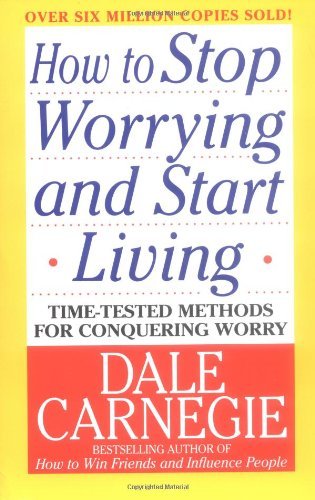
How to Stop Worrying and Start Living
Time-Tested Methods for Conquering Worry
Book Summary
Narrator: Ethan
Timeline
Summary Preview
In 1948, a businessman named Edward S. Evans collapsed. He had been pushing himself too hard at work, carrying the weight of his responsibilities until his body simply gave out. When the doctors examined him, they delivered a brutal verdict: he had two weeks to live. His nervous system was so ravaged by anxiety that his organs were shutting down.
Evans went home to wait. He stopped working. He stopped fighting. He stopped worrying. And something remarkable happened. Within days, his health began to improve. Within weeks, he was out of bed. Within months, he was fully recovered.
What killed Edward Evans wasn't overwork. It was worry. And what saved him wasn't medicine. It was the simple act of stopping.
This story sits at the heart of Dale Carnegie's argument: worry is not just an uncomfortable feeling. It is a destructive force that damages your body, clouds your thinking, and steals your happiness. It is a learned habit, and like any habit, it can be broken.
The Physical Toll of Anxiety. Carnegie opens his book by citing physician Alexis Carrel, who stated flatly: "Those who do not know how to fight worry die young." This isn't metaphor. According to Dr. O. F. Gober, chief physician at the Mayo Clinic, seventy percent of all illnesses are caused or worsened by anxiety. Worry directly attacks the nervous system, and from there, it spreads: digestive complaints, stomach ulcers, heart disorders, thyroid conditions, insomnia, headaches, arthritis, even tooth decay.
A study of business executives revealed that more than a third suffered from ulcers, heart disease, or high blood pressure. These weren't men with bad genes or poor diets. They were men who worried.
Carnegie uses the example of General Ulysses S. Grant during the Civil War. At a critical moment before Lee's surrender, Grant
In 1948, a businessman named Edward S. Evans collapsed. He had been pushing himself too hard at work, carrying the weight of his responsibilities until his body simply gave out. When the doctors examined him, they delivered a brutal verdict: he had two weeks to live. His nervous system was so ravaged by anxiety that his organs were shutting down.
Evans went home to wait. He stopped working. He stopped fighting. He stopped worrying. And something remarkable happened. Within days, his health began to improve. Within weeks, he was out of bed. Within months, he was fully recovered.
What killed Edward Evans wasn't overwork. It was worry. And what saved him wasn't medicine. It was the simple act of stopping.
This story sits at the heart of Dale Carnegie's argument: worry is not just an uncomfortable feeling. It is a destructive force that damages your body, clouds your thinking, and steals your happiness. It is a learned habit, and like any habit, it can be broken.
The Physical Toll of Anxiety. Carnegie opens his book by citing physician Alexis Carrel, who stated flatly: "Those who do not know how to fight worry die young." This isn't metaphor. According to Dr. O. F. Gober, chief physician at the Mayo Clinic, seventy percent of all illnesses are caused or worsened by anxiety. Worry directly attacks the nervous system, and from there, it spreads: digestive complaints, stomach ulcers, heart disorders, thyroid conditions, insomnia, headaches, arthritis, even tooth decay.
A study of business executives revealed that more than a third suffered from ulcers, heart disease, or high blood pressure. These weren't men with bad genes or poor diets. They were men who worried.
Carnegie uses the example of General Ulysses S. Grant during the Civil War. At a critical moment before Lee's surrender, Grant was incapacitated by a crushing headache and nausea. He spent the night in a farmhouse, unable to function. The next morning, a letter arrived from Lee confirming surrender. Grant's symptoms vanished instantly. The physical pain was real, but its cause was mental.
This is the hidden cost of worry. It doesn't just make you unhappy. It makes you sick.
Worry vs. Concern. Carnegie makes a crucial distinction that many self-help books miss. Not all anxiety is bad. There is a difference between worry and concern.
Concern is productive. When you are concerned about a problem, you recognize it, assess it calmly, and take steps to address it. Concern keeps you alert and engaged. It leads to action.
Worry is the opposite. Worry is going around in maddening, futile circles. It is replaying the same scenario over and over without reaching a conclusion. It is imagining catastrophes that never happen. It drains your energy and resolves nothing.
The key insight: you cannot eliminate concern, nor should you try. But you can learn to recognize when concern has tipped into worry, and you can stop it.
Recognizing the Physical Signs. Carnegie's first practical tool is simple awareness. Before you can break the habit of worry, you must learn to recognize when it is happening. The body gives clear signals:
- Tightness in the chest or throat
- Clenched jaw or shoulders
- Shallow breathing
- Restlessness or inability to sit still
- A churning stomach
- Difficulty concentrating
When you notice these signs, stop. Ask yourself: Am I concerned about a real problem I can address? Or am I worrying about something I cannot control?
If it is concern, take action. If it is worry, recognize it for what it is: a learned habit that is harming your body and wasting your energy.
The Promise of Change. Carnegie's central message is hopeful. Worry is not a permanent condition. It is not a personality flaw or a sign of weakness. It is a habit, and habits can be replaced.
Edward Evans was given two weeks to live. He stopped worrying. He lived for many more years.
The same is possible for you. Not by eliminating every source of stress from your life, but by learning to respond differently. The techniques in this book are not abstract theories. They are practical tools tested by thousands of people in Carnegie's classes. They work.
But they require something from you. As Carnegie writes in his preface: "Our trouble is not ignorance, but inaction." You already know that worry is bad for you. The question is whether you will do something about it.
Think about the last time you spent an entire day anxious about something that never happened. How much energy did you waste? How much joy did you miss? What if you could get that time back?
About the Book
Worry is a learned habit that damages your body and steals your joy. Dale Carnegie provides a practical, step-by-step system to break free. From living in day-tight compartments to accepting the worst and improving, this classic guide offers timeless techniques to cultivate peace, handle criticism, and starve off anxiety. Stop suffering and start living.
Key Takeaways
Live in Day-Tight Compartments to Stop Worry's Food Supply
Confine your mental energy to the present 24 hours by treating each day as a sealed unit, preventing regrets from the past and fears of the future from flooding in. Focus on handling only one task at a time, like a single grain of sand passing through an hourglass, to prevent mental paralysis.
Use the Magic Formula: Accept the Worst, Then Improve It
When a specific worry overwhelms you, force yourself to identify the absolute worst-case scenario, mentally accept that you could survive it, and then calmly work to improve the situation. This breaks the cycle of panic by freeing your mind from fear, allowing you to think clearly and find solutions.
Analyze Before You Act: Replace Vague Anxiety with Clear Action
Write down the concrete facts of a problem, analyze the causes, brainstorm all possible solutions, and then immediately decide on a course of action. This structured process transforms formless dread into a manageable problem with a clear next step, moving you from a passive worrier to an active problem-solver.
Crowd Out Worry with Purposeful, Absorbing Activity
Since your mind can only hold one thought at a time, fill your vulnerable moments with tasks that demand your full attention—especially physical work—to evict worry from your mental space. This isn't avoidance; it's using 'occupational therapy' to break the rumination loop and regain mental clarity.
Don't Let the Beetles Get You Down: Crush Trivial Irritations
Most of what you call 'worry' is actually a tiny irritation you are magnifying; ask yourself 'Will this matter in five years?' to regain perspective. Consciously refuse to dwell on small grievances, because like beetles chewing a tree, these trivialities will destroy your peace if left unchecked.
Use the Law of Averages to Eliminate Irrational Fears
When a specific fear keeps you awake, calculate the actual statistical probability of it happening—you will almost always find the odds are negligible. This forces your brain to switch from emotional panic to logical analysis, proving that you are suffering for nothing and giving you permission to let go.
Cooperate with the Inevitable and Set Stop-Loss Orders on Losses
If you cannot change a situation, accept it like an evergreen tree bending under snow rather than breaking; this conserves energy for what you can influence. For controllable worries, set a predetermined limit on how much time or emotional energy you will invest, then walk away when you hit that limit to avoid overpaying for any 'whistle.'
Prevent Fatigue and Insomnia to Starve Off Worry at Its Source
Rest before you get tired by scheduling short breaks throughout the day, and deliberately relax your muscles to eliminate unnecessary tension that fuels anxiety. Since fatigue magnifies worry, manage your energy by keeping a clear desk, prioritizing tasks, acting immediately, and making boring work interesting through self-competition.
Who Should Listen?
The overworked professional who lies awake at 3 AM replaying work problems and needs a practical system to quiet their mind.
The chronic overthinker who magnifies small irritations into major anxieties and wants to regain perspective on what truly matters.
The perfectionist who is paralyzed by fear of criticism or failure and needs concrete tools to take action despite uncertainty.
The exhausted parent or caregiver who feels drained by constant worry about loved ones and needs strategies to manage their own mental energy.