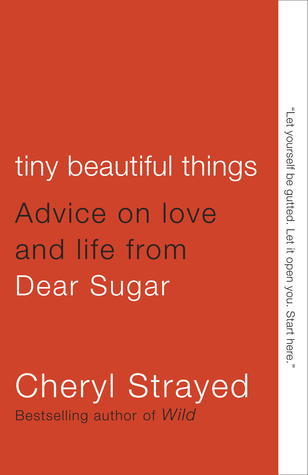
Tiny Beautiful Things
Advice on Love and Life from Dear Sugar
Book Summary
Narrator: Ethan
Timeline
Summary Preview
In 2010, Cheryl Strayed took on an unpaid job as an anonymous advice columnist for an online literary magazine called The Rumpus. She wrote under the pseudonym Sugar. She thought it would be fun. It turned out to be something far more significant.
For two years, Strayed answered letters from strangers about love, loss, grief, family, and the hardest choices in life. But she didn't answer them the way most advice columnists do. She didn't keep a professional distance. She didn't stay in the background, offering dry wisdom from a safe remove. Instead, she told her own stories. She revealed her own wounds. She made herself as vulnerable as the people writing to her.
The result was a collection of letters and responses that became the book Tiny Beautiful Things: Advice on Love and Life from Dear Sugar .
Steve Almond, who had been the original Sugar before Strayed, wrote the introduction. He explained what made her approach so different. Traditional advice columnists follow an unspoken code: remain anonymous, focus on the letter writer, keep yourself out of it. The model is therapy, where the therapist stays neutral, a blank screen for the patient's problems.
Strayed shattered that code completely.
Almond called her approach "radical empathy." Instead of ministering to people from a distance, she ministered to them by telling stories about her own life—the particular ways she'd felt thwarted and lost, and how she'd found her way again. She bared her personal experience so that her correspondents might understand their own problems through hers. She didn't just sympathize. She joined them in their pain by sharing her own.
This wasn't a gimmick. It came from a genuine place. Strayed had lived through enough to have stories worth telling. She lost her mother to cancer when she was only twenty
In 2010, Cheryl Strayed took on an unpaid job as an anonymous advice columnist for an online literary magazine called The Rumpus. She wrote under the pseudonym Sugar. She thought it would be fun. It turned out to be something far more significant.
For two years, Strayed answered letters from strangers about love, loss, grief, family, and the hardest choices in life. But she didn't answer them the way most advice columnists do. She didn't keep a professional distance. She didn't stay in the background, offering dry wisdom from a safe remove. Instead, she told her own stories. She revealed her own wounds. She made herself as vulnerable as the people writing to her.
The result was a collection of letters and responses that became the book Tiny Beautiful Things: Advice on Love and Life from Dear Sugar.
Steve Almond, who had been the original Sugar before Strayed, wrote the introduction. He explained what made her approach so different. Traditional advice columnists follow an unspoken code: remain anonymous, focus on the letter writer, keep yourself out of it. The model is therapy, where the therapist stays neutral, a blank screen for the patient's problems.
Strayed shattered that code completely.
Almond called her approach "radical empathy." Instead of ministering to people from a distance, she ministered to them by telling stories about her own life—the particular ways she'd felt thwarted and lost, and how she'd found her way again. She bared her personal experience so that her correspondents might understand their own problems through hers. She didn't just sympathize. She joined them in their pain by sharing her own.
This wasn't a gimmick. It came from a genuine place. Strayed had lived through enough to have stories worth telling. She lost her mother to cancer when she was only twenty-two. She left a good husband because the marriage was wrong for her. She struggled with heroin addiction. She spent years trying to become a writer, working odd jobs, writing sentences that never turned into anything. She hiked the Pacific Crest Trail alone, carrying everything she owned on her back.
When strangers wrote to Sugar about their grief, their guilt, their desire to leave relationships that looked fine from the outside, Strayed could say: I've been there. Let me tell you what I learned.
The book collects the best of those exchanges. It's divided into six parts. Parts one through five contain letters from her Rumpus years, 2010 to 2012. Part six features letters from a decade later, written to her Substack newsletter. Across all of them, the same themes emerge: love and loss, self-trust and doubt, the courage to leave and the courage to stay, the pain of grief and the possibility of transformation.
But Tiny Beautiful Things is not a typical self-help book. It doesn't offer five-step plans or bullet-pointed strategies. It offers something rarer: a literary conversation between a flawed human being and strangers who are brave enough to ask for the truth. The letters are often beautifully written. Strayed admits she had a bias toward well-written correspondence. But the real draw is her voice—colloquial, lyrical, tender, and tough all at once.
She calls her correspondents "sweet pea." She tells them things they don't want to hear. She shares stories about her grandfather's sexual abuse, her mother's dying word, the time she stole things as a teenager, the affair she had in her first marriage. Nothing is off-limits. She holds nothing back.
Almond writes that Strayed's radical empathy is essential in a culture where loneliness has reached epidemic proportions. People write to Sugar not because they need information, but because they need connection. They need to feel less alone. And Strayed gives them that gift, over and over again, by showing them that she too has been lost, has been broken, has made terrible mistakes—and has found her way back.
The book's title comes from a moment Strayed describes near the end. During her heroin phase, she was riding a bus, feeling like a worthless piece of crap. A little girl got on holding two purple balloons. She offered one to Strayed. Strayed refused, believing she no longer had a right to such tiny beautiful things. Looking back, she realizes she was wrong. Everyone, no matter how far they've fallen, still has a right to tiny beautiful things.
That's the core of her message. No matter what you've done, no matter how lost you feel, you are still worthy of love, of kindness, of redemption. And the way to find those things is not by hiding from your pain, but by walking straight through it, with someone who understands.
So who was Sugar, really? And how did a woman who wrote anonymously for two years become one of the most beloved advice givers of her generation?
About the Book
Cheryl Strayed, writing as the anonymous advice columnist Sugar, answers letters about love, grief, betrayal, and ambition with radical honesty. She doesn't offer distant platitudes—she shares her own painful stories of loss, addiction, and heartbreak. The result is a literary conversation that makes readers feel deeply seen, less alone, and brave enough to face their own truths.
Key Takeaways
Radical empathy requires vulnerability, not distance.
True connection is forged not by offering solutions from a safe remove, but by sharing your own wounds and stories, allowing others to see their struggles reflected in yours.
Wanting to leave is enough; your desire is a valid compass.
You don't need a catastrophic reason to leave a relationship or a path; the simple, persistent truth that you want to go is a sufficient and sacred justification for change.
Grief is a planet you inhabit, not a problem to solve.
Healing does not mean leaving your pain behind; it means learning to live on a new, altered world, carrying the loss with you while finding others who speak the same language.
Acceptance must precede forgiveness; you cannot skip the truth.
Before you can forgive, you must first embrace the raw, unvarnished reality of what happened—without loopholes or bright twists—because only from that foundation can genuine peace grow.
Build a temple in your obliterated place.
The worst thing that happens to you can become the source of your deepest wisdom; instead of letting grief destroy you, use it to construct something sacred and transformative within yourself.
Boundaries are a purely peaceable act of self-love.
Cutting ties with toxic family members is not a judgment or betrayal; it is a clear, necessary definition of what you will tolerate, teaching both others and yourself how to respect your own worth.
Creative ambition demands humility, persistence, and an abundance mindset.
The path to becoming a writer or artist is a long, humiliating slog through failure; the only way out is through, and the only way to survive envy is to believe there is enough success for everyone.
Doing lifts the burden, even if it's a small thing.
You cannot fix the world or save everyone, but by taking one small, compassionate action—like writing a letter or sharing a story—you transform from a bystander to suffering into an active participant in healing.
Who Should Listen?
Anyone grieving a profound loss who feels isolated by their pain and needs permission to not be okay.
A person stuck in a relationship or job that looks good on paper but feels wrong in their gut.
A creative struggling with envy, self-doubt, or the fear that their work is not good enough.
Someone wrestling with setting boundaries with a toxic family member without drowning in guilt.