Book Summary
Narrator: Ethan
Timeline
Summary Preview
Thirty eight days into her journey, Cheryl Strayed sat on the edge of a steep trail in California. Her enormous backpack, which she called Monster, toppled over. The pack hit her boot and sent it bouncing off a rocky outcropping, disappearing into the forest canopy below. Gone. Impossible to retrieve.
She sat there, alone, barefoot. Her feet were covered in blisters. Several of her toenails had blackened and detached themselves from her toes. Those boots had caused her nothing but pain for over a month. So she did something that made no sense to anyone who wasn't her. She grabbed the other boot, the one still on her foot, and hurled it down the cliff after its mate.
Now she was truly stuck. Alone in the woods. No boots. Miles from anywhere. And yet, in that moment of complete absurdity, she felt something shift. She had chosen to be there. She had chosen this.
Cheryl Strayed's story begins long before that boot went over the cliff. It begins with her mother, Bobbi, who died of lung cancer when Cheryl was twenty two years old. Bobbi was the center of Cheryl's universe—a woman who had escaped an abusive marriage, raised three children on her own, and loved them with an intensity that Cheryl could only describe as "full throated and all encompassing." When Bobbi was diagnosed with terminal cancer, she was given one year to live. She died one month later.
The loss shattered Cheryl. In the four years that followed, she unraveled completely. She had extramarital affairs—three of them in the span of five days at one point. She started using heroin, introduced to it by a man named Joe. She pushed away her husband, Paul, the one person who had stayed by her side through her mother's illness. She
Thirty-eight days into her journey, Cheryl Strayed sat on the edge of a steep trail in California. Her enormous backpack, which she called Monster, toppled over. The pack hit her boot and sent it bouncing off a rocky outcropping, disappearing into the forest canopy below. Gone. Impossible to retrieve.
She sat there, alone, barefoot. Her feet were covered in blisters. Several of her toenails had blackened and detached themselves from her toes. Those boots had caused her nothing but pain for over a month. So she did something that made no sense to anyone who wasn't her. She grabbed the other boot, the one still on her foot, and hurled it down the cliff after its mate.
Now she was truly stuck. Alone in the woods. No boots. Miles from anywhere. And yet, in that moment of complete absurdity, she felt something shift. She had chosen to be there. She had chosen this.
Cheryl Strayed's story begins long before that boot went over the cliff. It begins with her mother, Bobbi, who died of lung cancer when Cheryl was twenty-two years old. Bobbi was the center of Cheryl's universe—a woman who had escaped an abusive marriage, raised three children on her own, and loved them with an intensity that Cheryl could only describe as "full-throated and all-encompassing." When Bobbi was diagnosed with terminal cancer, she was given one year to live. She died one month later.
The loss shattered Cheryl. In the four years that followed, she unraveled completely. She had extramarital affairs—three of them in the span of five days at one point. She started using heroin, introduced to it by a man named Joe. She pushed away her husband, Paul, the one person who had stayed by her side through her mother's illness. She chose the surname "Strayed" on her divorce papers, embracing the word's multiple meanings: to diverge, to digress, to wander, to become wild.
By the time she was twenty-six, Cheryl had hit bottom. She was pregnant by Joe, addicted to heroin, and divorced from a man she still loved. She terminated the pregnancy. And then, instead of continuing to spiral, she made a decision that seemed insane to everyone who knew her. She would hike the Pacific Crest Trail alone. Eleven hundred miles. Through deserts and mountains and forests. A woman with no hiking experience, no real gear knowledge, and no money.
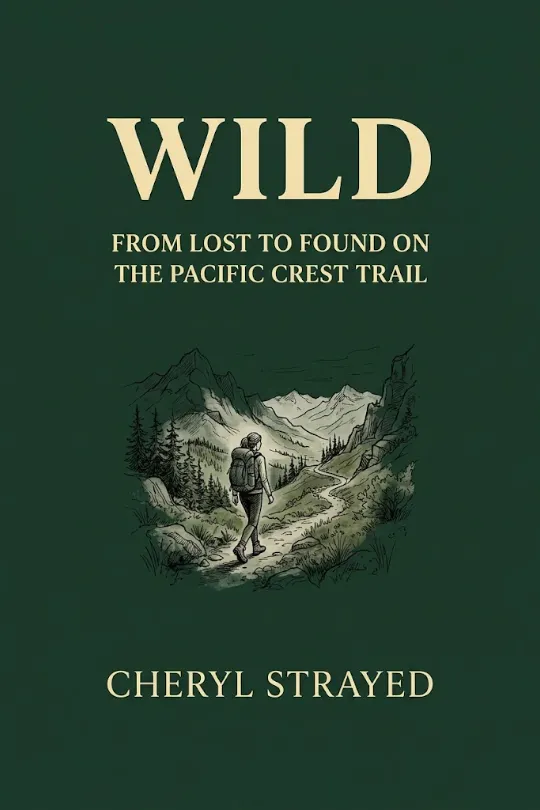
The book Wild: From Lost to Found on the Pacific Crest Trail tells the story of that journey. But it doesn't tell it in a straight line. The narrative weaves back and forth between the trail and the life that led Cheryl there. One chapter might find her scaling a snow-covered pass in the Sierra Nevada; the next might drop her back into a hospital room where she and her mother cried in separate bathroom stalls after receiving the terminal diagnosis. This structure mirrors what the hike itself forced her to do: to carry her past with her, step by step, until she could finally set it down.
Cheryl's goal was simple, though anything but easy. She wanted to become the person she was before her mother died. Not a different person, but the same one—strong, responsible, clear-eyed, ethical, good. She believed that if she walked far enough, long enough, and hard enough, she might find her way back to herself.
The boot-throwing incident captures the essence of her journey. It's a moment of despair, yes. She's stuck, barefoot, in the middle of nowhere. But it's also a moment of fierce determination. She chose to throw that boot. She chose to keep going. She chose to find a way forward, even when every rational part of her brain said she couldn't.
What follows over the next seventy-two days is a story of blisters and rattlesnakes, of snowstorms and scorching deserts, of loneliness so deep it aches and kindness so unexpected it restores faith. Cheryl carries a backpack so heavy she can barely stand upright. She loses toenails. She gets lost. She runs out of water. She wakes up covered in frogs. She nearly steps on a bear. She meets a reporter from the Hobo Times, a man who gives her a bag of licorice instead of a bullet, and a group of young hikers who crown her the "Queen of the PCT."
But the real journey is internal. On the trail, Cheryl finally confronts the grief she's been running from. She lets herself be angry at her mother for dying. She forgives herself for the affairs and the drugs and the divorce. She says her mother's name out loud for the first time—Bobbi—and sees her not just as a mother, but as a whole person with her own flaws and gifts.
The book ends at the Bridge of Gods, the final stop on the PCT. Cheryl touches the bridge but doesn't cross it. She sits alone, two days before her twenty-seventh birthday, and feels something she hasn't felt in years: peace. Her life, she realizes, is "mysterious and irrevocable and sacred."
So here is the question that hangs over this entire story: What does it take to heal from a wound so deep it changes who you are? For Cheryl Strayed, the answer was eleven hundred miles of walking, one step at a time, carrying everything she loved and lost on her back.
About the Book
After her mother's death, Cheryl Strayed spirals into addiction and divorce. With no hiking experience, she sets out to hike the Pacific Crest Trail alone. This memoir interweaves her brutal physical journey with the emotional one, as she confronts grief, guilt, and the raw power of nature to ultimately find healing and self-forgiveness.
Key Takeaways
Grief is a wound that must be walked through, not run from.
Cheryl Strayed's journey shows that healing from profound loss requires direct confrontation with pain, not escape through addiction or distraction; the physical act of walking mile after mile forced her to face her mother's death and her own guilt until she could finally release them.
The weight we carry is both literal and metaphorical, and we must learn to set it down.
Her enormous backpack, Monster, symbolizes the burden of grief, shame, and regret she hauled through the wilderness; only by enduring the crushing weight step by step did she discover which parts she could discard and which she needed to keep.
Kindness from strangers can restore faith in humanity and in yourself.
From Frank offering licorice instead of a bullet to Doug giving her a raven feather for luck, the trail taught Cheryl that the world is far less dangerous than her trauma had led her to believe, and that receiving help is not weakness but a form of courage.
Forgiveness of others begins with forgiving yourself for being human.
Sitting by a fire on her mother's birthday, Cheryl finally forgave herself for the affairs, the heroin, the divorce, and the abortion—not because she deserved it, but because holding onto guilt was another way of staying stuck in the past.
The bravest decision is sometimes to change course, not to push through blindly.
Choosing to bypass the deadly Sierra snow instead of risking her life was not failure but wisdom; true strength lies in listening to fear and adapting, not in stubbornly clinging to a plan that could destroy you.
Resilience is not about being tough; it is about being willing to look ridiculous and keep going.
Duct-taping her sandals to her feet, hiking with blackened toenails, and waking up covered in frogs taught Cheryl that survival often means embracing absurdity and laughing at your own brokenness while still moving forward.
Healing requires seeing the people we love as whole, imperfect humans, not just as our mothers or fathers.
When Cheryl finally said her mother's name—Bobbi—aloud, she stopped seeing her only as a parent and began to see the full, flawed woman she was, which allowed her to hold both gratitude and anger without being consumed by either.
Peace is not found at the destination but in the moment you realize you have already arrived.
At the Bridge of Gods, Cheryl touched the end of her journey but did not cross it; she sat alone and felt her life as 'mysterious and irrevocable and sacred,' understanding that the thousand miles of walking had already brought her home to herself.
Who Should Listen?
Readers who have experienced profound grief or loss and are seeking a story of resilience and healing.
Women who have felt lost or broken and need a powerful example of reclaiming their strength through a solo journey.
Outdoor enthusiasts and aspiring long-distance hikers who want an honest, unglamorous account of a grueling thru-hike.
Anyone who has made destructive choices and is looking for a narrative about self-forgiveness and starting over.