Book Summary
Narrator: Ethan
Timeline
Summary Preview
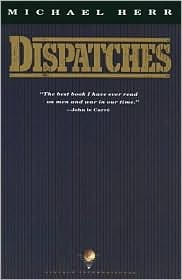
There was a map hanging in Michael Herr's Saigon apartment. He'd inherited it from the previous tenant, and it showed a country that no longer existed. The map divided Vietnam into its older territories—Tonkin, Annam, and Cochin China. To the west, past Laos and Cambodge, sat Siam, a kingdom. The map was a relic, hopelessly outdated, and utterly useless for understanding the war that was happening outside the apartment window.
That map is the perfect entry point into "Dispatches," Herr's account of his time as a war correspondent in Vietnam from late 1967 to early 1968. The book itself works like that map: fragmented, disorienting, and requiring active interpretation. Herr doesn't explain things. He doesn't provide a history of the conflict, introduce his characters with backstories, or gloss the military terminology that flies past. He drops you in, and you have to learn on the run—just like everyone who went to Vietnam had to learn on the run.
The book was published in 1977, nearly a decade after Herr returned from Vietnam. In France, it was published as a novel. In the United States, it was marketed as a memoir. Both labels are true and false. Herr wrote in what came to be called New Journalism, a style that prioritized "truth" over literal facts. He admitted in interviews that two of the most memorable characters in the book—Day Tripper and Mayhew—were entirely fictional. Much of the narrative, he said, was invented. But that doesn't make it dishonest. Herr wasn't trying to file a newspaper report. He was trying to make you feel what it was like to be there.
And what it was like to be there was profoundly disorienting. The war in Vietnam wasn't like the wars that had come before. There were no front lines. The enemy was
There was a map hanging in Michael Herr's Saigon apartment. He'd inherited it from the previous tenant, and it showed a country that no longer existed. The map divided Vietnam into its older territories—Tonkin, Annam, and Cochin China. To the west, past Laos and Cambodge, sat Siam, a kingdom. The map was a relic, hopelessly outdated, and utterly useless for understanding the war that was happening outside the apartment window.
That map is the perfect entry point into "Dispatches," Herr's account of his time as a war correspondent in Vietnam from late 1967 to early 1968. The book itself works like that map: fragmented, disorienting, and requiring active interpretation. Herr doesn't explain things. He doesn't provide a history of the conflict, introduce his characters with backstories, or gloss the military terminology that flies past. He drops you in, and you have to learn on the run—just like everyone who went to Vietnam had to learn on the run.
The book was published in 1977, nearly a decade after Herr returned from Vietnam. In France, it was published as a novel. In the United States, it was marketed as a memoir. Both labels are true and false. Herr wrote in what came to be called New Journalism, a style that prioritized "truth" over literal facts. He admitted in interviews that two of the most memorable characters in the book—Day Tripper and Mayhew—were entirely fictional. Much of the narrative, he said, was invented. But that doesn't make it dishonest. Herr wasn't trying to file a newspaper report. He was trying to make you feel what it was like to be there.
And what it was like to be there was profoundly disorienting. The war in Vietnam wasn't like the wars that had come before. There were no front lines. The enemy was invisible during the day and controlled the night. Information was flexible—"different pieces of ground told different stories to different people," Herr writes. The official reports from military command bore almost no resemblance to what soldiers on the ground were experiencing. The map in his apartment, with its obsolete territories and phantom kingdoms, wasn't just a decoration. It was a symbol of the entire enterprise: a war fought with outdated assumptions, unreliable intelligence, and a fundamental misunderstanding of the place itself.
Herr's writing style mirrors this chaos. The narrative jumps backward and forward in time. Memories are grouped by theme, not chronology. Terminology appears without explanation. You don't learn what a "Lurp" is through a definition; you learn through context, through the sheer weight of the word appearing again and again until it starts to mean something. This is deliberate. Herr wanted to simulate the feeling of being dropped into the middle of something that only time and experience could orient you to. The reader is never allowed to get comfortable. Just when you think you've found your footing, the ground shifts.
The book also simulates the drug-fueled haze that permeated the war. Soldiers used Dexedrine to stay alert on night patrols, marijuana to take the edge off, downers to sleep. The correspondents were no different. Herr writes about smoking before bed, smoking before getting out of bed, smoking through almost every encounter. The prose itself has a fractured, stoned quality—time stretches and condenses, moments of crystal clarity give way to fog, and the whole thing feels like a bad dream you can't wake up from.
But beneath the stylistic chaos, there's a central mystery that drives the entire narrative: Why did Herr go to Vietnam in the first place? What compels someone to voluntarily insert themselves into a war, to live alongside soldiers who are being shot at, to take the same risks without the same obligations? Herr never answers this question. Not in the book, and not in any of the interviews he gave afterward. It remains unresolved, a blank space at the center of the story.
There are hints, though. At one point, Herr writes that "Vietnam is what we had instead of happy childhoods." Later, he suggests that the experience didn't actually fill whatever was empty: "I hadn't been anywhere, I'd performed half an act; the war only had one way of coming to take your pain away quickly." Whatever drove him there—some need to prove something, to test himself, to find meaning—wasn't satisfied by the war. The demons that sent him to Vietnam were still there when he came back.
This unresolved question gives the book its strange, haunting quality. Herr is both the narrator and the subject of his own investigation, and he never quite figures himself out. He careens from moment to moment, from one encounter to the next, rarely giving the reader—or himself—a chance to catch his breath. The war becomes a kind of mirror, reflecting back something he can't quite name.
And that's the point. "Dispatches" isn't a book about the Vietnam War in the way that a history book is about the Vietnam War. It's a book about what it felt like to be there: the fear, the boredom, the dark humor, the casual brutality, the drugs, the music, the camaraderie, the horror. It's a book about how information gets distorted, how stories get told, how people cope with the unbearable. It's a book about watching, and what it means to watch, and whether watching makes you complicit.
The map in Herr's apartment showed a Vietnam that no longer existed. The war itself was like that map: a set of assumptions and narratives that had already been overtaken by events. Herr's book refuses to provide a stable picture of what happened. Instead, it gives you the fragments, the impressions, the moments of terror and beauty, and leaves you to put them together yourself.
So why did Herr go? And what did he find there that he couldn't find anywhere else?
About the Book
Michael Herr’s Dispatches drops you into the Vietnam War without a map, without a glossary, and without mercy. Through fragmented, drug-hazed prose, he captures the chaos, dark humor, and moral vertigo of combat. This isn’t a history lesson—it’s a fever dream of fear, friendship, and the unbearable weight of coming home.
Key Takeaways
The Map That Never Was: Truth Lives in Fragments, Not Certainty
Herr's obsolete map of Vietnam, with its phantom kingdoms and erased borders, mirrors the war itself—a conflict fought with outdated assumptions and unreliable intelligence. True understanding requires surrendering the need for a stable picture and embracing the disorienting fragments that demand active interpretation.
The Spectator Becomes the Accomplice: Watching Makes You Responsible
When Herr is forced to cover a dead Marine's face on a helicopter, he learns that observation is never neutral—you are as responsible for everything you see as for everything you do. The boundary between witness and participant dissolves the moment you touch what you only came to watch.
Dark Humor Is the Last Shelter: Laughter Where Nothing Is Funny
Marines turn death into punchlines, telling stories of officers who got themselves killed while the cynics survived, because laughter is the only armor against unbearable terror. The joke isn't cruelty—it's a survival mechanism that makes the next impossible moment bearable.
The Information War: The Lie That Kills from Within
Command reports a sanitized war of body counts and progress while grunts know the truth of invisible enemies and broken ropes, creating a system where lying becomes inevitable and survival depends on trusting only what your own eyes tell you. The gap between official story and ground truth is the war's deepest wound.
The Siege Within: Fear That Paralyzes Even the Way Home
The young Marine at Khe Sanh who cannot board the helicopter home embodies a fear so complete that safety itself becomes a threat—his body has learned that staying still is the only way to survive. The ghost of Dien Bien Phu is not just military failure but a failure to see that fear, left unacknowledged, becomes the only thing that makes sense.
Counting Seconds in a Whorehouse: Friendship Against the Arithmetic of Death
Day Tripper's rage at Mayhew for extending his tour—'Four seconds in this whorehouse'll get you greased'—reveals that in war, time is measured not in months but in the fragile seconds between living and dying. Their friendship is the only logic in a place where every X on a helmet marks a small miracle of survival.
The Glamour You Cannot Take Out of War: Beauty in the Brutal
Tim Page's defiant refusal to strip war of its glamour—comparing it to sex and the Rolling Stones—exposes the terrible truth that the helicopters at dawn and the adrenaline of firefights are what keep men alive. The horror and the beauty are inseparable, and that contradiction is the war's most haunting inheritance.
Coming Home to Ghosts: The War That Never Ends
Herr returns to find Vietnam coiled inside him, stepping over invisible corpses in his New York apartment, because the war only took his pain away temporarily. The unresolved question of why he went remains a blank space at the center of his story—a silence that proves some wounds have no closure, only the weight of memory pressing down like an elephant on your chest.
Who Should Listen?
Veterans or active-duty service members who have struggled to articulate the disorienting, surreal experience of combat to civilians back home.
Journalists and war correspondents who want to understand the psychological toll of bearing witness to violence while maintaining a professional distance.
Readers of literary nonfiction (e.g., *The Things They Carried*, *Slaughterhouse-Five*) who appreciate fragmented, impressionistic narratives that prioritize emotional truth over literal facts.
History buffs and students of the Vietnam War who are tired of sanitized official accounts and want a boots-on-the-ground perspective on the Tet Offensive, Khe Sanh, and the information war.