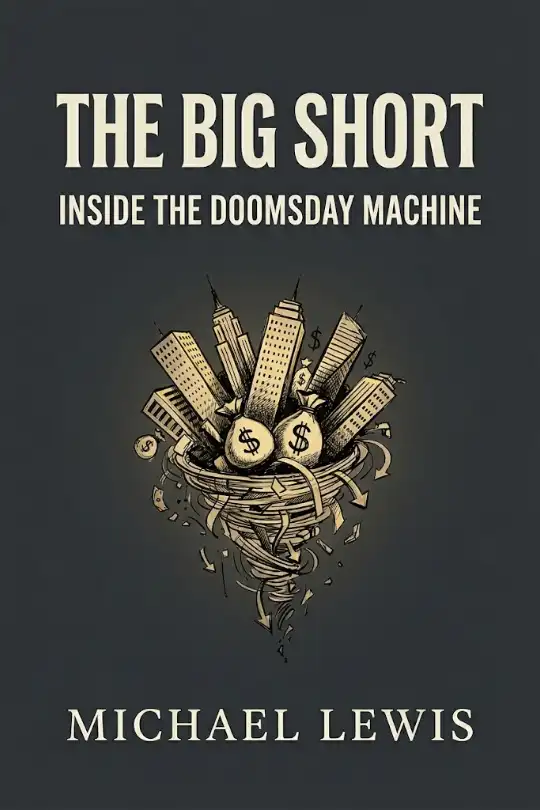
The Big Short
Inside the Doomsday Machine
Book Summary
Narrator: Ethan
Timeline
Summary Preview
In late 2007, a financial analyst named Meredith Whitney went public with a warning. Citigroup, one of the world's largest banks, was sitting on a mountain of subprime mortgage bonds. She said the bank would have to cut its dividend or face bankruptcy. The market shrugged. Citigroup's CEO insisted everything was fine.
Within months, Whitney was proven right. Citigroup was teetering. Then Bear Stearns collapsed. Then Lehman Brothers went bankrupt. Merrill Lynch was sold in a fire sale. The government pumped over a trillion dollars into the financial system to keep it from completely seizing up. The global economy plunged into the worst crisis since the Great Depression.
The crash didn't come out of nowhere. It was the result of years of financial malfeasance and incompetence at the highest levels of Wall Street. At the center of the disaster sat the subprime mortgage bond—a security that packaged bad home loans and sold them as safe investments. Banks created hundreds of billions of dollars' worth of these bonds. They fooled rating agencies, insurers, and even themselves into believing the products were rock solid.
But here's the strange part: a small number of independent investors saw it coming. They weren't insiders with access to secret information. They were outsiders—a one eyed doctor with Asperger's, a former lawyer who hated his job, two guys running a fund from a backyard shed. They studied the numbers, asked the right questions, and realized the entire system was built on a lie. They bet against the market and made fortunes.
Michael Lewis's The Big Short tells their story. It's a detective story into the origins of a disaster that was foreseeable—yet only a handful of people noticed. The book follows these investors as they dig deeper into the mysteries of subprime bonds, confront Wall Street's willful
In late 2007, a financial analyst named Meredith Whitney went public with a warning. Citigroup, one of the world's largest banks, was sitting on a mountain of subprime mortgage bonds. She said the bank would have to cut its dividend or face bankruptcy. The market shrugged. Citigroup's CEO insisted everything was fine.
Within months, Whitney was proven right. Citigroup was teetering. Then Bear Stearns collapsed. Then Lehman Brothers went bankrupt. Merrill Lynch was sold in a fire sale. The government pumped over a trillion dollars into the financial system to keep it from completely seizing up. The global economy plunged into the worst crisis since the Great Depression.
The crash didn't come out of nowhere. It was the result of years of financial malfeasance and incompetence at the highest levels of Wall Street. At the center of the disaster sat the subprime mortgage bond—a security that packaged bad home loans and sold them as safe investments. Banks created hundreds of billions of dollars' worth of these bonds. They fooled rating agencies, insurers, and even themselves into believing the products were rock solid.
But here's the strange part: a small number of independent investors saw it coming. They weren't insiders with access to secret information. They were outsiders—a one-eyed doctor with Asperger's, a former lawyer who hated his job, two guys running a fund from a backyard shed. They studied the numbers, asked the right questions, and realized the entire system was built on a lie. They bet against the market and made fortunes.
Michael Lewis's The Big Short tells their story. It's a detective story into the origins of a disaster that was foreseeable—yet only a handful of people noticed. The book follows these investors as they dig deeper into the mysteries of subprime bonds, confront Wall Street's willful ignorance, and watch the house of cards collapse around them.
How could so many smart people be so blind? And what does it take to see what everyone else refuses to see?
About the Book
This is the true story of the outsiders who predicted the 2008 financial crisis while Wall Street's smartest minds remained blind. Michael Lewis follows a one-eyed doctor with Asperger's, a crusading former lawyer, and two guys operating from a backyard shed as they uncover the subprime mortgage fraud, bet against the system, and watch the global economy collapse around them.
Key Takeaways
The outsider's isolation is the seed of their greatest insight.
Michael Burry, a one-eyed doctor with Asperger's, and the Cornwall Capital team operating from a backyard shed, saw the subprime mortgage collapse coming not despite their isolation, but because of it. Being disconnected from Wall Street's groupthink and social pressures allowed them to trust the raw data over the comforting consensus.
Willful blindness is more dangerous than simple ignorance.
The entire financial system—from bank CEOs to rating agencies—didn't just fail to see the risk; they actively refused to look. The rating agencies admitted they couldn't get data from the banks, yet continued to stamp AAA ratings on garbage, proving that the most catastrophic failures often stem from a deliberate choice not to know.
A system that rewards the wrong behavior will inevitably destroy itself.
Wall Street's transformation from cautious partnerships into public corporations created a structure where traders like Howie Hubler could lose $9 billion and still walk away rich. When people gamble with other people's money and face no personal consequences for failure, the system is engineered for collapse, not stability.
The truth is often punished before it is vindicated.
Michael Burry's investors tried to sue him and demanded their money back while his bets were underwater, only to fall silent when he delivered a 500% return. Being right before the world is ready to hear it often invites hostility, proving that foresight is a lonely and thankless burden.
Complexity is the enemy of accountability.
The CDO machine was deliberately designed to be so intricate that no one—not the bankers who created it, not the insurers who backed it, and not the regulators who watched it—could trace where the risk actually landed. When systems become too complex to understand, they become too complex to control.
The most dangerous lie is the one the liar believes.
The banks didn't just sell toxic bonds to others; they held onto huge piles for themselves, having been fooled by their own AAA ratings. The greatest deception in the financial crisis was not the fraud against investors, but the self-deception of the institutions that believed their own propaganda.
Victory is hollow when the system that fought you is never held accountable.
The outsiders who predicted the crash made fortunes, but their victory tasted like ash because no major Wall Street CEO went to jail and the government bailed out the very banks that caused the disaster. Winning the bet meant nothing when the game itself was rigged to protect the losers.
The absence of adult supervision is the market's most terrifying secret.
Cornwall Capital's founders assumed some grown-up was in charge of the financial system, only to discover after the crash that there was no one. The realization that the global economy was a casino with no security, no rules, and no consequences for the house is a profound warning that stability is often just a comforting illusion.
Who Should Listen?
Investors who want to understand how to spot systemic risk when everyone else is celebrating market euphoria.
Finance professionals who need to grasp the structural flaws in mortgage-backed securities and credit default swaps.
History and economics readers fascinated by the human stories behind the 2008 financial crisis.
Anyone who has ever felt like an outsider and wants proof that independent thinking can beat the establishment.