Hamilton
The Revolution
Book Summary
Narrator: Ethan
Timeline
Summary Preview
The year was 2009. Lin Manuel Miranda stood on a stage at the White House, invited to perform a song from his Tony winning musical In the Heights . The audience included President Barack Obama and First Lady Michelle Obama. It was a celebration of American artists, and Miranda was the closing act.
He could have played it safe. He could have sung the crowd pleaser everyone expected. Instead, he took a breath and said something that made the room chuckle in confusion.
"I'm actually working on a hip hop album," Miranda announced. "A concept album. About the life of someone who embodies hip hop. Treasury Secretary Alexander Hamilton."
The audience laughed. It sounded absurd. A founding father rapping? A Treasury secretary as a hip hop subject? But Miranda didn't flinch. He explained that Hamilton was a poor, orphaned immigrant who had become one of the most influential figures in American history. He represented the idea that one person could change everything.
Then he performed the song "Alexander Hamilton." When he finished, the room rose to its feet. Standing ovation.
That moment launched a project that would become a global phenomenon. But here's the thing: Miranda hadn't written a musical yet. He had a concept album idea called The Hamilton Mixtape . He had a few songs. He had a dream that most people thought was crazy. What he didn't have was a script, a cast, a director, or any guarantee that hip hop could work on Broadway.
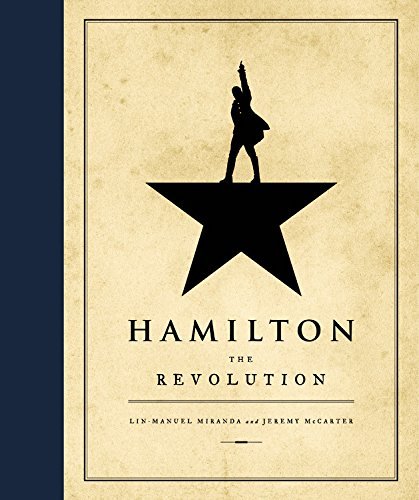
The book Hamilton: The Revolution documents everything that happened next. It's not a typical book about a musical. It's a hybrid: the complete libretto of the show, printed alongside essays by drama critic Jeremy McCarter, with annotations by Miranda himself. The essays tell the story of how the musical was created. The
The year was 2009. Lin-Manuel Miranda stood on a stage at the White House, invited to perform a song from his Tony-winning musical In the Heights. The audience included President Barack Obama and First Lady Michelle Obama. It was a celebration of American artists, and Miranda was the closing act.
He could have played it safe. He could have sung the crowd-pleaser everyone expected. Instead, he took a breath and said something that made the room chuckle in confusion.
"I'm actually working on a hip-hop album," Miranda announced. "A concept album. About the life of someone who embodies hip-hop. Treasury Secretary Alexander Hamilton."
The audience laughed. It sounded absurd. A founding father rapping? A Treasury secretary as a hip-hop subject? But Miranda didn't flinch. He explained that Hamilton was a poor, orphaned immigrant who had become one of the most influential figures in American history. He represented the idea that one person could change everything.
Then he performed the song "Alexander Hamilton." When he finished, the room rose to its feet. Standing ovation.
That moment launched a project that would become a global phenomenon. But here's the thing: Miranda hadn't written a musical yet. He had a concept album idea called The Hamilton Mixtape. He had a few songs. He had a dream that most people thought was crazy. What he didn't have was a script, a cast, a director, or any guarantee that hip-hop could work on Broadway.
The book Hamilton: The Revolution documents everything that happened next. It's not a typical book about a musical. It's a hybrid: the complete libretto of the show, printed alongside essays by drama critic Jeremy McCarter, with annotations by Miranda himself. The essays tell the story of how the musical was created. The annotations reveal what Miranda was thinking when he wrote each line. Together, they create a dual narrative—the story of Alexander Hamilton's life and the story of how that life became a Broadway revolution.
The book's central idea is simple but profound: history is subjective. It's shaped by the person who tells the story. Miranda discovered this firsthand when he met historian Ron Chernow, whose biography of Hamilton had inspired the whole project. At one point, Miranda and Chernow realized they remembered their first meeting differently. Miranda was delighted. "History is entirely created by the person who tells the story," he said. That insight runs through every page of the book.
The structure mirrors the show itself. Each act of the musical is printed in full, with Miranda's footnotes running alongside. Between scenes, McCarter's chapters dive into the creative process: how Miranda met his collaborators, how the choreography evolved, how the sound design had to be reimagined for rap lyrics, how the casting of Black and Latino actors became a deliberate statement about "America then, told by America now."
The book opens with that White House performance because it marks the moment when a crazy idea became real. Miranda had been carrying the seed for years. He'd read Chernow's biography on vacation and realized that Hamilton's story—an orphan immigrant who wrote his way to power—was fundamentally hip-hop. The genre is built on ambition, defiance, and the drive to rise from nothing. Hamilton lived that. But it took that risky performance in front of the president to set the wheels in motion.
From there, the book traces how Miranda gathered a team. Director Tommy Kail pushed him to finish the songs. Choreographer Andy Blankenbuehler created a movement language that could express both battle and bureaucracy. Scenic designer David Korins built a set with two turntables that made time itself feel fluid. Each collaborator added something essential.
The annotations are where Miranda's voice comes through most clearly. He points out historical inaccuracies he deliberately chose to include. He explains why certain rhymes exist. He admits when he forgot something and had to invent a reason for it later. There's no pretense of objectivity. This is a creator explaining his choices, and those choices reveal how all history is curated.
By the end of the book, the parallel between Hamilton's life and Miranda's is unmistakable. Both were prodigies who wrote their way to prominence. Both were immigrants or children of immigrants who saw America as a place of possibility. But there's a crucial difference. Hamilton's ambition destroyed his family and led to his death. Miranda, by contrast, built a team, nurtured relationships, and found a way to balance work with love. The book suggests that Miranda learned from Hamilton's mistakes. He didn't have to throw away his shot to succeed.
That White House performance was just the beginning. But it contains everything that makes Hamilton remarkable: the audacity to try something new, the faith that a story about a dead founder could feel urgent, and the belief that how you tell history matters as much as what happened.
So Miranda stood in the East Room, rapping about a man who had been dead for two centuries. The audience laughed, then listened, then stood. And a revolution began.
What would it take for you to risk everything on a story only you can tell?
About the Book
This book reveals the parallel journeys of Alexander Hamilton and Lin-Manuel Miranda, weaving the complete libretto with behind-the-scenes essays and annotations. It documents how a risky hip-hop concept about a founding father became a cultural phenomenon, exploring how history is shaped by storytellers and why representation matters in reimagining America's narrative.
Key Takeaways
History is a living conversation, not a fixed record.
The book reveals that Miranda's delight in discovering he and historian Ron Chernow remembered their first meeting differently became a core philosophy: every storyteller shapes the past. This insight frees us to reimagine history not as a static truth, but as a dynamic dialogue between what happened and who is telling it now.
The audacity to risk everything on a story only you can tell.
Miranda stood before the President and performed a rap about a dead Treasury secretary, knowing the audience would initially laugh—yet he trusted his singular vision. This teaches that profound impact often begins with the courage to share an idea that seems absurd to everyone except its creator.
True legacy is built not by the person who lives it, but by those who preserve and retell it.
Eliza Hamilton spent fifty years after her husband's death shaping his narrative, founding an orphanage, and organizing his papers—proving that the final author of any life's story is not the one who lived it, but the one who ensures it survives.
Ambition without connection destroys; ambition with community transforms.
Hamilton's relentless drive cost him his family and his life, while Miranda built a team of collaborators who grounded him and nurtured his relationships. The contrast shows that greatness is sustainable only when it is balanced by love, presence, and shared purpose.
Representation is not decoration—it is a declaration of who belongs.
By casting Black and Latino actors as the founding fathers, the creative team made a deliberate statement that America's story belongs to everyone. The student who said 'It made me feel good about being American, like I belong here' proves that who tells the story is as important as the story itself.
Constraints are not obstacles—they are the raw material for breakthroughs.
The dual turntable, the need for crystal-clear rap lyrics, and the challenge of choreographing a sung-through hip-hop musical forced the team to invent new solutions. The spinning stage and hidden speakers became the show's secret weapons, proving that limitations can spark the most original creativity.
The most powerful 'I want' song is the one that admits what you are willing to lose.
Hamilton's 'My Shot' is a declaration of total ambition, but the musical's arc reveals that every 'yes' to legacy is a 'no' to something else—family, peace, safety. The insight is that true desire is defined not just by what you chase, but by what you are willing to sacrifice.
Forgiveness is not an explanation—it is a shared silence that becomes a new beginning.
After their son's death, Hamilton and Eliza find no words adequate for their grief; instead, they walk in silence uptown, and forgiveness arrives through shared loss, not apology. This teaches that the deepest healing often happens not through speech, but through the quiet decision to stay together in the wreckage.
Who Should Listen?
Musical theater fans who want to understand how a hip-hop show about a founding father broke every Broadway rule and became a global phenomenon.
History buffs curious about how creative liberties can make the past feel urgent, alive, and relevant to modern audiences.
Aspiring artists and writers who need proof that a seemingly crazy idea—like rapping about a Treasury secretary—can succeed with the right team and relentless belief.
Immigrants or children of immigrants who will see their own struggle and ambition reflected in Hamilton's story and Miranda's journey.