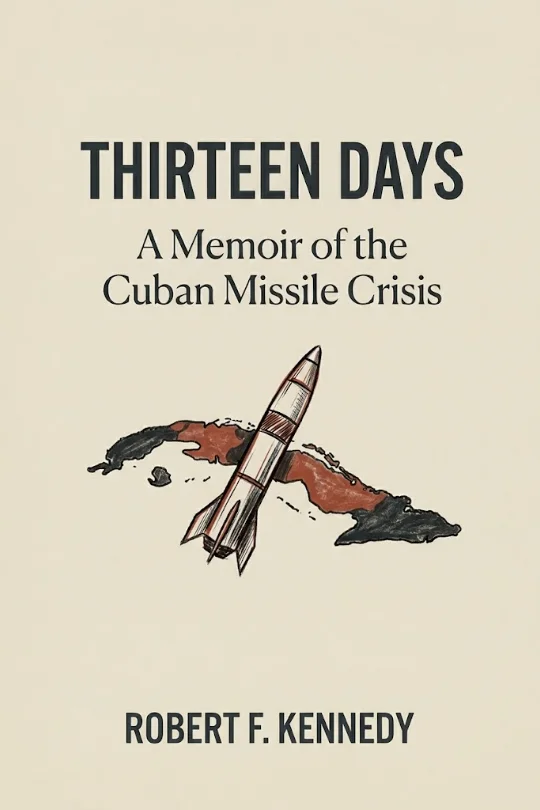
Thirteen Days
A Memoir of the Cuban Missile Crisis
Book Summary
Narrator: Ethan
Timeline
Summary Preview
The morning of Tuesday, October 16, 1962, began like any other for Robert F. Kennedy. He was the Attorney General of the United States, but more than that, he was the President's brother—his closest confidant, the man who could speak to him without ceremony or pretense. That Tuesday, President Kennedy summoned him to the White House for a private meeting. What he learned in that room would consume the next thirteen days of his life, and nearly the rest of the world's.
The President showed him the photographs. U 2 spy planes had flown over Cuba and captured something terrifying: Soviet engineers were constructing missile sites. Nuclear missile sites. The photographs showed launch pads, support equipment, and the telltale shapes of medium range ballistic missiles capable of reaching American cities. "This was the beginning of the Cuban Missile Crisis," Robert Kennedy would later write—"a confrontation between the two giant atomic nations, the U.S. and the U.S.S.R., which brought the world to the abyss of nuclear destruction."
Robert Kennedy was not just any official learning about a national security crisis. He was the President's brother, and he saw the weight settle on his brother's shoulders. The President trusted him absolutely, and in the days ahead, Robert Kennedy would serve as a bridge between the President and the men advising him. He would argue, persuade, and carry messages that could mean peace or war. His account of those thirteen days, written five years later, is not a historian's analysis or a journalist's reconstruction. It is a firsthand narrative from someone who sat in every meeting, participated in every debate, and watched his brother make decisions that held the fate of humanity.
The book covers the full arc of the crisis: the discovery of the missiles, the furious debate over how to respond,
The morning of Tuesday, October 16, 1962, began like any other for Robert F. Kennedy. He was the Attorney General of the United States, but more than that, he was the President's brother—his closest confidant, the man who could speak to him without ceremony or pretense. That Tuesday, President Kennedy summoned him to the White House for a private meeting. What he learned in that room would consume the next thirteen days of his life, and nearly the rest of the world's.
The President showed him the photographs. U-2 spy planes had flown over Cuba and captured something terrifying: Soviet engineers were constructing missile sites. Nuclear missile sites. The photographs showed launch pads, support equipment, and the telltale shapes of medium-range ballistic missiles capable of reaching American cities. "This was the beginning of the Cuban Missile Crisis," Robert Kennedy would later write—"a confrontation between the two giant atomic nations, the U.S. and the U.S.S.R., which brought the world to the abyss of nuclear destruction."
Robert Kennedy was not just any official learning about a national security crisis. He was the President's brother, and he saw the weight settle on his brother's shoulders. The President trusted him absolutely, and in the days ahead, Robert Kennedy would serve as a bridge between the President and the men advising him. He would argue, persuade, and carry messages that could mean peace or war. His account of those thirteen days, written five years later, is not a historian's analysis or a journalist's reconstruction. It is a firsthand narrative from someone who sat in every meeting, participated in every debate, and watched his brother make decisions that held the fate of humanity.
The book covers the full arc of the crisis: the discovery of the missiles, the furious debate over how to respond, the tense naval blockade, the diplomatic exchanges with Soviet leader Nikita Khrushchev, and finally the resolution that pulled the world back from the edge. But more than a chronological account, Thirteen Days carries a core message about leadership. Robert Kennedy argues that the crisis was resolved peacefully because of three things: the time the President's advisors had to deliberate in secret, the President's insistence on understanding the Soviet perspective, and his willingness to question military recommendations.
The book is short—about forty pages of narrative—but its impact has been enormous. Written in sections that read like diary entries, it gives readers a window into the Cabinet Room during the most dangerous days of the Cold War. Robert Kennedy does not pretend to be objective. He admires his brother deeply. He believes the blockade was the right choice. He is critical of military leaders who pushed for immediate airstrikes. But his account rings with authenticity because he was there, because he felt the pressure, and because he knew what was at stake.
That Tuesday morning, as Robert Kennedy stood in the President's office looking at the U-2 photographs, he understood something that would guide him through the coming days. The Soviet Union had lied. Just weeks earlier, Soviet Ambassador Anatoly Dobrynin had assured him personally that the Soviet Union would never put offensive weapons in Cuba. The photographs proved those assurances were false. The missiles were there, and they were being assembled at an alarming pace. The question was not whether the United States would respond. The question was how—and whether the response would trigger a nuclear war.
What made this moment different from other Cold War crises was the speed at which events moved. The missile sites would be operational within days. Once they were, the Soviet Union could strike American cities with little warning. The President and his advisors had to decide on a course of action before the missiles were ready, and they had to do it in secret. If the press learned what was happening, the pressure for immediate military action would become overwhelming. If the Soviets discovered that the United States knew about the missiles, they might accelerate their efforts or take preemptive measures.
So the President convened a group of top officials—cabinet members, military leaders, intelligence experts—to advise him. This group would later be called the Executive Committee of the National Security Council, or Ex Comm. They met nearly nonstop for thirteen days. They argued, debated, and sometimes fought. But they did it behind closed doors, away from the press and the public. Robert Kennedy credits this secrecy with giving them the time they needed to find a peaceful solution.
The book's structure reflects the intensity of those days. Each section begins with a date or a key moment, moving the reader through the crisis hour by hour. There is no lengthy introduction, no philosophical preamble. Robert Kennedy throws the reader directly into the action, starting with that Tuesday morning when everything changed. From there, the narrative follows the Ex Comm's deliberations, the decision to impose a blockade, the tense confrontation at sea, the confusing exchange of letters with Khrushchev, and finally the breakthrough that ended the crisis.
But Thirteen Days is not just a story about what happened. It is a story about how decisions were made. Robert Kennedy emphasizes the President's leadership style: his willingness to listen to opposing views, his insistence on questioning assumptions, his refusal to be stampeded into war. The President deliberately absented himself from some Ex Comm meetings to allow free debate. He wanted his advisors to argue openly, without worrying about his reaction. He understood that groupthink could be fatal, that unanimity of opinion was dangerous when the stakes were this high.
Robert Kennedy also makes clear the moral dimensions of the crisis. The debate between a blockade and an airstrike was not just strategic—it was ethical. An airstrike would kill thousands of innocent Cubans. It would be a surprise attack by a large nation against a small one. It would damage America's moral standing in the world. Robert Kennedy supported the blockade in part because he could not accept the idea of bombing civilians. "That kind of surprise attack," he wrote, "would erode if not destroy the moral position of the United States throughout the world."
The book ends with Robert Kennedy's reflections on what the crisis taught him. He lists several lessons: the importance of time for secret deliberation, the value of exposing the President to diverse perspectives, the need for civilian control over military recommendations, and above all, the necessity of understanding the other side's point of view. President Kennedy spent as much time trying to see the situation from Khrushchev's perspective as he did planning America's response. He gave the Soviet leader room to retreat without humiliation. He understood that Khrushchev was under pressure too, and that pushing him into a corner could trigger a war neither side wanted.
These lessons were not abstract for Robert Kennedy. He lived them. He watched his brother refuse to retaliate when a U-2 pilot was shot down. He watched him order the Navy to give Soviet ships more time to turn back. He watched him insist on answering Khrushchev's more reasonable letter rather than the one that demanded an impossible trade. And in the end, he watched the crisis dissolve not because of military superiority, but because of restraint, patience, and empathy.
Thirteen Days is a short book, but it carries an enormous weight. It was published in 1968, after Robert Kennedy's own assassination, and it stands as both a historical document and a personal testament. It captures a moment when the world came closer to nuclear war than at any other time in history—and it shows how that war was averted by leaders who refused to let events spiral out of control.
The story begins with a private meeting in the President's office, where two brothers looked at photographs and understood that everything had changed. What happened next was not inevitable. It was the result of choices, debates, and decisions made by people who knew that one wrong move could mean the end of everything. How did they navigate those thirteen days? What arguments shaped their thinking? And what made the difference between war and peace?
The answers start with that Tuesday morning—and with the men who gathered in the White House to decide the fate of the world.
About the Book
In October 1962, the world stood hours from nuclear annihilation. Robert F. Kennedy, the President's brother and closest advisor, offers a gripping firsthand account of the thirteen days that decided humanity's fate. From secret debates over air strikes to tense naval confrontations and Khrushchev's cryptic letters, this is the definitive inside story of leadership, moral courage, and the empathy that pulled us back from the abyss.
Key Takeaways
Secrecy is the shield that protects wisdom from the tyranny of public pressure.
The crisis was resolved not through immediate action, but through secret deliberation that gave leaders the time to explore options, change their minds, and find peaceful solutions before the weight of public opinion forced them into irreversible decisions.
Civilian leadership must question military advice, because strategy without morality is a path to catastrophe.
President Kennedy consistently challenged the military's recommendations for immediate force, understanding that the narrow perspective of military necessity must be balanced against broader political, ethical, and human consequences.
True strength lies not in cornering an adversary, but in giving them a dignified path to retreat.
By understanding Khrushchev's pressures and offering private assurances rather than public humiliation, President Kennedy created space for a peaceful resolution that saved face for the Soviet leader and prevented a war neither side wanted.
The most dangerous miscalculation is believing your enemy is a madman rather than a human being under pressure.
President Kennedy spent more time trying to understand the situation from Khrushchev's perspective than on any other aspect of decision-making, recognizing that empathy—not aggression—was the key to avoiding the chain reaction of misunderstanding that leads to war.
Allies transform unilateral action into legitimate authority, and isolation is the luxury of those who have never faced annihilation.
The support of the Organization of American States and NATO turned the American blockade from an act of war into a lawful quarantine, proving that in moments of existential crisis, the strength of alliances matters as much as military power.
The moral cost of action must be weighed as heavily as its strategic benefit.
Robert Kennedy's refusal to accept a surprise attack on Cuba—because it would 'destroy the moral position of the United States throughout the world'—forced the committee to confront the ethical dimensions of their choices, ultimately steering them away from a path that would have killed thousands of innocent civilians.
A leader's greatest gift is the willingness to step back and let others argue freely.
By deliberately absenting himself from Ex Comm meetings, President Kennedy created an environment where rank and deference dissolved, allowing his advisors to challenge each other openly and produce better decisions than any single mind could have achieved.
War is rarely chosen; it is stumbled into through a chain of small, irreversible steps.
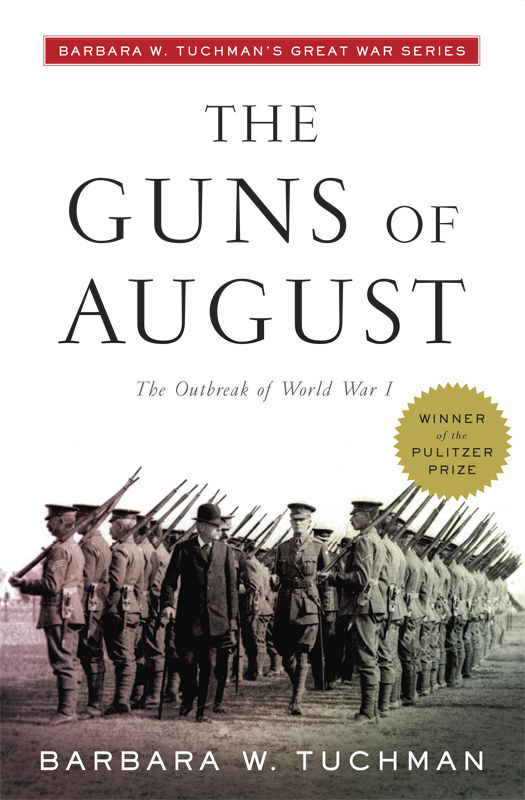
President Kennedy's study of *The Guns of August* taught him that the greatest danger was not deliberate aggression but miscalculation—a series of escalating responses that no one intended but no one could stop, which is why he insisted on breaking the chain before it began.
Who Should Listen?
History buffs who want a raw, unfiltered eyewitness account of the Cuban Missile Crisis from someone who sat in every meeting.
Leaders and managers seeking a real-world case study on how to make high-stakes decisions under impossible pressure with limited information.
Military and foreign policy professionals interested in the critical tension between civilian leadership and military recommendations during a crisis.
Anyone anxious about modern nuclear threats who wants to understand how rational leaders once averted catastrophe through restraint and empathy.