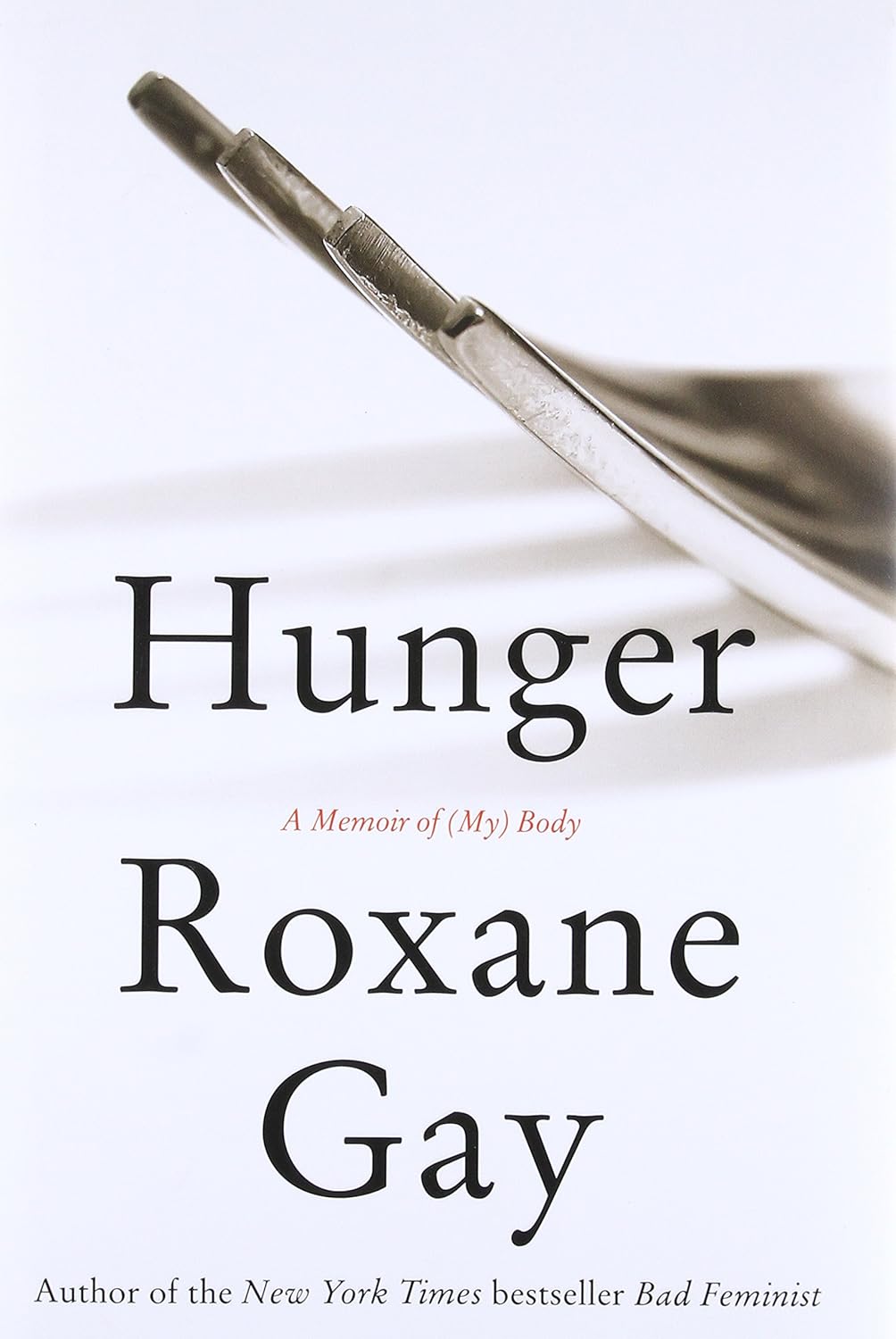
Hunger
A Memoir of (My) Body
Book Summary
Narrator: Ethan
Timeline
Summary Preview
This book opens with a confession. Roxane Gay tells us straight away that this is not a story about triumph. There will be no dramatic weight loss at the end, no moment where she finally becomes acceptable to a world that has spent decades telling her she is not. Instead, this is a book about her body—what happened to it, what she did to it, and what it means to live in a body that society has decided is wrong.
Gay describes her body as "unruly." It is a word she returns to throughout the memoir, and it captures something essential about her experience. Her body does not behave the way it should. It does not conform to expectations. It takes up space in ways that make other people uncomfortable. And she knows this. She has always known this. The world has made sure she knows it.
But here is the crucial thing: Gay's unruly body did not simply happen to her. She built it. Not out of laziness or lack of willpower, but out of a desperate need for protection. When she was twelve years old, a boy she trusted—someone she called her boyfriend—led her to an isolated cabin where he and his friends gang raped her. That single act split her life into before and after. And in the after, she made a choice. She would make herself undesirable. She would become so large that no man would ever want to hurt her again.
The book is a confession, Gay admits. She feels compelled to share this story, even though it is painful, even though it exposes her to judgment. She is telling us things she has spent decades hiding. And she is doing it because she wants us to understand something about the world we live in—a
This book opens with a confession. Roxane Gay tells us straight away that this is not a story about triumph. There will be no dramatic weight loss at the end, no moment where she finally becomes acceptable to a world that has spent decades telling her she is not. Instead, this is a book about her body—what happened to it, what she did to it, and what it means to live in a body that society has decided is wrong.
Gay describes her body as "unruly." It is a word she returns to throughout the memoir, and it captures something essential about her experience. Her body does not behave the way it should. It does not conform to expectations. It takes up space in ways that make other people uncomfortable. And she knows this. She has always known this. The world has made sure she knows it.
But here is the crucial thing: Gay's unruly body did not simply happen to her. She built it. Not out of laziness or lack of willpower, but out of a desperate need for protection. When she was twelve years old, a boy she trusted—someone she called her boyfriend—led her to an isolated cabin where he and his friends gang-raped her. That single act split her life into before and after. And in the after, she made a choice. She would make herself undesirable. She would become so large that no man would ever want to hurt her again.
The book is a confession, Gay admits. She feels compelled to share this story, even though it is painful, even though it exposes her to judgment. She is telling us things she has spent decades hiding. And she is doing it because she wants us to understand something about the world we live in—a world that treats fat bodies as public property, as problems to be solved, as evidence of moral failure.
Gay challenges fatphobia directly. She points out that society has created a whole vocabulary for punishing fat people: "thunder thighs," "muffin tops," "plus-size." These terms are not neutral descriptions. They are weapons. They remind people in fat bodies that they are abnormal, that they are taking up too much space, that they should be ashamed. The world tells fat people they must hate themselves, and if they do not, something is wrong with them.
But Gay refuses to play that game. She does not hate her body, even though she struggles with it. What she hates is how the world responds to her body. She wants to change the culture that makes her existence so difficult. She wants to walk down the street without men shouting insults from car windows. She wants to board an airplane without dreading whether the seat will fit. She wants to go to a restaurant and not have to squeeze into a chair that was not made for someone her size.
And yet, she also wants to lose weight. This is the contradiction at the heart of the memoir. Gay knows intellectually that her body is not the problem—that the problem is a culture obsessed with thinness. But she also lives in that culture. She has internalized its messages. She wants to be smaller because being smaller would make her life easier. It would give her more choices. It would mean she could buy clothes she actually likes. It would mean she could hike with friends without worrying about her physical limits.
She does not pretend this contradiction is easy to resolve. She lives in it every day.
The story she tells is one of trauma and the slow, painful work of moving toward acceptance. There is no happy ending where she finally learns to love her body completely. Instead, there is something more honest: a woman who has been through something terrible, who built walls around herself to survive, and who is now trying to figure out how to tear those walls down. She calls it "undestroying" herself—a process that has nothing to do with weight loss and everything to do with learning to be vulnerable, to let herself be seen, to stop hiding.
So what does it mean to confess something like this? What does it take to write a book that lays bare your deepest shame, your most private pain, your ongoing struggle to make peace with your own skin? And what happens when you finish telling the story—do you finally feel free, or do you just feel exposed?
About the Book
Roxane Gay's memoir is a raw confession about her body, trauma, and hunger for acceptance after being gang-raped at twelve. She built a fortress with food to feel safe, but that fortress became a cage. This is not a story of triumph or weight loss, but of learning to tear down walls and undestroy herself.
Key Takeaways
Trauma can fracture a life into before and after, and the body becomes a battlefield for survival.
Roxane Gay's life split irrevocably after being gang-raped at twelve, forcing her to build a physical fortress of weight to become undesirable and safe, illustrating how profound trauma can reshape identity and the body into a tool for protection.
The body can be both a fortress and a cage, offering safety while imprisoning the self.
Gay's deliberate weight gain protected her from male desire but also trapped her in loneliness, shame, and a body that made navigating the world painful, revealing that survival strategies can become their own form of suffering.
Society's taxonomy of shame weaponizes language to punish fat bodies and enforce a hierarchy of worth.
Terms like 'thunder thighs' and 'muffin tops' are not neutral descriptions but tools of public judgment, reminding fat people they are abnormal and transforming their bodies into public property subject to constant scrutiny.
Healing requires sitting in the contradiction of wanting to change your body while also seeking acceptance of it.
Gay honestly navigates the tension between intellectually knowing her body is not the problem and still wanting to lose weight for ease and freedom, showing that self-acceptance is not a binary but a messy, ongoing negotiation.
Trauma distorts the ability to receive love, causing survivors to seek out relationships that confirm their worthlessness.
Gay gravitated toward people who used and disrespected her because she believed she deserved nothing better, demonstrating how deep shame can create a self-fulfilling cycle of toxic relationships that reinforce a shattered sense of self.
Vulnerability is the door through which genuine love and healing can enter, even after decades of walls.
A broken ankle forced Gay into helplessness, and her family's unconditional presence cracked her armor, teaching her that gentleness can be genuine and that allowing herself to be seen is the first step toward freedom.
Undestroying yourself is not about becoming new, but about recovering the person buried beneath survival mechanisms.
Gay reframes healing as 'undestroying'—removing the walls built for protection rather than rebuilding from scratch, a process of reclaiming the vulnerable, joyful self that existed before trauma taught her to hide.
True freedom comes not from fixing the body, but from ceasing to apologize for its existence and taking up space unashamed.
The memoir's power lies in Gay's refusal to offer a triumphant weight-loss narrative; instead, she models liberation through honesty, vulnerability, and the radical act of liking herself despite a culture that insists she should not.
Who Should Listen?
Readers who have experienced trauma and struggle with their relationship with food and body image.
Anyone who has ever felt judged or shamed for their body size and wants a voice that validates their experience.
People interested in a nuanced critique of fatphobia and society's obsession with thinness.
Survivors of sexual assault seeking a memoir that explores the long-term psychological aftermath without offering easy answers.