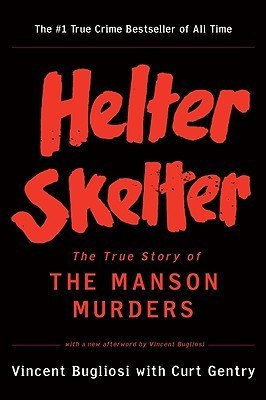
Helter Skelter
The True Story of the Manson Murders
Book Summary
Narrator: Ethan
Timeline
Summary Preview
On the morning of August 9, 1969, housekeeper Winnifred Chapman arrived for work at 10050 Cielo Drive, a secluded rental home in the hills above Beverly Hills. She walked into a nightmare. Bodies everywhere. Blood on the walls. The word "PIG" scrawled in blood on the front door.
Five people were dead. Sharon Tate, a young actress eight months pregnant. Jay Sebring, a famous hairstylist and Tate's former lover. Abigail Folger, heiress to the Folger coffee fortune. Voytek Frykowski, a Polish friend of Tate's husband, film director Roman Polanski. And Steven Parent, an eighteen year old who'd simply been visiting the wrong person at the wrong time.
The scene was almost beyond comprehension. Parent had been shot four times. Sebring was stabbed seven times and shot. Tate herself had been stabbed sixteen times. Folger and Frykowski had tried to escape—Folger received twenty eight stab wounds, Frykowski an extraordinary fifty one. The killers had cut the phone lines, stolen almost nothing, and left that single word in blood: "PIG."
Chapman ran screaming to a neighbor's door, yelling "Murder, death, bodies, blood!"
This is where Vincent Bugliosi begins his account. And he's not just any writer telling this story. He was the lead prosecutor who built the case against Charles Manson and his followers. His book, Helter Skelter , is the definitive insider account of the murders, the investigation, and the trial that followed—one of the most sensational in American history.
The core of Bugliosi's argument is that these murders weren't random violence. They were ordered by one man: Charles Manson. And the motive was something so bizarre that it took months for investigators to even begin to understand it.
Manson led a cult known as "the Family"—a group of roughly twenty followers living together at Spahn Ranch, an abandoned movie set
On the morning of August 9, 1969, housekeeper Winnifred Chapman arrived for work at 10050 Cielo Drive, a secluded rental home in the hills above Beverly Hills. She walked into a nightmare. Bodies everywhere. Blood on the walls. The word "PIG" scrawled in blood on the front door.
Five people were dead. Sharon Tate, a young actress eight months pregnant. Jay Sebring, a famous hairstylist and Tate's former lover. Abigail Folger, heiress to the Folger coffee fortune. Voytek Frykowski, a Polish friend of Tate's husband, film director Roman Polanski. And Steven Parent, an eighteen-year-old who'd simply been visiting the wrong person at the wrong time.
The scene was almost beyond comprehension. Parent had been shot four times. Sebring was stabbed seven times and shot. Tate herself had been stabbed sixteen times. Folger and Frykowski had tried to escape—Folger received twenty-eight stab wounds, Frykowski an extraordinary fifty-one. The killers had cut the phone lines, stolen almost nothing, and left that single word in blood: "PIG."
Chapman ran screaming to a neighbor's door, yelling "Murder, death, bodies, blood!"
This is where Vincent Bugliosi begins his account. And he's not just any writer telling this story. He was the lead prosecutor who built the case against Charles Manson and his followers. His book, Helter Skelter, is the definitive insider account of the murders, the investigation, and the trial that followed—one of the most sensational in American history.
The core of Bugliosi's argument is that these murders weren't random violence. They were ordered by one man: Charles Manson. And the motive was something so bizarre that it took months for investigators to even begin to understand it.
Manson led a cult known as "the Family"—a group of roughly twenty followers living together at Spahn Ranch, an abandoned movie set outside Los Angeles. He had spent most of his life in prison. He was obsessed with the Beatles, Scientology, and Nazi imagery. And he had developed a twisted apocalyptic fantasy he called "Helter Skelter."
His belief, as Bugliosi pieced it together, was that a race war was coming. The Black Panthers would rise up and slaughter white America. Manson's job was to start that war by committing murders that would be blamed on Black militants. Then he and his Family would hide out in the desert, emerge after the war, and rule the world.
It sounds insane. But Bugliosi argues that Manson genuinely believed it. And he convinced his followers to believe it too.
The challenge for Bugliosi was enormous. Manson hadn't been present at the murders. His followers—Susan Atkins, Patricia Krenwinkel, Leslie Van Houten, and Charles "Tex" Watson—had done the actual killing. To convict Manson, Bugliosi had to prove that he ordered the murders, that he controlled his followers absolutely, and that the "Helter Skelter" fantasy was the motive.
This required using conspiracy law. Under the "vicarious liability" rule, if someone orders a murder as part of a criminal conspiracy, they're as guilty as the person who pulls the trigger—even if they're miles away.
But proving that required evidence. And the evidence was a mess.
The initial police response to the Tate crime scene was chaotic. Officers tracked blood through the house. Evidence was moved. The forensic chemist, Joe Granado, took incomplete samples and ran blood subtypes on only twenty-one of the forty-five samples he collected. The caretaker, William Garretson, was found sleeping in the guest house just yards from the murders. Police knocked him down, handcuffed him, dragged him across the lawn—then later released him when they couldn't connect him to the crimes.
The next night, just a few miles away, the same killers murdered Leno and Rosemary LaBianca in their home. The scene was equally gruesome: multiple stab wounds, blood-written messages reading "DEATH TO PIGS" and "RISE," and the misspelled "HEALTER SKELTER" scrawled on the wall. Leno had a knife and fork sticking out of his body.
Despite the obvious similarities, separate LAPD teams investigated each case with almost no communication. The Tate detectives focused on a drug angle. The LaBianca detectives looked into gambling connections. As Bugliosi writes, both teams were operating on a basic assumption: in nearly ninety percent of all homicides, the victim knows their killer. That assumption kept them from seeing the truth.
It took months for the cases to connect. And when they finally did, it was because of something almost unbelievable: Susan Atkins, one of the killers, started bragging about the murders to her cellmates. She described the crime scenes in intimate detail. She showed no remorse. She told her fellow inmates that she had "a real love in your heart to do this for people."
That boastfulness, that need to be recognized for what she'd done, broke the case open. Without it, Bugliosi admits, the murders might have remained a mystery.
But even with Atkins's confessions, building a case against Manson himself required something more. It required understanding what drove him. And that meant entering a world that most people—including the police—simply couldn't comprehend.
What kind of man could convince young women to commit murder for him? What kind of hold did he have over them? And what did the Beatles' White Album have to do with any of it?
The answers would take Bugliosi down a path stranger than anything he'd encountered in his career. And they would lead to a trial that turned the Los Angeles courtroom into a circus, with Manson carving an X into his own forehead, his followers doing the same, and the entire nation watching in horror and fascination.
But before any of that could happen, Bugliosi had to find a way to prove that Manson's delusion was real—and that it had cost seven people their lives.
How do you prove that a man who wasn't at the scene of the crime ordered the murders? How do you prove that a fantasy about a race war was the motive? And how do you convince a jury that the smiling, long-haired young women sitting in the courtroom were capable of such brutality?
That's the story Bugliosi set out to tell. And it begins with a housekeeper walking into a house in Beverly Hills on a quiet August morning, finding bodies everywhere, and screaming for help.
About the Book
Lead prosecutor Vincent Bugliosi takes you inside the Tate-LaBianca murders and the trial that followed. This is the true story of how Charles Manson controlled his followers, the bizarre 'Helter Skelter' race war motive, and the legal battle to convict a man who wasn't at the crime scene. A gripping, chilling account of one of America's most infamous cases.
Key Takeaways
Evil is not born from monsters, but from broken systems that fail the vulnerable.
Charles Manson was not a supernatural villain but a product of a failed foster care system, revolving-door prisons, and absent mental health support—a man who begged to stay incarcerated because he couldn't handle the outside world, revealing that society's neglect can cultivate the very horrors it fears.
Charisma without conscience is a weapon that can weaponize love itself.
Manson's power lay not in force but in his ability to make followers feel seen, chosen, and loved—transforming their desperate need for belonging into absolute obedience, proving that the most dangerous manipulation often wears the mask of affection.
The most terrifying crimes are not those of passion, but those committed with cold ideology.
The murders were not random violence but calculated acts designed to ignite a race war—showing that when human beings are reduced to symbols in someone's apocalyptic fantasy, their lives become expendable in the service of a delusion.
Truth can emerge from the most unlikely and flawed witnesses.
Linda Kasabian, a drug-using runaway who abandoned her child, became the prosecution's star witness—her imperfect life did not invalidate her testimony, reminding us that the truth is not reserved for the virtuous, and that redemption can begin with a single honest act.
Justice requires the courage to believe the unbelievable.
Prosecutor Bugliosi had to convince a jury that a bizarre fantasy about Beatles songs and a race war was the motive for murder—proving that sometimes the truth is stranger than fiction, and that justice demands we confront realities that defy our comfortable assumptions.
The desire for recognition can undo even the most careful criminals.
Susan Atkins' need to brag about the murders to her cellmates broke the case wide open—a stark reminder that the human hunger for validation and notoriety often overrides self-preservation, and that silence is the only safe companion for guilt.
A trial can become a stage where the guilty perform their innocence.
Manson turned the courtroom into a circus—carving an X into his forehead, orchestrating coordinated disruptions, and using the media as his amplifier—demonstrating that when the justice system becomes a spectacle, the accused can manipulate the very process meant to hold them accountable.
The end of an era is often written in blood before it is understood in history.
The Manson murders marked the violent death of the 1960s counterculture—the promise of peace and love shattered by a cult that weaponized those ideals—reminding us that cultural shifts are not gentle transitions but often violent ruptures that only make sense in retrospect.
Who Should Listen?
True crime enthusiasts who want the definitive, firsthand account of the Manson case from the prosecutor who built the conspiracy case.
Criminal justice students and legal professionals interested in how conspiracy law and vicarious liability can convict a mastermind without direct physical evidence.
Psychology and sociology readers fascinated by cult dynamics, charismatic leadership, and how a group of young followers could be manipulated into committing murder.
History buffs seeking to understand how the Manson murders marked the violent end of the 1960s counterculture era and shaped American paranoia.