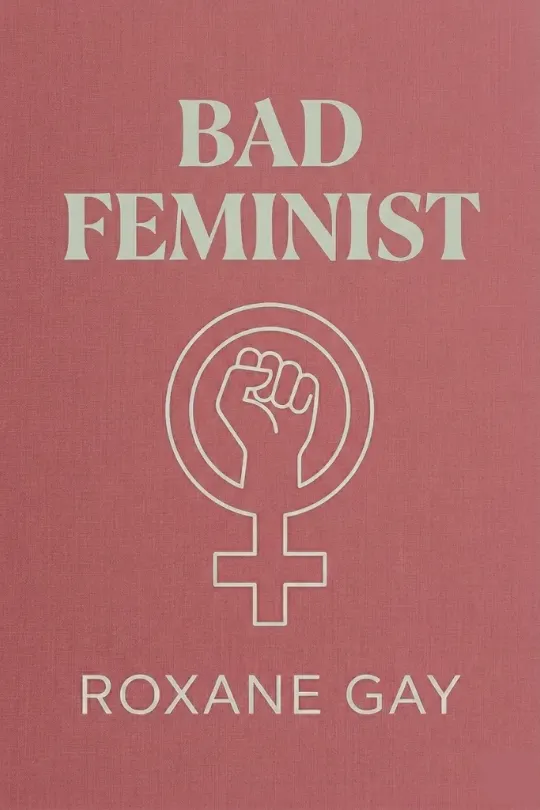
Bad Feminist
Book Summary
Narrator: Ethan
Timeline
Summary Preview
Roxane Gay has a confession to make. She loves the color pink. She wears dresses. She doesn't know the first thing about cars. And she genuinely enjoys listening to music that, by any reasonable standard, is deeply misogynistic.
By the strict rules of what she calls "essential feminism," these things should disqualify her. Essential feminism demands anger, humorlessness, militancy, and unwavering principles. It tells women how to dress, what to enjoy, what to reject. It says there's a right way and a wrong way to be a feminist. Gay, by her own admission, fails that test spectacularly.
So she calls herself something else: a "bad feminist."
This confession, which opens her 2014 collection of essays Bad Feminist , isn't an apology. It's a declaration. Gay isn't admitting failure. She's reclaiming the right to be human.
The book brings together essays on topics that seem wildly different—reality television, Scrabble tournaments, The Hunger Games , the Fifty Shades phenomenon, gang rape coverage in the news, abortion legislation, Tyler Perry movies, and the death of Trayvon Martin. But they're all connected by one core argument: that true feminism must embrace the messy, contradictory, imperfect reality of human life. It can't demand perfection from women any more than it can demand perfection from itself.
What makes Gay's approach so powerful is her willingness to start with her own flaws. She doesn't position herself as an authority figure dispensing wisdom from on high. She begins with what she doesn't know, what she struggles with, what makes her uncomfortable. She admits that she's failed at being the kind of feminist that mainstream culture seems to require.
But here's the thing: that "failure" isn't really failure at all. It's an honest reflection of what it means to be a person navigating a world that's complicated, contradictory, and
Roxane Gay has a confession to make. She loves the color pink. She wears dresses. She doesn't know the first thing about cars. And she genuinely enjoys listening to music that, by any reasonable standard, is deeply misogynistic.
By the strict rules of what she calls "essential feminism," these things should disqualify her. Essential feminism demands anger, humorlessness, militancy, and unwavering principles. It tells women how to dress, what to enjoy, what to reject. It says there's a right way and a wrong way to be a feminist. Gay, by her own admission, fails that test spectacularly.
So she calls herself something else: a "bad feminist."
This confession, which opens her 2014 collection of essays Bad Feminist, isn't an apology. It's a declaration. Gay isn't admitting failure. She's reclaiming the right to be human.
The book brings together essays on topics that seem wildly different—reality television, Scrabble tournaments, The Hunger Games, the Fifty Shades phenomenon, gang rape coverage in the news, abortion legislation, Tyler Perry movies, and the death of Trayvon Martin. But they're all connected by one core argument: that true feminism must embrace the messy, contradictory, imperfect reality of human life. It can't demand perfection from women any more than it can demand perfection from itself.
What makes Gay's approach so powerful is her willingness to start with her own flaws. She doesn't position herself as an authority figure dispensing wisdom from on high. She begins with what she doesn't know, what she struggles with, what makes her uncomfortable. She admits that she's failed at being the kind of feminist that mainstream culture seems to require.
But here's the thing: that "failure" isn't really failure at all. It's an honest reflection of what it means to be a person navigating a world that's complicated, contradictory, and often just plain difficult. Gay argues that the demand for feminist perfection is itself a trap. It denies women the full range of human experience—the ability to love things that are problematic, to hold conflicting opinions, to change your mind, to be unsure, to be flawed.
This is where the book's title gains its real weight. "Bad feminism" isn't a lesser form of the movement. It's a more honest one. It acknowledges that feminism itself has problems—its history of excluding women of color, its tendency toward respectability politics, its insistence on a narrow set of acceptable behaviors. Gay doesn't pretend these problems don't exist. She names them. She wrestles with them. And she still calls herself a feminist.
The essays work by connecting the seemingly trivial to the deeply serious. That reality TV show you watch guiltily? It's teaching you something about how women are expected to perform femininity. That pop song you can't stop humming? It's part of a broader culture that teaches women their bodies exist for men's pleasure. That Scrabble tournament where a man refused to shake Gay's hand after she beat him? That's patriarchy showing up in a hundred small ways every single day.
Gay's method is to take these small moments seriously without losing her sense of humor or her sense of proportion. She can analyze the gender politics of a reality dating show in one paragraph and the language of a news article about gang rape in the next. She moves between the personal and the political, the frivolous and the urgent, without ever losing her thread.
The book is divided into five parts. Part One introduces Gay herself—her background, her loneliness, her competitive Scrabble habit, her first year as a professor. Part Two takes on gender and sexuality, examining how women are represented in media, how they're expected to perform femininity, and how they're punished when they refuse. Part Three shifts to race and entertainment, analyzing films like The Help and Django Unchained and what they reveal about Hollywood's limited imagination for Black stories. Part Four moves into politics, exploring abortion rights, respectability politics, and the racial profiling that shaped the coverage of Trayvon Martin and Dzhokhar Tsarnaev. Part Five returns to Gay herself, where she makes her final case for embracing "bad feminism."
Throughout, Gay's voice is direct, personal, and unpretentious. She writes like she's talking to a friend—smart, honest, willing to admit when she's not sure, willing to change her mind. She doesn't lecture. She invites you into her thinking.
What emerges is a vision of feminism that's big enough to include everyone. Not just the women who get it right, but the women who get it wrong. Not just the women who are angry all the time, but the women who also happen to like pink and misogynistic music and not knowing anything about cars. Not just the women who are perfect, but the women who are real.
Gay's central question is simple but profound: What if we stopped demanding that feminists be flawless? What if we made room for contradiction, for messiness, for the full complexity of human life? What if being a "bad feminist" was actually the most honest way to be a feminist at all?
It's a question that doesn't just apply to feminism. It reaches into how we think about race, about class, about sexuality, about everything. Because the demand for perfection is always a trap. And the only way out is to embrace the mess.
So what happens when we stop trying to be good feminists and start trying to be real ones?
About the Book
Roxane Gay confesses she's a 'bad feminist'—she loves pink, enjoys misogynistic music, and doesn't know cars. In this sharp, personal collection of essays, she argues that true feminism must embrace human complexity and contradiction, not rigid perfection. From reality TV to gang rape coverage to Trayvon Martin, Gay connects pop culture to politics, urging us to fight for equality without denying our messy, authentic selves.
Key Takeaways
Perfection is a trap that denies our full humanity
Roxane Gay argues that essential feminism's demand for flawless, unwavering principles sets women up to fail, because real human beings are inherently contradictory, messy, and imperfect. True liberation begins when we stop policing ourselves and others for not meeting impossible standards.
The burden of representation is a form of oppression
Marginalized creators are held to a higher standard than their privileged counterparts, expected to speak for entire groups and solve systemic problems with a single work of art. This unfair weight denies them the same creative freedom and forgiveness that dominant groups enjoy.
Femininity is a performance that colonizes from within
Women learn to perform femininity under the constant gaze of others, internalizing the male gaze until they lose touch with their authentic selves. When a woman finally stops performing, society labels her 'crazy' rather than recognizing her exhaustion and refusal to pretend.
Unlikable women are the most honest characters we have
Society punishes women who refuse to be pleasant, agreeable, and accommodating, yet these 'unlikable' women have simply stopped performing for others' approval. Their authenticity, even when uncomfortable, is a form of liberation that challenges the cultural obsession with female likeability.
The careless language of violence perpetuates the harm
When media coverage of sexual violence sympathizes with perpetrators and blames victims through subtle framing, it normalizes rape culture and denies the literal, bodily horror of the crime. Restoring weight and care to our language is a necessary act of resistance.
The 'bad boy' myth is a symptom of a culture that fails everyone
Patriarchy distorts masculinity by excusing and even celebrating abusive behavior in men, while women become collateral damage in narratives that romanticize brokenness. This system harms both men and women, teaching women that their worth is measured by the abuse they are willing to tolerate.
Struggle narratives reduce Black humanity to suffering
Hollywood's obsession with stories of Black pain and subjugation denies Black people the full range of human experience—joy, fantasy, romance, adventure. These films serve white audiences' desire for virtuous discomfort while limiting the imagination for what Black stories can be.
Respectability politics cannot stop a bullet
The belief that behaving 'properly' will protect marginalized people from oppression ignores the fundamental truth that systemic racism doesn't check credentials before destroying lives. As Trayvon Martin's death proved, no amount of respectability can overcome the perception of threat.
Who Should Listen?
Women who feel guilty for liking things they think they shouldn't—from pop music to trashy TV—and need permission to be imperfect feminists.
Readers frustrated by mainstream feminism's narrow, humorless demands who want a more inclusive, human approach to the movement.
Anyone interested in how pop culture, from reality shows to hit songs, reflects and reinforces larger systems of oppression like racism and patriarchy.
People of color tired of being asked to represent their entire group perfectly, who want to understand why that burden is unfair and how to reject it.