Book Summary
Narrator: Ethan
Timeline
Summary Preview
The night was cold and quiet at the remote lodge of Edonomee. Maia, the fourth son of the Emperor of Ethuveraz, lay asleep in his narrow bed when rough hands shook him awake. His cousin Setheris, his guardian and tormentor, stood over him with an expression Maia had never seen before—something between shock and calculation.
"A messenger from the Untheileneise Court," Setheris said. "Get up."
Maia had spent his entire life in this isolated exile. His mother, the goblin Empress Chenelo, had died when he was eight. His father, Emperor Varenechibel IV, had sent him away and never once visited. For ten years, Maia had been forgotten—a half goblin, half elven embarrassment hidden from the court's view. His only company was Setheris, who filled those years with contempt and cruelty.
Now, a stranger stood in the drafty hall of Edonomee. The messenger was young, elven, and impeccably dressed despite the late hour. He introduced himself as Csevet Aisava, a courier from the capital. His words came with careful formality, but their meaning was devastating.
The imperial airship, Wisdom of Choharo , had crashed. There were no survivors.
Emperor Varenechibel IV was dead. Maia's three older half brothers—Nemolis, Idraban, and Atharo—were dead. The entire direct line of succession, every legitimate heir who stood between Maia and the throne, had been erased in a single fiery moment.
Maia was now the Emperor of the Elflands.
He stared at the messenger, the words failing to take shape in his mind. He had never been permitted to leave Edonomee. He had never been taught to rule. He had never even been acknowledged as a son, let alone an heir. The court despised him for his goblin blood. His father had openly called his mother mad and claimed Maia had inherited her "bad blood."
And
The night was cold and quiet at the remote lodge of Edonomee. Maia, the fourth son of the Emperor of Ethuveraz, lay asleep in his narrow bed when rough hands shook him awake. His cousin Setheris, his guardian and tormentor, stood over him with an expression Maia had never seen before—something between shock and calculation.
"A messenger from the Untheileneise Court," Setheris said. "Get up."
Maia had spent his entire life in this isolated exile. His mother, the goblin Empress Chenelo, had died when he was eight. His father, Emperor Varenechibel IV, had sent him away and never once visited. For ten years, Maia had been forgotten—a half-goblin, half-elven embarrassment hidden from the court's view. His only company was Setheris, who filled those years with contempt and cruelty.
Now, a stranger stood in the drafty hall of Edonomee. The messenger was young, elven, and impeccably dressed despite the late hour. He introduced himself as Csevet Aisava, a courier from the capital. His words came with careful formality, but their meaning was devastating.
The imperial airship, Wisdom of Choharo, had crashed. There were no survivors.
Emperor Varenechibel IV was dead. Maia's three older half-brothers—Nemolis, Idraban, and Atharo—were dead. The entire direct line of succession, every legitimate heir who stood between Maia and the throne, had been erased in a single fiery moment.
Maia was now the Emperor of the Elflands.
He stared at the messenger, the words failing to take shape in his mind. He had never been permitted to leave Edonomee. He had never been taught to rule. He had never even been acknowledged as a son, let alone an heir. The court despised him for his goblin blood. His father had openly called his mother mad and claimed Maia had inherited her "bad blood."
And now this unwanted, unready, despised half-goblin was supposed to sit on the Sunrise Throne.
The messenger handed him a letter from the Lord Chancellor, Uleris Chavar. Maia read it with trembling hands. The letter discussed funeral arrangements, burial rites, and the proper period of mourning—but it made no mention of a coronation. Setheris, reading over his shoulder, immediately understood the implication.
"The Lord Chancellor means to sideline you," Setheris said, his voice sharp. "If you wait, if you let him arrange the funeral first, he will control the narrative. He will present you as a regency at best, a puppet at worst. You must go to the capital immediately. You must be crowned before you are buried."
It was the first useful advice Setheris had ever given him. And it was delivered, as always, with contempt.
"Moon-witted hobgoblin," Setheris muttered, but there was no real venom in it now. He was thinking, calculating. "The dead are dead. It is the living power that must concern you."
Maia agreed. He would travel at dawn aboard the messenger's airship, the Radiance of Cairdado. Before leaving the room, he paused. The messenger, Csevet, had been standing the entire time, and the lodge had no servants to attend to him. Maia turned to Setheris.
"See that he is given something to eat and a place to rest."
It was a small thing. But it was the first command Maia had ever given as emperor.
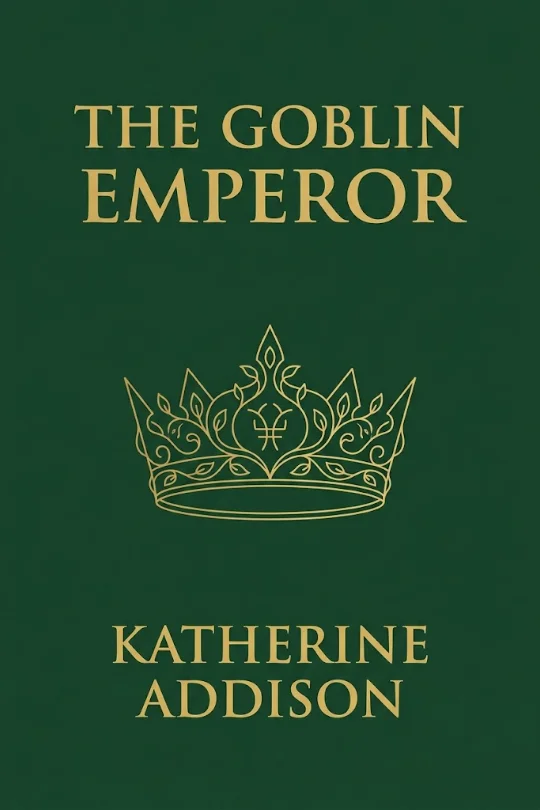
The Goblin Emperor by Katherine Addison is a novel about power, prejudice, and the unexpected strength found in kindness. It belongs to a subgenre called "fantasy of manners," where the drama unfolds not on battlefields but in courtly audiences, council meetings, and the delicate negotiations of formal language. The story follows Maia's journey from a despised exile to a reluctant emperor, forced to navigate a treacherous political landscape where every word, every title, every gesture carries hidden meaning.
Maia's goblin heritage marks him as an outsider in the elven court. His father's bigotry was well known—he had called the Barizheise "degenerate," had claimed Maia's mother was mad, had made no secret of his contempt for his own half-goblin son. The courtiers Maia must now rule were raised on this prejudice. They see in him not an emperor but an aberration, a creature to be managed or manipulated.
Yet Maia possesses something the cynical court does not expect: a genuine capacity for empathy, forged in the crucible of his own suffering. He knows what it means to be powerless, to be ignored, to be treated as less than human. This knowledge becomes his most radical political tool.
The novel unfolds over a single winter, from the night of the crash to the first days of spring. In that time, Maia must learn to command a language designed to exclude him, to assert authority over men who have spent decades accumulating power, and to solve the mystery of who destroyed the airship that made him emperor. He must confront the possibility that his reign—with all its progressive hopes—rests on an act of mass murder.
But the story's heart is something quieter: a young man learning that he can define himself, that his mixed heritage is not a weakness but a bridge between two worlds, and that leadership is not about the power you take but the connections you build.
Maia boarded the Radiance of Cairdado at dawn, the sky gray and cold. The crew was nervous—having the uncrowned emperor on board the same kind of vessel that had just killed his entire family was a delicate situation. Maia saw their fear and, despite his own terror, spoke to the captain.
"We have nothing but confidence in you and your crew."
The captain's shoulders relaxed. The crew's hands steadied. It was a small act of reassurance, born from genuine empathy, and it was the first bridge Maia would build.
As the airship rose above Edonomee, Maia watched the lodge shrink to a speck. He had spent ten years dreaming of escape. Now he was leaving forever, but not toward freedom—toward a throne he had never wanted, a court that despised him, and a murder investigation that would shake the foundations of the empire.
He was nineteen years old.
He had no training in governance, no allies at court, no knowledge of the labyrinthine rules that governed every breath of imperial life. He had only his wits, his memory of his mother's love, and a determination not to become the cruel emperor everyone expected him to be.
The Radiance of Cairdado carried him east, toward the Untheileneise Court, toward his coronation, toward a future he could not imagine. And as he watched the sunrise paint the sky in shades of gold and rose, he made a silent vow: he would not rule through fear. He would not become his father. He would find another way.
But how do you rule an empire when you cannot even speak the language of power? How do you command loyalty from people who see your very existence as an insult? How do you build trust in a world built on lies?
Maia was about to find out.
About the Book
When a tragic airship crash kills the entire imperial family, Maia, the despised half-goblin son, is thrust onto the Sunrise Throne. Navigating a treacherous court of prejudice and deadly intrigue, he must learn to wield the language of power, uncover the truth behind the sabotage, and forge a new legacy—one bridge at a time.
Key Takeaways
Unwanted Power Reveals True Character
Maia's rise to emperor was not an ambition fulfilled but a burden thrust upon him, and it is precisely his reluctance and lack of preparation that allows his innate empathy and decency to emerge as his defining leadership traits, proving that character is forged in the crucible of unwanted responsibility.
Kindness Is the Most Radical Political Tool
In a court built on manipulation and prejudice, Maia's genuine empathy—born from his own suffering as an outcast—becomes his most powerful weapon, as small acts of compassion like attending a commoner's funeral or granting a sister's freedom build loyalty where fear and coercion cannot.
Embrace Your Heritage as a Bridge, Not a Burden
Maia's journey from shame to pride in his goblin blood transforms his mixed heritage from a source of weakness into a unique strength, allowing him to connect two worlds and rule as a unifier rather than a divider.
True Leadership Requires the Courage to Be Alone
The emperor's position demands a profound isolation, as Maia learns when his guard tells him 'we cannot be your friend,' yet it is within this solitude that he discovers his own voice and the resolve to govern according to his own principles rather than the expectations of others.
Justice Must Be Tempered with Mercy to Break Cycles of Violence
By choosing exile over execution for his would-be usurper, Maia consciously breaks the Drazhada family tradition of blood vengeance, understanding that true justice sometimes requires sparing an enemy to prevent creating a martyr and perpetuating a cycle of hatred.
The Ends Do Not Justify the Means, but the Means Define the Legacy
Confronted by the bomber who claims credit for his reign, Maia must grapple with the uncomfortable truth that his compassionate rule was enabled by mass murder, ultimately realizing that while he cannot change how he came to power, he can choose what he builds with it.
Build Bridges, Not Walls—Both Literally and Metaphorically
Maia's signature achievement, the Wisdom Bridge, symbolizes his entire philosophy of governance: connecting divided peoples, honoring both noble and common dead, and choosing construction over conquest, earning him the title 'Edrehasivar the Bridge-Builder' as his lasting legacy.
True Power Is Found in the Connections You Forge, Not the Authority You Seize
Maia's strength as emperor comes not from the throne he inherited but from the relationships he carefully builds—with his secretary, his guards, his half-sister, and even his enemies—proving that leadership is ultimately about trust, not control.
Who Should Listen?
Fans of political fantasy who crave intricate court intrigue and nuanced power struggles over epic battles.
Readers who love underdog protagonists, especially those who overcome prejudice and systemic oppression through quiet strength and empathy.
Anyone who enjoys 'fantasy of manners' with rich worldbuilding, formal language, and detailed social rituals.
Listeners looking for a character-driven story about found family, identity, and the transformative power of kindness in leadership.