Book Summary
Narrator: Ethan
Timeline
Summary Preview
Three men ride through a frozen forest north of a massive Wall of ice. They are rangers of the Night's Watch, the ancient order sworn to guard the realm of Westeros from whatever lurks in the cold wasteland beyond. The air is bitter. The men are nervous. They have been tracking a band of wildlings—the people who live beyond the Wall—but something is wrong.
Will, the scout, returns to his companions with unsettling news. He found the wildlings, but they were all dead. Not killed by weapons or beasts. They died from the cold itself, their bodies frozen solid in poses of terror. The leader, Ser Waymar Royce, insists on investigating. He is young, arrogant, eager to prove himself. Against the warnings of his men, he pushes forward into the trees.
What they find is not a camp of dead wildlings. The bodies are gone. Instead, pale figures emerge from the darkness, their eyes burning ice blue. They carry crystal swords that shimmer with an unnatural light. Waymar draws his steel and fights, but he is no match. He falls. Will watches in horror as the creatures vanish into the night. He approaches his commander's body—and then the corpse sits up. Dead hands grip Will's throat. The last thing he feels is cold.
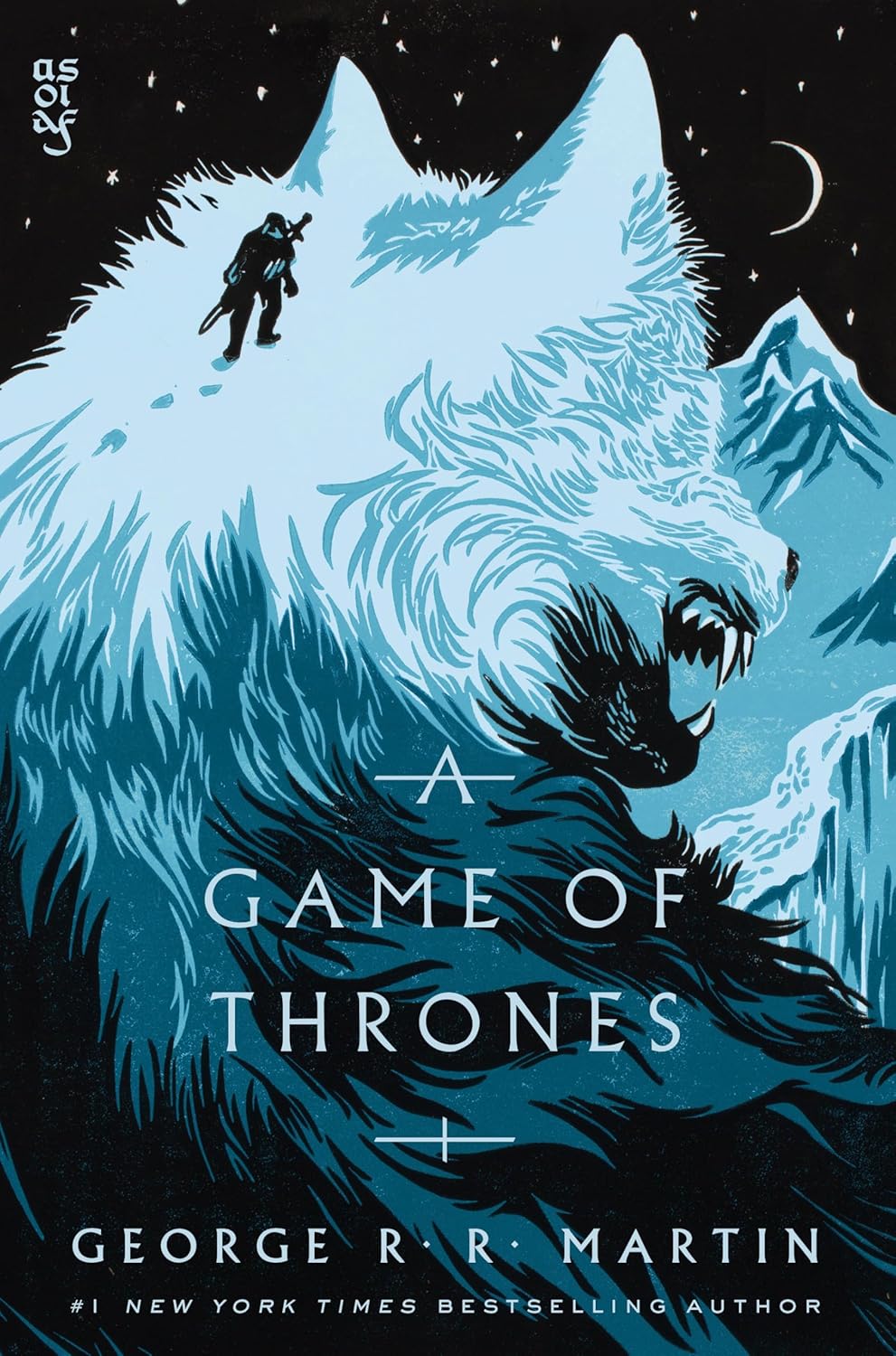
This is how George R. R. Martin opens A Game of Thrones . It is a warning. A promise. And almost immediately, it is forgotten.
The world of Westeros is one where seasons last for years. A summer can stretch a decade, and the winter that follows will be just as long, just as harsh. The Starks of Winterfell, the noble family who rule the northern reaches of the continent, carry a motto that captures this truth: "Winter is Coming." It is not a cheerful slogan. It
Three men ride through a frozen forest north of a massive Wall of ice. They are rangers of the Night's Watch, the ancient order sworn to guard the realm of Westeros from whatever lurks in the cold wasteland beyond. The air is bitter. The men are nervous. They have been tracking a band of wildlings—the people who live beyond the Wall—but something is wrong.
Will, the scout, returns to his companions with unsettling news. He found the wildlings, but they were all dead. Not killed by weapons or beasts. They died from the cold itself, their bodies frozen solid in poses of terror. The leader, Ser Waymar Royce, insists on investigating. He is young, arrogant, eager to prove himself. Against the warnings of his men, he pushes forward into the trees.
What they find is not a camp of dead wildlings. The bodies are gone. Instead, pale figures emerge from the darkness, their eyes burning ice blue. They carry crystal swords that shimmer with an unnatural light. Waymar draws his steel and fights, but he is no match. He falls. Will watches in horror as the creatures vanish into the night. He approaches his commander's body—and then the corpse sits up. Dead hands grip Will's throat. The last thing he feels is cold.
This is how George R. R. Martin opens A Game of Thrones. It is a warning. A promise. And almost immediately, it is forgotten.
The world of Westeros is one where seasons last for years. A summer can stretch a decade, and the winter that follows will be just as long, just as harsh. The Starks of Winterfell, the noble family who rule the northern reaches of the continent, carry a motto that captures this truth: "Winter is Coming." It is not a cheerful slogan. It is a reminder that hardship is always on the horizon, that preparation and vigilance are the price of survival.
But in the southern capital of King's Landing, no one is thinking about winter. They are thinking about power.
King Robert Baratheon sits on the Iron Throne, but he is fat, drunk, and bored with ruling. His queen, Cersei Lannister, despises him. Her twin brother, Jaime, serves in the Kingsguard. Their family, the Lannisters, is the richest in the realm, and they have their own plans for the future. Meanwhile, across the Narrow Sea, the last children of the deposed Targaryen dynasty wait in exile, dreaming of reclaiming the throne their father lost.
The book presents itself as a sprawling epic of political intrigue and family drama. Noble houses maneuver for advantage. Alliances are forged and broken. Armies march. But Martin has planted something else in those opening pages, something the reader is never allowed to forget: a supernatural threat rising in the frozen north, one that makes the squabbles over kings and castles look like children playing with toys.
The Prologue establishes dramatic irony that will haunt the entire story. The Others—the white walkers of legend—are real. They have returned after thousands of years. The men of the Night's Watch who survive that first encounter will try to warn the realm. One of them, Gared, will desert his post in terror, only to be captured and executed by Lord Eddard Stark for breaking his oath. The man's story of what he saw is dismissed as madness.
No one believes him.
No one wants to believe.
This is the central tension of A Game of Thrones: the existential crisis that no one will acknowledge because they are too busy fighting each other. The book is a story of two converging catastrophes. One is human-made, born of ambition, greed, and old grudges. This is the "game of thrones"—the deadly competition for power that consumes the attention of kings, queens, lords, and ladies. The other is something older, colder, and far more dangerous. It is winter, in every sense of the word.
Martin structures his narrative so that these two threats develop in parallel. In the capital, Ned Stark investigates the murder of his predecessor, uncovering secrets about the royal family that could tear the kingdom apart. In the north, his bastard son Jon Snow joins the Night's Watch, expecting honor and purpose, only to find a broken institution struggling to survive. And far across the sea, a young girl named Daenerys Targaryen is sold into marriage with a Dothraki warlord, beginning a journey that will transform her from a frightened pawn into something far more powerful.
But while these stories unfold—while characters scheme, betray, love, and die—the threat from beyond the Wall grows unchecked. The Night's Watch sends out rangers who never return. Wildlings flee south, fleeing something they cannot name. The signs are there for anyone willing to see them. But no one in King's Landing is looking north. They are too busy looking at the throne.
The book's title is both literal and ironic. Yes, the characters are playing a game for control of the Seven Kingdoms. But it is a game with deadly stakes, and the players are so focused on each other that they fail to notice the board is about to be overturned by forces they have dismissed as fairy tales.
What makes this structure so effective is the way Martin uses the reader's knowledge against them. We have seen the Others. We have watched them kill. We know what is coming. And yet we are drawn into the political drama anyway. We care about Ned Stark's investigation. We worry about Daenerys's safety. We wonder who will sit on the Iron Throne. The supernatural threat becomes a shadow at the edge of consciousness, present but ignored, exactly as it is for the characters themselves.
This is masterful storytelling. Martin creates a world where the audience shares the characters' blind spot. We know the danger is real, but the human conflicts are so compelling, so immediate, that we find ourselves forgetting about the ice-eyed monsters in the snow. We become complicit in the same distraction that will doom the realm.
The Prologue serves as the book's moral center in a strange way. It establishes what truly matters in this world. The Others represent a threat that transcends politics, thatrenders the game of thrones meaningless. And yet the game continues. Characters will die for it. Kingdoms will burn for it. And all the while, winter creeps closer.
By the time the book ends, with dragons hatching in the east and war raging in the south, the threat from the north has not been resolved. It has barely been acknowledged. The Night's Watch knows. Jon Snow knows. But they are a forgotten order on the edge of the world, and no one is listening.
So the question hangs in the air, unanswered: What happens when the game of thrones meets the winter that is coming?
About the Book
In a world where seasons last for years, noble families battle for the Iron Throne while an ancient supernatural menace stirs beyond the Wall. When honor clashes with power, the Starks, Lannisters, and exiled Targaryens are drawn into a deadly game where no one is safe and winter is always coming.
Key Takeaways
The existential threat is always ignored when people are consumed by petty power struggles.
The Others, a supernatural force that could destroy all of Westeros, are dismissed as legend while nobles fight for the Iron Throne, illustrating humanity's tragic tendency to ignore catastrophic dangers when distracted by immediate conflicts.
Honor without wisdom is a fatal weakness, not a virtue.
Ned Stark's unwavering commitment to honor leads him to warn Cersei of his discovery and trust Littlefinger, choices that directly cause his death and the destruction of his family, proving that rigid morality in a corrupt world is self-destructive.
True courage is acting despite fear, not the absence of it.
Ned teaches Bran that bravery only exists when fear is present, a lesson that echoes throughout the story as characters like Jon Snow and Daenerys must act while terrified, defining courage as the choice to move forward rather than the lack of fear.
Identity is forged in the crucible of loss and transformation.
Daenerys emerges from the funeral pyre not as a frightened exile but as the Mother of Dragons, her identity reborn through the destruction of everything she loved, demonstrating that who we become is often shaped by what we are willing to burn.
Power belongs to those who understand the game, not those who deserve it.
Littlefinger and Cersei thrive while honorable characters like Ned and Jon Arryn die because they recognize that politics is a game of manipulation and timing, where merit and justice are irrelevant compared to strategic cunning.
The bonds we choose are stronger than the blood we inherit.
Jon Snow finds his true family not among the Starks who rejected him but in the criminal outcasts of the Night's Watch, proving that loyalty and brotherhood are earned through shared suffering and sacrifice rather than granted by birth.
Every action in a connected world has consequences that echo far beyond intention.
Catelyn's impulsive arrest of Tyrion, driven by maternal love, ignites a war that destroys her family, showing that even righteous decisions made without full information can unleash devastation that no one could have predicted.
The most dangerous monsters are those we refuse to believe exist.
The realm dismisses the White Walkers as fairy tales while preparing for human wars, a blindness that mirrors how societies often ignore real existential threats—climate change, pandemics, authoritarianism—because acknowledging them would require uncomfortable action.
Who Should Listen?
Fans of epic fantasy who crave morally complex characters and political intrigue over clear-cut heroes and villains.
Readers who enjoy sprawling, multi-perspective narratives with high stakes and shocking plot twists.
Listeners who appreciate world-building that blends gritty realism with elements of magic and myth.
Anyone who has ever been frustrated by predictable storytelling and wants a book that subverts traditional fantasy tropes.