Beloved
Book Summary
Narrator: Ethan
Timeline
Summary Preview
In 1856, an enslaved woman named Margaret Garner made a choice that would haunt American history. When slave catchers cornered her and her children in Cincinnati, Ohio—just across the river from the Kentucky plantation where she was enslaved—she grabbed a knife and killed her two year old daughter rather than let the child be dragged back into bondage. The courts debated whether she should be tried for murder or treated as stolen property. She was returned to slavery. Her daughter's name was never recorded.
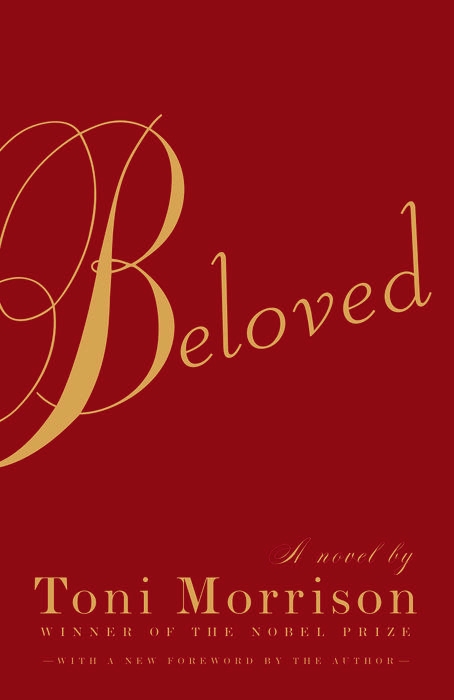
More than a century later, Toni Morrison discovered Margaret Garner's story while compiling The Black Book , an encyclopedia of African American history. The question wouldn't leave her: What kind of love would drive a mother to such an act? And what would it mean to survive that kind of choice, to live with it, to be haunted by it? In 1987, Morrison published Beloved , a novel that doesn't just tell Margaret Garner's story but inhabits its emotional and psychological depths.
The novel opens in 1873, eight years after slavery's official end. Sethe, a formerly enslaved woman, lives at 124 Bluestone Road in Ohio with her daughter Denver. The house is haunted by the ghost of the baby Sethe murdered—the child whose tombstone bears only the word "Beloved." Sethe's two sons have fled the constant haunting. Her mother in law, Baby Suggs, has died. She is alone with Denver and the spirit of the child she killed.
This is not a ghost story in the traditional sense. The ghost is real, yes—it slams doors, rattles the house, makes its anger known. But it represents something deeper: the unprocessed trauma of slavery itself, the memories that refuse to stay buried, the guilt that won't let go. Sethe has spent eighteen years trying to outrun what she
In 1856, an enslaved woman named Margaret Garner made a choice that would haunt American history. When slave catchers cornered her and her children in Cincinnati, Ohio—just across the river from the Kentucky plantation where she was enslaved—she grabbed a knife and killed her two-year-old daughter rather than let the child be dragged back into bondage. The courts debated whether she should be tried for murder or treated as stolen property. She was returned to slavery. Her daughter's name was never recorded.
More than a century later, Toni Morrison discovered Margaret Garner's story while compiling The Black Book, an encyclopedia of African American history. The question wouldn't leave her: What kind of love would drive a mother to such an act? And what would it mean to survive that kind of choice, to live with it, to be haunted by it? In 1987, Morrison published Beloved, a novel that doesn't just tell Margaret Garner's story but inhabits its emotional and psychological depths.
The novel opens in 1873, eight years after slavery's official end. Sethe, a formerly enslaved woman, lives at 124 Bluestone Road in Ohio with her daughter Denver. The house is haunted by the ghost of the baby Sethe murdered—the child whose tombstone bears only the word "Beloved." Sethe's two sons have fled the constant haunting. Her mother-in-law, Baby Suggs, has died. She is alone with Denver and the spirit of the child she killed.
This is not a ghost story in the traditional sense. The ghost is real, yes—it slams doors, rattles the house, makes its anger known. But it represents something deeper: the unprocessed trauma of slavery itself, the memories that refuse to stay buried, the guilt that won't let go. Sethe has spent eighteen years trying to outrun what she did. She has refused to talk about it, refused to think about it, refused to let herself feel the full weight of that moment in the shed with a handsaw and her children's blood.
Morrison builds the novel around a central question that has no easy answer: How do you survive the unsurvivable? How do you heal from wounds so deep they've become part of who you are? The characters in Beloved don't have therapists or support groups. They have each other, their memories, and the painful work of telling their stories aloud.
The real Margaret Garner case raised legal and moral questions that America wasn't ready to answer. Did she own her children enough to choose death for them? Was her act madness or the clearest kind of love? Morrison doesn't resolve these questions. Instead, she forces us to sit with them, to feel the impossible weight of a mother's choice in a system that denied Black people even the right to their own bodies, let alone their children's.
Beloved won the Pulitzer Prize for Fiction and cemented Morrison's place as one of America's greatest writers. But more than that, it became a reckoning—a way for the country to look at the legacy of slavery not as a distant historical event but as something that still breathes, still aches, still haunts the present.
The novel asks us to consider: What happens when the past refuses to stay dead? What do we owe the people we've hurt, even when our choices were made in desperation? And is it possible to love enough to let go?
The story of Margaret Garner ended in tragedy and silence. Morrison's Beloved gives her a voice, a name, and a chance to be heard. But as the novel unfolds, we discover that the hardest question isn't about the past at all. It's about what comes after.
What happens when the ghost you've been running from finally catches up—and demands to be seen?
About the Book
In 1873, former slave Sethe is haunted by the ghost of the baby she killed rather than let her grow up in bondage. When a mysterious young woman named Beloved arrives, she forces Sethe and her family to confront the unbearable trauma of slavery, the impossible choices it demanded, and the fragile possibility of healing.
Key Takeaways
The past refuses to stay buried until it is fully confronted
Sethe spends eighteen years trying to outrun her trauma, but the ghost at 124 Bluestone Road proves that unprocessed pain will always find a way back—often more violently than before. True healing requires facing the worst of what we've done and what has been done to us, not building a life around silence.
Love can be as destructive as hatred when stripped of choice
Sethe's infanticide is an act of love so fierce it becomes monstrous—she kills her daughter to save her from slavery, revealing that when a system denies people the right to their own bodies and children, even the purest love can twist into violence. Morrison forces us to sit with the unbearable truth that some choices are impossible to judge from the outside.
Dehumanization begins when we are reduced to what we can produce
The schoolteacher's nephews take Sethe's breastmilk as if she were a cow, and Paul D wears a bit in his mouth like a horse—both moments show how slavery systematically stripped people of their humanity by treating them as resources rather than beings. The novel insists that reclaiming personhood requires remembering who we were before the breaking began.
Survival itself can become a prison if we cannot forgive ourselves
Sethe survives slavery, the escape, the infanticide, and eighteen years of haunting, yet she nearly dies when Beloved returns because she believes she deserves punishment, not love. Morrison shows that physical survival is meaningless without the emotional capacity to accept that we are worthy of tomorrow.
Community abandonment is a second wound that deepens the first
The Black townspeople ostracize Sethe after the infanticide, leaving her isolated with her guilt for nearly two decades—and it is only when Denver reaches out and the community returns that the exorcism becomes possible. Morrison suggests that individual healing is incomplete without collective reckoning and compassion.
The stories we refuse to tell become the ghosts that haunt us
Beloved is not just a ghost but the embodiment of every untold story, every suppressed memory, every grief that Sethe has locked away. The novel demonstrates that the act of speaking the unspeakable—of naming our deepest wounds aloud—is the first step toward releasing their power over us.
Freedom is not the absence of chains but the presence of choice
Even after emancipation, Sethe remains enslaved by her past because she cannot choose how to remember or who to become. Paul D's final words—'You your best thing'—offer a new kind of liberation: the freedom to see oneself as worthy of love and future, independent of the roles imposed by trauma or history.
Healing is not a destination but a fragile, ongoing practice
The novel ends not with triumph but with two broken people holding hands in the dark, trying to imagine a tomorrow they never thought they'd have. Morrison refuses easy resolution because real healing is not about forgetting—it is about learning to carry the weight of the past without being crushed by it.
Who Should Listen?
Readers who want to understand how the psychological trauma of slavery continues to shape Black American families and identities generations later.
Anyone interested in literary fiction that uses supernatural elements to explore real historical atrocities and moral dilemmas.
Book club members looking for a deeply layered, emotionally devastating novel that sparks conversations about motherhood, memory, and survival.
Students and teachers of American literature or African American studies who need a comprehensive understanding of Morrison's Pulitzer Prize-winning masterpiece.