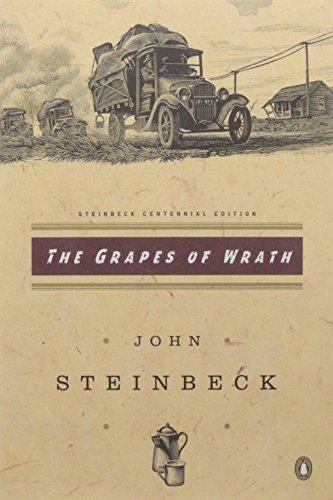
The Grapes of Wrath
Book Summaries
Hosts: Ethan
Timeline
Summary Preview
The sky turned red as ripe new blood. That's how John Steinbeck opens *The Grapes of Wrath*—with a dust storm so thick it blotted out the sun. For days, the wind had scooped up the dry topsoil of the Oklahoma plains and hurled it across the land. The dust sifted through every crack in every house. It settled on plates, on beds, on the faces of sleeping children. And beneath the earth, it did its worst work: it dug cunningly among the rootlets of the corn, uprooting the young plants before they could grow.
When the storm finally passed, the men came out of their houses and stood in the fields. They didn't say much. They just looked at what was left. The women watched the men, wondering if they would break. A farmer could survive a bad season. But a farmer could not survive a world that no longer made sense.
This opening scene is more than weather. It's a metaphor for the catastrophic forces about to sweep through the lives of the Joad family and thousands like them. The dust storm was natural, yes—the result of drought and over-farming. But the disaster that followed was human-made. And it would prove far more destructive.
The Joads are tenant farmers in Sallisaw, Oklahoma. They've lived on the same land for generations, growing corn and cotton, raising children, burying grandparents. The land is not just where they work—it's who they are. When the dust storms ruin their crops, the banks see an opportunity. They consolidate the small farms into large plantations worked by tractors. One man on a machine can do the work of twelve families. The tenant farmers are no longer needed.
So the Joads are evicted. They pile everything they own into a beat-up truck and head west on Highway 66, toward California. They've heard there's work there. Pamphlets promise high wages picking fruit. Pictures show orange groves and white houses. But the Joads don't know yet that these promises are lies—deliberate lies designed to lure more workers than any farm could ever need, so wages stay low and the landowners stay rich.
The journey itself becomes a crucible. Grampa dies of a stroke before they've even left Oklahoma. They bury him themselves by the roadside because they can't afford the forty dollars for an undertaker. They meet other families in the same desperate situation—the Wilsons, whose car broke down; the ragged man returning from California with stories of starvation. Some people along the road help them. Others exploit them, charging inflated prices for gas and tires, or refusing them water.
By the time the Joads cross into California, they've lost Grampa, Granma, and Noah, the oldest son who wanders off by a river and never returns. They've seen kindness and cruelty in equal measure. And they've begun to change in ways they don't yet understand.
What makes *The Grapes of Wrath* more than a story about poverty is what happens to the Joads' souls. They start the journey thinking as individuals—as a family looking out for their own. But hardship forces them to see differently. When they share food with strangers, when they take turns driving through the night, when they bury their dead without money or ceremony, they learn something that Steinbeck calls the movement from "I" to "we." The family's survival depends on solidarity. And that solidarity, once learned, cannot be unlearned.
The novel traces this transformation through Tom Joad, the protagonist just released from prison for killing a man. Tom begins the story wanting only to stay out of trouble. But as he witnesses police brutality, wage theft, and the systematic dehumanization of migrant workers, he becomes radicalized. By the end, he's ready to fight—not for himself, but for everyone.
So the dust storm that opens the book is both an ending and a beginning. It destroys the Joads' old life. But it also sets them on a path that will strip away everything they thought they knew—about home, about family, about what it means to be human. The question Steinbeck asks is whether that stripping away leaves only ruin, or whether something new can grow from the wreckage.
What would it take for you to leave everything you know behind, with no guarantee of finding anything better?
About the Book
Driven from their Oklahoma farm by dust and debt, the Joad family heads west to California, chasing a dream that turns to nightmare. Steinbeck's masterpiece follows their brutal journey and transformation from a family of individuals into a collective fighting for survival. It's a raw, unflinching look at poverty, injustice, and the radical power of human solidarity.
Key Takeaways
The Monster Has No Face: Systems, Not Individuals, Are the True Enemy
The Joads are not destroyed by a single villain but by an impersonal economic system—the 'monster' of capitalism—that prioritizes growth over human life, forcing even well-meaning people to become instruments of destruction against their own conscience.
The Willow Tree Is You: Home Is Not a Place but a Part of Your Identity
When the Joads lose their land, they lose not just shelter but a piece of themselves, because home is woven into the fabric of who we are—the willow tree, the gate, the field are not objects but extensions of the self that cannot be replaced.
Solidarity Is Not Charity; It Is the Only Weapon Against Desperation
On Highway 66, the Joads learn that sharing with strangers is not an act of kindness but a necessity for survival, because when everyone has nothing, the only way forward is to become part of a 'we' that transcends blood and family.
Manufactured Dreams Are the Cruelest Lies
The handbills promising high wages in California are deliberate traps designed to create a surplus of desperate workers, proving that the most devastating oppression is not violence but the systematic destruction of hope through false promises.
Dehumanization Is a Perfect Circle: Suffering Used to Justify Suffering
The migrants are treated like animals—denied water, shelter, and dignity—and then called animals for living like that, a vicious logic that allows the comfortable to look at misery and feel nothing, justifying exploitation as justice.
The Dance Is a Declaration: Joy Itself Is an Act of Resistance
In the government camp, the Saturday night dance is not mere entertainment but a radical assertion of humanity, proving that when everything has been taken, the ability to laugh, dance, and love together becomes a form of defiance against the system that wants you broken.
The 'I' Must Die for the 'We' to Be Born
Tom Joad's transformation from a man seeking only personal safety to a revolutionary willing to fight for all oppressed people shows that true redemption comes not from saving yourself but from losing yourself in the collective struggle for justice.
Redemption Is Milk Flowing from a Mother to a Stranger
In the final barn scene, Rose of Sharon feeds a starving stranger with the milk meant for her dead baby, symbolizing that the ultimate human act is not preserving your own bloodline but giving your very life to someone else—the dissolution of the family into the universal family of suffering humanity.
Who Should Listen?
History buffs and social justice advocates who want to understand the human cost of the Dust Bowl and the Great Depression through a visceral, personal story.
Readers of modern dystopian fiction who appreciate a classic novel about systemic oppression, corporate greed, and the struggle for dignity in the face of overwhelming power.
Writers and storytellers seeking a masterclass in narrative structure, interwoven plotlines, and the use of symbolic imagery to drive home a political and emotional message.
Anyone who has ever felt displaced, whether by economic hardship, natural disaster, or personal loss, and needs a story that validates their struggle and offers a vision of hope through community.