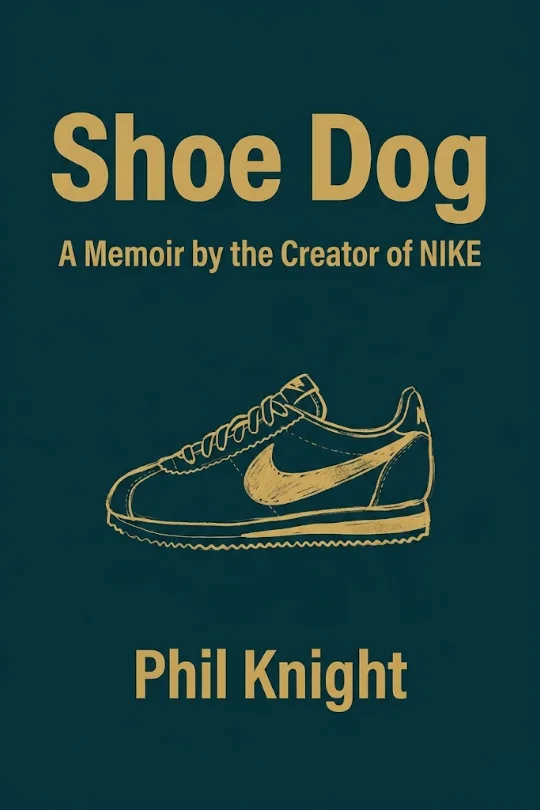
Book Summary
Narrator: Ethan
Timeline
Summary Preview
It's 1962, and Phil Knight is 24 years old. He's just finished graduate school at Stanford, and he's back living with his parents in Portland, Oregon. He feels like a kid again, and he doesn't like it.
One morning, he eats a light breakfast and goes for a run. This is no ordinary jog. As his feet hit the pavement, his mind starts racing. He thinks about what he wants from life. Not money, not status. He wants his life to feel like play.
And then it hits him. His "Crazy Idea."
The idea had been brewing since his time at Stanford, where he wrote a paper about the potential of Japanese running shoes in the American market. At the time, German brands like Adidas dominated the industry. Japanese shoes were cheaper, lighter, and virtually unknown in the United States. Knight saw an opportunity. He imagined flying to Japan, finding a shoe company to partner with, and selling their shoes back home.
Standing there on that road, the idea crystallized. He started running faster, feeling the excitement build. And in that moment, he gave himself a piece of advice that would define the rest of his life: "Just keep going. Don't stop. Don't even think about stopping until you get there, and don't give much thought to where 'there' is."
Fifty years later, Knight would call this the most important advice there is.
This book, Shoe Dog , is the story of that single idea and what happened when Knight refused to let it go. It covers the journey from 1962 to 1980, from a young man with nothing but a crazy notion to the day Nike went public and made him a multimillionaire. But make no mistake: this is not a story about easy success. It's a story about
It's 1962, and Phil Knight is 24 years old. He's just finished graduate school at Stanford, and he's back living with his parents in Portland, Oregon. He feels like a kid again, and he doesn't like it.
One morning, he eats a light breakfast and goes for a run. This is no ordinary jog. As his feet hit the pavement, his mind starts racing. He thinks about what he wants from life. Not money, not status. He wants his life to feel like play.
And then it hits him. His "Crazy Idea."
The idea had been brewing since his time at Stanford, where he wrote a paper about the potential of Japanese running shoes in the American market. At the time, German brands like Adidas dominated the industry. Japanese shoes were cheaper, lighter, and virtually unknown in the United States. Knight saw an opportunity. He imagined flying to Japan, finding a shoe company to partner with, and selling their shoes back home.
Standing there on that road, the idea crystallized. He started running faster, feeling the excitement build. And in that moment, he gave himself a piece of advice that would define the rest of his life: "Just keep going. Don't stop. Don't even think about stopping until you get there, and don't give much thought to where 'there' is."
Fifty years later, Knight would call this the most important advice there is.
This book, Shoe Dog, is the story of that single idea and what happened when Knight refused to let it go. It covers the journey from 1962 to 1980, from a young man with nothing but a crazy notion to the day Nike went public and made him a multimillionaire. But make no mistake: this is not a story about easy success. It's a story about struggle, risk, and the relentless pursuit of victory against all odds.
Knight frames his memoir around three core themes. First, there's the power of telling the truth as a business strategy. Time and again, Knight finds that honesty—even when it's embarrassing—builds trust that no amount of clever marketing can replace. Second, there's the necessity of breaking rules to succeed. Knight's hero, General Douglas MacArthur, once said, "You are remembered for the rules you break." Knight took this to heart, ignoring bankers, defying conventional wisdom, and bluffing his way through deals that should have failed. Third, there's the desire for victory as Nike's binding spirit. The company's name comes from the Greek goddess of victory, and that hunger to win—or more precisely, that hatred of losing—became the glue that held a ragtag group of misfits together.
The opening scene in the prologue sets the tone for everything that follows. Knight, alone on that road, makes a decision. He chooses to pursue his Crazy Idea, no matter the cost. He chooses to keep going, even when every authority figure in his life tells him to stop. His father, a hardworking man who grew up in poverty, thinks the shoe business is a waste of time. His banker warns him that his growth is "dangerous." His professors and peers expect him to take a respectable job.
Knight ignores them all.
What makes this story remarkable is not just that Nike succeeded, but how it succeeded. The company was built on a series of improbable moments: a bluff in a Japanese conference room, a partnership with a legendary coach, the obsessive dedication of a first employee who wrote hundreds of letters, and the quiet support of a Japanese trading company that saved Nike from bankruptcy. Each of these moments could have gone wrong. Most of them nearly did.
Knight writes with brutal honesty about the fear, the doubt, and the moments when he almost gave up. He was not a natural businessman. He was an introvert, a runner, an accountant who stumbled into entrepreneurship. He made mistakes—sometimes costly ones. He lied to his bank, stole documents from a business partner, and drove his company to the edge of financial collapse more than once.
But he kept going.
The book covers the years 1962 to 1980, but its heart is the struggle of those early days. Knight worked out of the trunk of his car. He sold shoes at track meets. He borrowed money from his father, his friends, and his employees' parents. He lived in constant fear that the bank would call in his loans, that Onitsuka would cut him off, that the whole thing would collapse.
Yet through it all, he held onto that Crazy Idea. And he held onto the mantra he gave himself on that morning run: Just keep going.
The question that hangs over the entire book is this: What does it take to turn a crazy idea into a global empire? And more importantly, what does it cost?
As we move into the next section, we'll see how Knight took his first concrete step toward making that idea real—a world trip that would lead him to a handshake that changed everything.
About the Book
In 1962, Phil Knight had a crazy idea: import cheap Japanese running shoes to America. Shoe Dog is his raw, honest memoir of the wild journey that followed—from bluffing his way into a handshake deal, to building a ragtag team of misfits, to nearly losing everything. It's a story of risk, betrayal, triumph, and the mantra that kept him going: just don't stop.
Key Takeaways
A Crazy Idea Is Just the Beginning; Persistence Is Everything
Phil Knight's 'Crazy Idea' to import Japanese running shoes was not a stroke of genius but a starting point. The true power came from his refusal to stop, even when facing bankruptcy, betrayal, and personal tragedy, proving that relentless forward motion is more important than the initial spark.
Build Your Team from Shared Drive, Not Perfect Resumes
Knight hired misfits like a paralyzed athlete and an eccentric accountant not because they fit a mold, but because they shared a burning hatred of losing. This unconventional team became the company's backbone, showing that raw determination and competitive fire are worth more than conventional credentials.
Honesty Is a Strategic Weapon, Even When It's Painful
Throughout Nike's struggles, Knight found that telling the truth—about failures, financial crises, and mistakes—built deeper trust with partners like Nissho than any clever marketing could. This honesty created a foundation of loyalty that saved the company when it was on the brink of collapse.
Sometimes You Must Break the Rules to Create Something New
Knight bluffed his way into deals, stole documents from a briefcase, and defied his banker's warnings, all in service of his vision. He embodied General MacArthur's idea that 'you are remembered for the rules you break,' showing that innovation often requires a willingness to operate outside conventional boundaries.
Victory Is Not a Destination; It Is a Binding Spirit
Nike's name, taken from the Greek goddess of victory, was more than a brand—it was the glue that held a ragtag group together. The hunger to win, and the deeper hatred of losing, became a shared identity that transformed a collection of individuals into an unstoppable family.
The Greatest Threats Often Force Your Greatest Breakthroughs
When Onitsuka betrayed Knight and cut off their supply, desperation forced the creation of the Nike brand and the iconic swoosh. The crisis that could have destroyed the company became the catalyst for its true identity, proving that betrayal and loss can be the soil from which greatness grows.
Success Comes with a Heavy Personal Cost
Knight's journey to building a global empire was shadowed by the death of his son Matthew, the loss of his mentor Bowerman, and the tragic end of Steve Prefontaine. The book reminds us that the pursuit of victory exacts a price, and that the deepest triumphs are often intertwined with profound grief.
Keep Going Until You Get There—Wherever 'There' Is
The mantra Knight gave himself on that morning run—'Just keep going. Don't stop'—became the guiding philosophy of his life. It teaches that the path to success is not about knowing the destination, but about having the courage to move forward despite uncertainty, fear, and every reason to quit.
Who Should Listen?
Entrepreneurs and startup founders who feel like they're constantly fighting an uphill battle against banks, doubters, and their own fear.
Runners and athletes who want to understand the obsessive, rebellious spirit behind the swoosh and the shoes on their feet.
History and business biography fans who love a gritty, honest underdog story that doesn't sugarcoat the near-disasters.
Anyone feeling stuck or afraid to take a leap, who needs a real-world example that a crazy idea, pursued relentlessly, can change the world.