Book Summaries
Hosts: Ethan
Timeline
Summary Preview
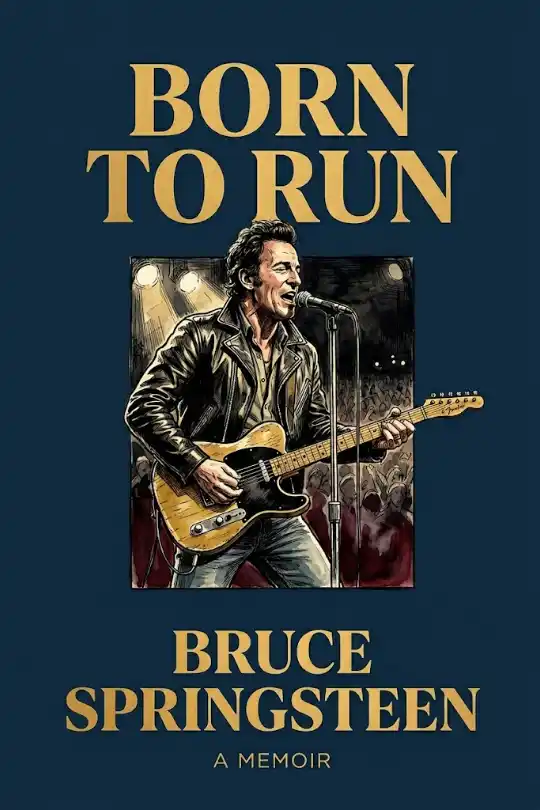
Bruce Springsteen's memoir opens not with a stadium roar or a guitar riff, but with a town. Freehold, New Jersey. He describes it as "heart-stopping, pants-dropping, race-riot-creating, oddball-hating, soul-shaking, love-and-fear-making, heartbreaking town." That single sentence contains everything that follows: the contradictions, the grit, the desperate need to escape, and the aching love for the place that made him.
This is not your typical rock star autobiography. Springsteen isn't interested in polishing his legend or settling scores. Instead, *Born to Run* operates on two levels simultaneously. On the surface, it traces his journey from working-class poverty to global superstardom, from playing dive bars to filling stadiums. But underneath, it's something far more intimate: a confession, an excavation of family trauma, and a reckoning with the cost of authenticity.
The book's central question emerges early: How does a sensitive, entitled boy from a struggling family become the voice of the American working class? The answer, Springsteen suggests, lies in the tension between two forces that shaped him. First, there was his father, Douglas Springsteen, a man battling mental illness and alcoholism, whose emotional distance left his son feeling "not worth the time." Then there was his mother, Adele, whose relentless optimism and work ethic kept the family afloat even as her husband withdrew. Between these poles, young Bruce learned that music was the only viable escape route.
The narrative follows a clear arc: Freehold, New Jersey, is both prison and launchpad. Springsteen describes his hometown as a place where people did "their best to hold off the demons that seek to destroy us." The Catholic Church provided ritual and awe but also a sense of being an outcast. His Italian grandmother spoiled him rotten, giving him a sense of entitlement that would prove crucial. His father's rages and silences created a deep-seated rage of his own. Together, these forces produced a boy who was simultaneously desperate for freedom and terrified of being alone.
The memoir's structure mirrors Springsteen's own development. Early chapters focus on family, church, and the slow realization that rock and roll offered something his world lacked: a language for rebellion, sexuality, and hope. When he first saw Elvis Presley on *The Ed Sullivan Show*, it wasn't just entertainment. It was a conversion experience. The guitar became what he calls "the master key, the sword in the stone, the sacred talisman." It was the only way out.
But this isn't a story of instant success. Springsteen spends hundreds of pages detailing the grind: the early bands that fired him, the humiliating gigs, the long drives in plywood crates on the back of trucks, the constant search for the right musicians. His work ethic, instilled by his mother's example, becomes his defining characteristic. He practices until his fingers bleed. He studies other musicians obsessively. He fires friends when they don't meet his standards. The music, always the music, comes first.
What makes the book remarkable is Springsteen's willingness to examine his own flaws. He admits to being a "benevolent dictator" who controlled every aspect of the E Street Band. He acknowledges the pain he caused his first wife, Julianne Phillips, and the long, difficult path to finding lasting love with Patti Scialfa. He doesn't flinch from describing his own battles with depression and anxiety, the "abyss" that has threatened to swallow him throughout his career.
The central theme running through everything is authenticity. Springsteen insists that his music must come from lived experience, not calculation. When he writes about broken dreams and shattered lives, he's drawing on his own family history, his own encounters with poverty and loss. When he became wealthy and famous, he worried constantly about losing touch with the people he wrote about. His solution was simple: never stop telling the truth, even when it's uncomfortable.
This commitment to authenticity extends to his relationships. The book is filled with vivid portraits of the people who shaped him: his mother, whose love sustained him; his father, whose demons haunted him; Clarence Clemons, the saxophonist whose first note sounded like "a force of nature" and who became his spiritual brother; Steve Van Zandt, his lifelong friend and collaborator; Jon Landau, the critic who became his producer and confidant. Each relationship reveals something essential about Springsteen's character.
The memoir also functions as a cultural history of rock music. Springsteen traces his influences from Elvis and the Beatles through Dylan, the Rolling Stones, and the soul artists who shaped his sound. He reflects on the power of radio to create community, the importance of live performance as a shared ritual, and the way rock and roll became a voice for a generation searching for meaning in a changing America.
By the end of the book, Springsteen has come full circle. He has faced his demons, built a family, and found a measure of peace. But he never pretends the struggle is over. "The defenses I built to withstand the stress of my childhood," he writes, "outlived their usefulness." The work of healing, like the work of music, is never finished.
This is a memoir about escape, yes, but also about return. Springsteen left Freehold to become a rock star, but he never really left. The town, with all its contradictions, lives in his songs, in his voice, in the way he carries himself on stage. The boy who felt like an outcast became the voice of millions. The son who couldn't connect with his father became a father himself, determined to break the cycle.
So the question that hangs over this opening section is simple but profound: How does a person become who they are? Is it the town that shapes you? The family that wounds you? The music that saves you? Or is it something more mysterious, some alchemy of pain and talent and stubborn refusal to give up? Springsteen's answer, delivered over 500 pages of unflinching honesty, is that it's all of these things, woven together in a story that is at once deeply personal and utterly universal.
About the Book
Bruce Springsteen's Born to Run is no ordinary rock star autobiography. It is a soul-baring excavation of family trauma, artistic obsession, and the relentless pursuit of authenticity. From the working-class grit of Freehold, New Jersey, to global superstardom, Springsteen traces his escape from a haunted father and a suffocating town. This is a story of a boy who used a guitar as a talisman, a band as a family, and his songs as a map to find his way home.
Key Takeaways
Escape is not freedom; return is the true test of growth.
Springsteen's journey from Freehold to global stardom wasn't just about leaving—it was about carrying his hometown's contradictions into his art and eventually finding the courage to stop running and build a home, proving that real freedom comes from confronting where you came from, not just fleeing it.
The wounds we inherit can become the fuel for our greatest creations.
Springsteen transformed his father's emotional distance, his mother's relentless optimism, and the church's shame into a musical language of rebellion and hope, showing that the deepest pain, when channeled through discipline and honesty, can become the source of profound artistic power.
Authenticity is not a fixed state but a daily choice to tell the truth.
From clarifying the meaning of 'Born in the USA' to refusing to let fame distance him from working-class reality, Springsteen demonstrates that authenticity requires constant vigilance—it means choosing honesty over comfort, even when the world wants to simplify your message into a slogan.
The band is a mirror: the people you surround yourself with reveal who you are becoming.
Springsteen's relationships with Clarence Clemons, Steve Van Zandt, and the E Street Band were not just musical partnerships but spiritual bonds that forced him to confront race, loyalty, and his own authoritarian tendencies, teaching him that the collective can heal what the individual cannot.
Success without self-knowledge is just a louder form of emptiness.
After achieving everything he'd dreamed of, Springsteen found himself broke, depressed, and suicidal in a Texas parking lot, realizing that the defenses built to survive childhood had outlived their purpose—true success began only when he stopped running and started the lifelong work of understanding himself.
Fatherhood is the reckoning with your own childhood that you cannot outrun.
Springsteen broke the cycle of emotional distance by staying present for his children, learning that the only way to heal the wounds his father left was to become the father he never had—not by being perfect, but by refusing to leave when every instinct told him to flee.
The cost of freedom is the willingness to lose everything you've built.
When Springsteen fired his bandmates, fought his manager in court, and abandoned a successful sound to follow his artistic vision, he proved that creative integrity demands sacrifice—the willingness to burn down what you've built is often the only path to building something that truly belongs to you.
Healing is not a destination but a practice of showing up every day.
Springsteen's thirty-year therapy journey, his ongoing battles with depression, and his admission that 'the work is never finished' reframe healing as an active, ongoing discipline—not a problem to solve once, but a relationship with yourself that requires constant attention, humility, and the courage to begin again.
Who Should Listen?
Fans of Bruce Springsteen who want to understand the man behind the music, beyond the stadium anthems and iconic imagery.
Readers interested in deeply personal memoirs about overcoming generational trauma, mental health struggles, and the search for identity.
Aspiring musicians and artists who want an unflinching look at the decades of grinding work, rejection, and creative obsession required to build a legendary career.
Anyone who has ever felt like an outsider in their own family or town and is looking for a story of redemption, resilience, and the courage to build a home.