Book Summaries
Hosts: Ethan
Timeline
Summary Preview
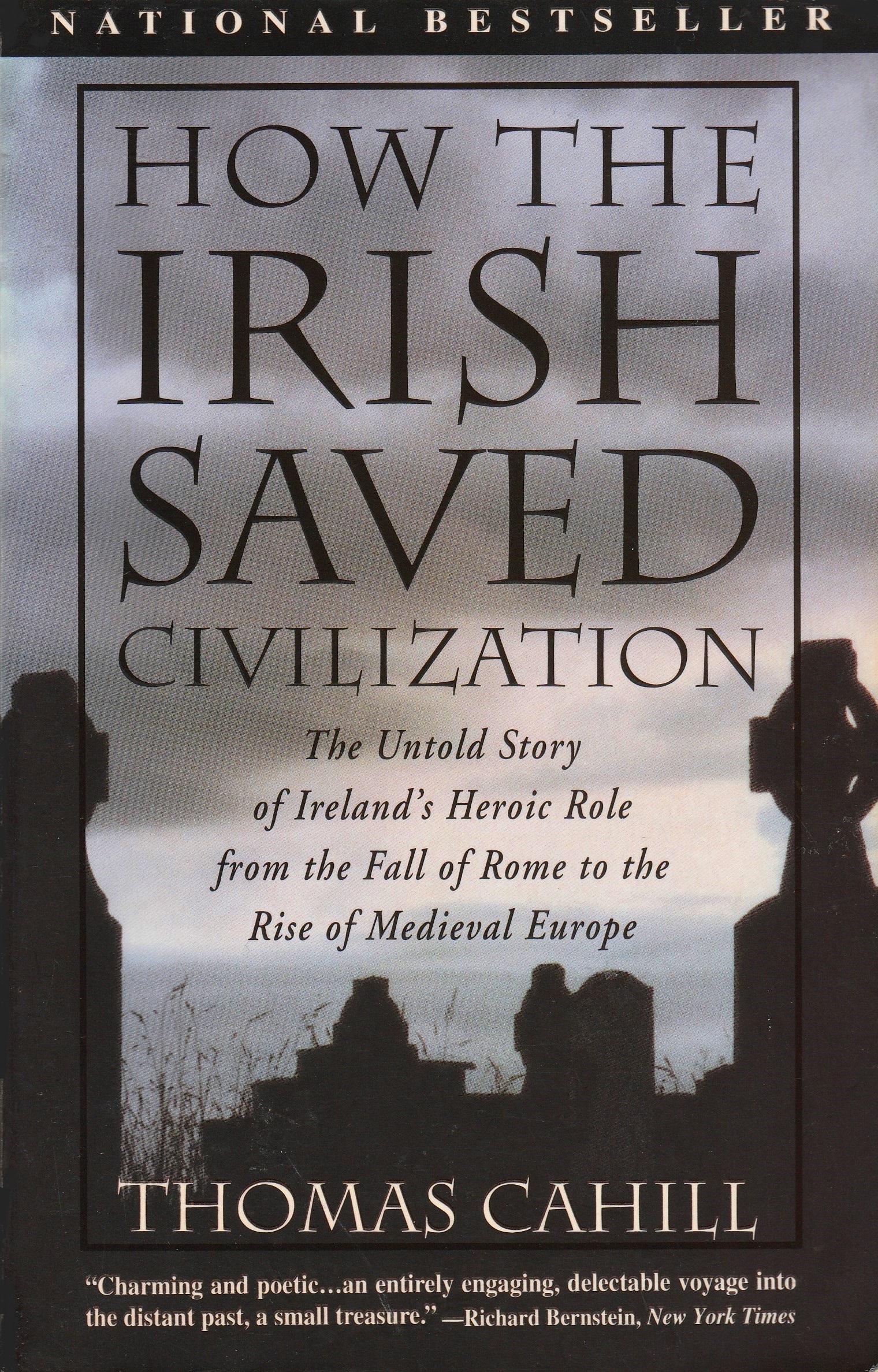
Here's a bold claim: without a handful of Irish monks, the books you love—and books themselves—might never have existed. That's the argument Thomas Cahill makes at the start of *How the Irish Saved Civilization*. He writes that without the Irish monastic scribes, "the world that came after them would have been an entirely different one—a world without books."
Think about that. A world without books. No novels, no histories, no poetry. No way to pass down knowledge from one generation to the next. That's the catastrophe Cahill believes we narrowly avoided, thanks to a people the Romans dismissed as barbarians.
This book tells a story that most history books skip. You've probably heard about Rome's fall—the Germanic tribes sweeping in, the empire crumbling, the so-called Dark Ages descending. But what happened next? Who kept the flame of learning alive?
The answer, Cahill argues, lies on the western edge of Europe, in a place the Romans never conquered: Ireland.
The book follows a chronological arc. It starts with Rome's collapse, then moves to the man who changed everything: Patrick, a former slave who became Ireland's apostle. From there, it traces how Patrick's mission sparked a golden age of Irish monasticism, how those monks spread across Europe, and how their work in copying manuscripts preserved classical civilization—until Viking raids finally brought the golden age to an end.
Cahill sets up a dramatic contrast from the start. On one side, the Romans: sophisticated, powerful, the masters of the ancient world. On the other, the Irish: illiterate, pagan, what the Romans called *barbari*—a "matted mass of Others," as Cahill puts it. The Irish were the people Rome dismissed as not worth worrying about.
Yet these same "barbarians" became the ones who saved what Rome had built.
The irony is delicious. While Roman civilization collapsed under the weight of its own decay and external invasions, the Irish—who had never been part of that civilization—took up the task of preserving its greatest treasures. They copied Greek and Latin manuscripts by hand, often decorating them with stunning Celtic art. They developed new scripts that made texts easier to read. They built monasteries that became centers of learning, welcoming students from all over Europe.
Without them, Cahill argues, the classical tradition would have been lost. The works of Virgil, Cicero, and Augustine would have disappeared. The intellectual foundation of Western civilization would have crumbled.
This summary will walk you through that remarkable story. We'll see how Patrick's conversion of Ireland created the conditions for a learning revolution. We'll follow Irish monks as they carry their books to Scotland, England, and the European continent. We'll witness the beauty they created—the illuminated manuscripts that blend Celtic spirals with Christian imagery. And we'll see how Viking raids nearly destroyed everything they built.
But before we get to that, we need to understand what was at stake. What did the world stand to lose when Rome fell? How much knowledge actually vanished? And why were the Irish—of all people—the ones to save it?
The answers might surprise you. Because the same people the Romans considered uncivilized turned out to be the ones who kept civilization alive.
How did that happen? How did a slave boy named Patrick become the catalyst for one of history's greatest rescue missions?
About the Book
After Rome fell, barbarians ravaged Europe and classical knowledge teetered on the edge of extinction. Yet from the misty, untamed island of Ireland—a land the Romans dismissed as worthless—emerged an unlikely rescue mission. This book reveals how former slave Patrick, joyful monks, and illuminated manuscripts preserved the works of Virgil, Augustine, and Cicero, ultimately saving Western civilization itself.
Key Takeaways
Civilization is preserved not by the powerful, but by the overlooked.
The Roman Empire, with all its might and sophistication, collapsed under its own weight, while the Irish—dismissed as barbarians—became the unlikely custodians of classical knowledge, proving that true preservation often comes from those on the margins.
True transformation begins with love, not conquest.
Patrick succeeded in converting Ireland not by force or imperial authority, but by immersing himself in Irish culture and loving the people as his own, demonstrating that the deepest changes come from empathy and identification rather than domination.
Adversity can be the forge of greatness.
Patrick's six years of solitary slavery became the crucible that transformed him from a frightened boy into a man of unshakeable faith, showing that our darkest trials often prepare us for our most significant missions.
The greatest gifts are often given by those who have the least.
The Irish, who had no cities, no written language, and no political power, gave Europe back its books and its learning, reminding us that generosity and impact are not measured by material wealth.
Preservation requires active devotion, not passive inheritance.
Irish monks did not simply inherit knowledge; they devoted years of their lives to painstakingly copying manuscripts by hand, treating each page as an act of worship—a lesson that safeguarding culture demands deliberate, sacrificial effort.
True universality embraces the stranger as family.
The Irish monks copied pagan classics alongside Christian texts and welcomed all students regardless of class, embodying a universalist spirit that saw all humanity as one family—a stark contrast to the tribal exclusivity of Rome.
Beauty is a form of worship and a vessel for truth.
The illuminated manuscripts like the Book of Kells were not just functional texts but breathtaking works of art, proving that how we present truth matters—beauty can elevate the sacred and make knowledge unforgettable.
The end of an era is not the end of its legacy.
Though Viking raids destroyed the great Irish monasteries, the manuscripts they had copied and the seeds of learning they had planted across Europe survived, teaching us that what is built with love and care can outlast even the most violent destruction.
Who Should Listen?
History buffs who love underdog stories and want to discover the overlooked Irish monks who preserved the classics.
Readers of narrative nonfiction like *Sapiens* or *Guns, Germs, and Steel* who enjoy big-picture arguments about how civilization survives.
Irish-Americans or anyone with Irish heritage seeking a proud, myth-busting account of their ancestors' global impact.
Bibliophiles and book lovers who will be moved by the dramatic tale of how handwritten manuscripts were smuggled, buried, and copied to survive the Dark Ages.