Book Summaries
Hosts: Clara
Timeline
Summary Preview
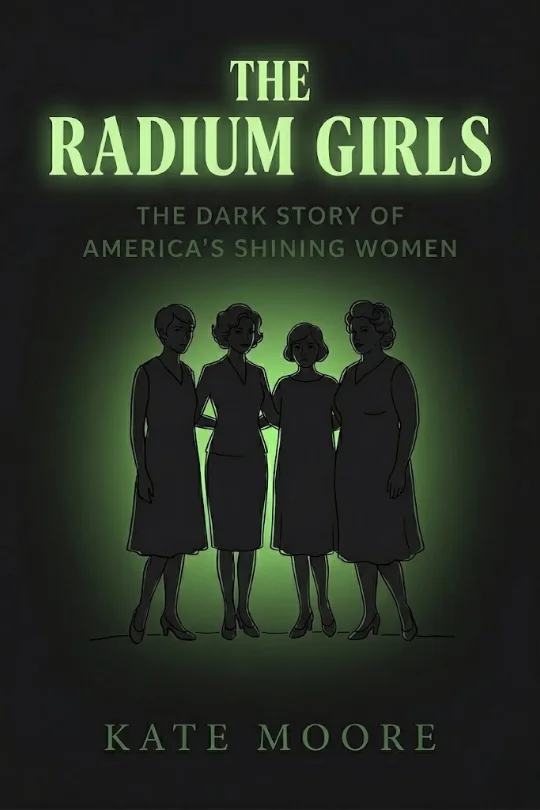
In 1901, an unnamed scientist was traveling to England to give a lecture. Tucked away in his pocket, forgotten, was a tiny vial of radium. It had been a gift from Marie and Pierre Curie, the discoverers of this remarkable new element. The scientist was one of the few people on earth to possess a sample of the difficult-to-extract radioactive substance. In the media, radium was portrayed as something enchanted, a substance of the gods. But as author Kate Moore points out, enchantment can also involve a curse.
A few days later, the scientist noticed a red, burn-like mark across his stomach. The mark deepened and grew more painful in the following days. Finally, he remembered the radium. The tiny vial in his pocket had been burning him all along, and he hadn't even known it.
This eerie image sets the tone for everything that follows. Radium was both magical and deadly, a substance that could glow with unearthly beauty while quietly destroying the bodies of those who came too close. The scientist's forgotten vial foreshadowed a much larger tragedy that would unfold over the coming decades, one that would destroy the lives of hundreds of young women who trusted the companies that employed them.
This is the story of the Radium Girls, the young female dial-painters who suffered from radium poisoning after working with luminous paint. It is a cautionary tale about corporate greed, unchecked commercialization, and technological optimism run amok. But more than that, it is a story of courage, of women who fought back against powerful corporations and, against all odds, won a measure of justice.
The book chronicles the lives of young women who worked at two radium factories: the Radium Luminous Materials Corporation in Newark, New Jersey, and Radium Dial in Ottawa, Illinois. These women were hired to paint watch dials with luminous paint, a job that was considered glamorous and well-paid. They were taught to "lip-point" their brushes, putting them in their mouths to form a sharp point. The company assured them it was harmless.
But it was not harmless. The radium they ingested accumulated in their bones, where it would remain for the rest of their lives, emitting radiation that would slowly destroy their bodies from the inside. The women experienced toothaches, jaw pain, and fatigue. Their teeth fell out. Their jaws disintegrated. They died choking on their own blood. And for years, the companies denied any responsibility.
The narrative serves as a warning about what happens when commercial interests are placed above human life. The radium companies knew about the dangers of their product. Scientists had known since 1901 that radium could cause burns and illness. But the companies chose to ignore this knowledge, suppressing reports and hiring biased experts to produce false clean bills of health. They prioritized profit over safety, and hundreds of women paid the price.
Yet this is also a story of resistance. The women refused to accept their fate quietly. They contacted government agencies, demanded investigations, and eventually filed lawsuits against the powerful corporations that had exploited them. They faced systemic barriers at every turn, from skeptical doctors and indifferent bureaucrats to hostile lawyers and biased judges. But they persisted, driven by a determination to expose the truth and secure justice for themselves and their fellow workers.
The legal battles were long and grueling. The companies used every tactic at their disposal to avoid liability, including statute of limitations arguments, legal loopholes, and outright deception. They hired private detectives to follow the women and spread rumors about them. They ran full-page ads in local newspapers denying any danger. They even exhumed the body of a dead dial-painter to try to disprove the connection between radium and the women's illnesses.
But the women refused to give up. With the help of determined lawyers, doctors, and advocates, they eventually won their cases. The verdicts set important precedents for workplace safety and workers' rights, leading to mandatory health safety testing and regulation in the United States. The cases contributed to the formation of the Occupational Safety and Health Administration (OSHA) and safety standards for radioactive materials.
The Radium Girls' story is a powerful reminder of the human cost of corporate negligence. It is a story that should not be forgotten. But as the book's epilogue makes clear, we have a tendency to forget such lessons. The same patterns of exploitation and denial continue to occur, even today.
As you listen to this summary, consider this: What other dangers might be lurking in our workplaces, hidden from view, quietly destroying the lives of workers who trust their employers? And what will it take for us to learn the lessons of the Radium Girls before tragedy strikes again?
About the Book
In the early 1900s, young women painted watch dials with radium, taught to 'lip-point' their brushes for a perfect tip. Assured it was safe, they swallowed poison with every stroke. This is the gripping true story of their fight for justice against corporate greed—a battle that changed workplace safety forever, told through the women who glowed, suffered, and refused to be silenced.
Key Takeaways
The most beautiful light can cast the darkest shadow
Radium was celebrated as a miracle substance, glowing with unearthly beauty and promising health and progress, yet it was silently destroying the very women who made it shine, reminding us that what appears enchanting may hide a deadly curse.
Trust is the first casualty of corporate greed
The young dial-painters trusted their employers' assurances that the luminous paint was harmless, only to discover that the companies knowingly suppressed scientific evidence of radium's toxicity, proving that when profit is prioritized, human lives become disposable.
Silence is the accomplice of injustice
The radium companies buried damning reports, hired fraudulent experts, and manipulated test results to deny the women's suffering, demonstrating that the most powerful weapon against exploitation is not violence but the refusal to be silenced.
The body keeps the score when the system looks away
While courts, doctors, and corporations dismissed the women's pain as hysteria or coincidence, their crumbling jaws and glowing bones told the undeniable truth of radium poisoning, showing that physical evidence can speak louder than any legal denial.
Justice delayed is not justice denied when courage endures
Despite expired statutes of limitations, biased judges, and a legal system designed to protect the powerful, the radium girls fought for years until they won, proving that persistence can overcome even the most formidable institutional barriers.
The dead can testify when the living refuse to listen
When Mollie Maggia's body was exhumed six years after her death, her bones still glowed with radium, providing irrefutable evidence that the company had lied, reminding us that truth cannot be buried forever.
Progress is not permanent; it must be defended every day
The radium girls' sacrifice led to OSHA, workplace safety standards, and nuclear regulations, yet decades later, the same executives reopened a new factory where history repeated itself, proving that vigilance is the price of safety.
The most powerful legacy is not a monument but a changed law
Though a memorial to the radium girls came decades late, their true monument lives in every ventilation system, every safety test, and every worker protected by the regulations their suffering inspired, showing that systemic change outlasts any statue.
Who Should Listen?
History buffs who want a deeply researched, human-centered account of a landmark workplace tragedy that reshaped labor law.
True crime and narrative nonfiction fans who appreciate stories of corporate malfeasance, cover-ups, and the fight for justice.
Workers, union members, or anyone in hazardous industries who wants to understand the hard-won safety standards they now take for granted.
Readers of social justice and feminist history who are inspired by stories of ordinary women banding together to take on powerful institutions.