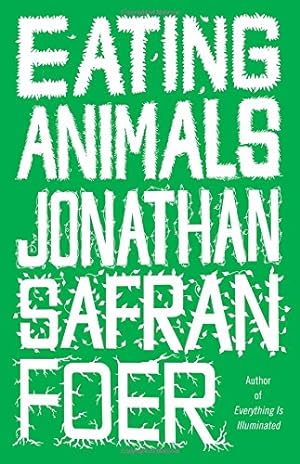
Eating Animals
Book Summaries
Hosts: Ethan
Timeline
Summary Preview
Jonathan Safran Foer's grandmother, Ethel Safran, had one recipe. Just one. Chicken and carrots. But in her family, that single dish earned her the title "Greatest Chef Who Ever Lived." It wasn't about culinary skill. It was about what food meant to her—and what it cost her.
Ethel survived the Holocaust. She spent years fleeing Nazi capture, starving, hiding, watching people die around her. During those years, she ate from garbage cans. She ate anything she could find to stay alive. Almost anything.
She never ate pork.
Not once. Not even when starvation pressed against her ribs. Not even when a bite of pork might have been the difference between life and death. For Ethel, food wasn't just fuel. It was identity. It was dignity. It was history and religion and love, all tangled together. As Foer writes, "Food, for her, is not food. It is terror, dignity, gratitude, vengeance, joyfulness, humiliation, religion, history, and, of course, love."
That refusal to eat pork—even when dying—stayed with Foer. It shaped his understanding of what food can mean. And years later, when Foer's wife became pregnant with their son, that understanding collided with a new question: What kind of eating animal would his child become?
Foer had been a wavering vegetarian most of his life. He went vegetarian at ten after a babysitter showed him why meat came from animals. He went back to eating meat. Then, as a philosophy major at Princeton, he became vegetarian again for two years. Then he stopped again. He and his wife, Nicole, called themselves "honest people who occasionally told lies, careful friends who sometimes acted clumsily." They were vegetarians who from time to time ate meat.
But fatherhood changed the stakes. Foer realized he would have to explain to his son why they ate what they ate. He would have to justify it. And he couldn't.
"I assumed we'd maintain a diet of conscientious inconsistency," Foer writes. "Why should eating be any different from any of the other ethical realms of our lives?"
But it was different. Because eating isn't private. It's public, political, repeated three times a day. And behind every piece of meat sits a story that most people never hear.
Foer decided to investigate. He spent three years immersed in animal agriculture. He visited factory farms. He interviewed ranchers, activists, slaughterhouse owners, and farmers. He read the scientific literature. He used the most conservative statistics available—government data, peer-reviewed studies. But he knew facts alone wouldn't be enough.
"Place facts in a story," he writes, "a story of compassion or domination, or maybe both—place them in a story about the world we live in and who we are and who we want to be—and you can begin to speak meaningfully about eating animals."
This book, *Eating Animals*, is that story.
It begins with Ethel's chicken and carrots. That dish, that single recipe, represents everything Foer stands to lose if he changes what his family eats. His grandmother's cooking was family tradition, connection, love made edible. Could his son ever feel part of the family without tasting that chicken? Could Foer honor his grandmother's memory while refusing to eat the food she made?
These questions haunted him. But so did another: Could he honor his grandmother's memory by ignoring what he learned about where meat comes from?
Ethel survived because she held onto meaning. She refused pork not because she was full—she was starving—but because eating it would have made her less herself. As Foer later reflects, "If nothing matters, there's nothing to save."
So Foer began his investigation, carrying his grandmother's story and his son's future as twin weights on either side of the scale. The personal and the philosophical. The family table and the factory farm. What he found behind the locked doors of the meat industry would force him to decide not just what he believed, but who he was.
What happens when the stories we tell about food—comfort, tradition, love—collide with the stories we don't tell?
About the Book
Jonathan Safran Foer's grandmother survived the Holocaust by refusing pork, teaching him that food carries meaning. Now a new father, Foer investigates the hidden realities of factory farming—from locked sheds to antibiotic resistance. Blending personal memoir with investigative journalism, he confronts the moral questions behind every meal and challenges readers to decide what kind of eating animal they want to be.
Key Takeaways
Food is never just food; it is identity, history, and meaning made edible.
Foer’s grandmother survived the Holocaust by refusing to eat pork even while starving, teaching that what we consume carries the weight of who we are—our dignity, religion, and love are all tangled in every bite.
The species barrier is a wall built from forgetting, not from reason.
We love dogs and eat pigs not because of any logical ethical distinction, but because cultural norms have trained us to sort animals into arbitrary categories—and the meat industry depends on keeping that wall invisible.
Language is the first line of defense against moral clarity.
Euphemisms like 'broiler chickens,' 'CAFOs,' and 'Common Farming Exemptions' are not neutral terms; they are tools designed to hide cruelty behind clinical bureaucracy, making suffering routine and legal.
Witnessing suffering forces you to become complicit or to change.
When Foer visited a factory farm, an activist had to kill a suffering chick—showing that even those who expose cruelty are trapped in a system where inaction is a form of participation, and action is never clean.
The myth of consent collapsed when farming became industrial slavery.
For millennia, humans kept animals with some semblance of a bargain—space, sunlight, care—but factory farming broke that pact entirely, replacing it with confinement so total that the animals' lives are nothing but engineered pain.
What we do to animals eventually comes back to us as a public health crisis.
Factory farms are perfect incubators for zoonotic diseases and antibiotic-resistant superbugs, proving that cruelty is not just a moral issue but a biological time bomb that threatens everyone, regardless of diet.
Even the most ethical farmer must take a deep breath before admitting the violence.
Bill Niman, the gold standard of humane ranching, could not defend branding his cattle without a pause—revealing that no amount of good treatment can erase the fundamental contradiction of raising animals to kill them.
Individual choice matters not because it changes the system overnight, but because it changes what is imaginable.
Foer’s decision to omit turkey from Thanksgiving was not a grand gesture, but a quiet act of integrity that ripples through social osmosis—showing that personal choices reshape norms and make alternatives visible.
Who Should Listen?
New or expecting parents who are rethinking the meals they serve their children and want guidance on making ethical food choices.
Flexitarians or occasional meat-eaters who feel uneasy about factory farming but lack the full picture of what happens behind locked doors.
Environmentalists and public health advocates concerned about antibiotic resistance, zoonotic disease risks, and the ecological impact of industrial agriculture.
Anyone who has ever wondered why we love dogs but eat pigs, and wants a thoughtful, non-judgmental exploration of that contradiction.