Book Summaries
Hosts: Ethan
Timeline
Summary Preview
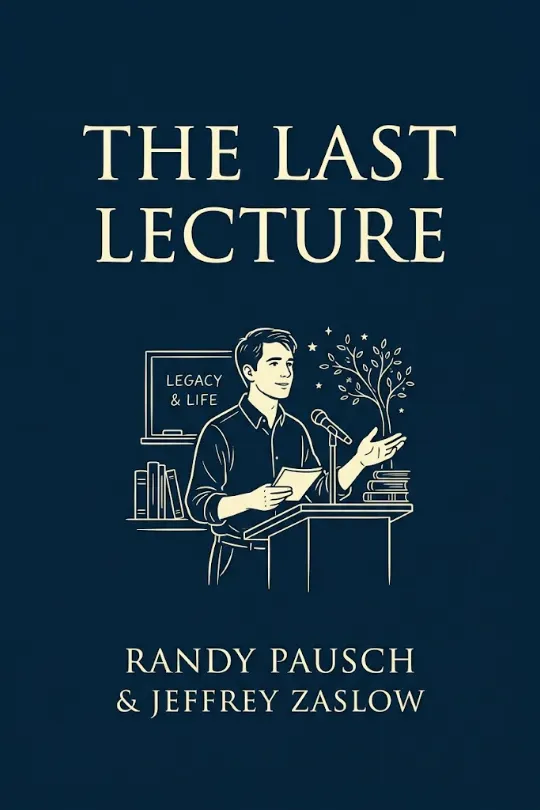
In September 2007, a trim man in a Disney Imagineering t-shirt walked onto a stage at Carnegie Mellon University. The auditorium was packed. More than four hundred students, faculty, and staff had come to hear Randy Pausch deliver what the university called a "last lecture"—a tradition where retiring professors share their final wisdom.
But Pausch was not retiring. He was forty-seven years old. And he was dying.
Three weeks earlier, his doctors had confirmed what he already suspected. The pancreatic cancer that had attacked him a year ago had returned. There would be no more treatments aimed at a cure. His prognosis: three to six months of life.
Pausch began his lecture by addressing the elephant in the room directly. He pulled up a slide showing his most recent CT scan. On the screen, the tumors appeared as dark spots across his liver. The audience went quiet.
Then Pausch did something unexpected. He dropped to the floor and began doing pushups. Right there, in front of everyone. He pumped out a few quick reps, then popped back up, brushed off his hands, and explained: "That's what I get for having chemo today." He wanted them to see that he was not some fragile, dying figure. He was still himself—still capable of physical strength, still capable of humor, still capable of living fully in the time he had left.
"I'm not just some dying man," he told them. "It was just me. I could begin."
And begin he did. For the next hour, Pausch delivered a talk titled "Really Achieving Your Childhood Dreams." He walked through his own childhood aspirations—floating in zero gravity, writing for the World Book Encyclopedia, working at Disney, playing in the NFL—and showed how he had accomplished nearly every one. But the lecture was not really about dreams. It was about something much deeper. It was a carefully constructed "head fake."
The concept of the head fake came from Pausch's childhood football coach, Jim Graham. A head fake, Pausch explained, is when you think you're learning one thing, but really you're learning something else entirely. When Coach Graham ran his young players through grueling drills, the boys thought they were learning football. In reality, they were learning discipline, resilience, teamwork, and character. The football was just the wrapper.
The Last Lecture, both the talk and the book, operates on the same principle. On the surface, it appears to be an academic lecture about achieving childhood dreams. But that is the head fake. The real purpose is something far more personal and urgent.
Pausch had three young children: Dylan, Logan, and Chloe. The oldest was five. The youngest was not yet two. They would grow up without a father. They would have no memories of him teaching them to ride a bike, no memories of him at their graduations, no memories of him walking them down the aisle. Pausch knew this. It was the one brick wall he could not climb.
So he decided to leave them something else. He decided to push himself into a bottle—a metaphor he borrowed from a science fiction story—and let that bottle wash up on the beach of their lives someday. The lecture was that bottle. The book became another.
"I was trying to put myself in a bottle that would one day wash up on the beach for my children," he later admitted.
This is the hidden truth that runs beneath every story in The Last Lecture. Every lesson about perseverance, every story about mentors, every piece of advice about gratitude and teamwork—these are not just general life lessons. They are specific messages designed for three particular children who would one day need to know who their father was, what he believed, and how much he loved them.
The lecture itself was filmed and posted on YouTube. Within months, it had been viewed millions of times. People from around the world wrote to Pausch, sharing how his words had changed their lives. He was offered book deals, speaking invitations, and countless expressions of gratitude. The lecture had taken on a life of its own.
But Pausch understood something that many of his viewers did not. The lecture was never really for them. It was for his kids. The public audience was just part of the head fake. By making the lecture widely available, Pausch ensured that his children would always be able to find it, to watch it, to hear their father's voice and see his face. The fame of the lecture guaranteed its survival.
The book that followed expands on the lecture, adding context and depth. It is part memoir, part advice manual, part love letter. Pausch co-wrote it with Wall Street Journal columnist Jeffrey Zaslow, and together they shaped the material into something that would endure long after Pausch was gone.
Pausch opens the book with a confession. He admits that he is not a natural optimist. He has moments of despair, anger, and fear. But he made a conscious decision to frame his remaining time positively. He remembered something he had learned from Disney employees, who were trained to tell guests that "the park is open until eight" rather than "the park closes at eight." The same information, but one version focuses on what remains, the other on what will end.
"Telling people the park closes at eight makes them feel like they're being kicked out," Pausch wrote. "Telling them the park is open until eight makes them feel like they have time to enjoy themselves."
This is how Pausch chose to live his final months. He would focus not on what he was losing, but on what he still had. He had his wife Jai, who had stood by him through the grueling chemotherapy and the devastating prognosis. He had his children, who would carry his memory forward. He had his work, which had given him purpose and meaning. And he had this one last chance to speak, to teach, to leave something behind.
The pushups at the start of the lecture were not just a stunt. They were a statement. I am still alive. I am still strong. I am still here. And as long as I am here, I will keep teaching, keep loving, keep living.
This is the foundation of everything that follows. The book is structured as a series of lessons, each one built around a specific story from Pausch's life. But the real lesson is always the same: How do you live a life worth living? How do you make your time count? How do you leave something behind that matters?
Pausch knew he could not answer these questions perfectly. He was not claiming to have figured everything out. But he had something more valuable than certainty: he had urgency. He knew exactly how much time he had left, and that knowledge gave his words a weight they would not otherwise have carried.
When you know you are dying, you stop wasting time on the trivial. You stop worrying about what others think. You stop postponing the important conversations. You say what needs to be said.
And what Pausch needed to say was simple: Life is short. Love your family. Work hard. Be grateful. Help others. And never, ever give up.
These are not new ideas. They are not original. But coming from a man who was staring at his own death, they land differently. They are not abstract platitudes. They are hard-won truths, earned through years of struggle and confirmed in the final months of his life.
The book begins with Pausch on that stage, showing his tumors and doing his pushups. It ends with him reflecting on the head fake he had pulled off. He had come to give a lecture about achieving dreams, but he had really come to say goodbye to his children. He had come to tell them, in the only way he could, that their father loved them and would always love them, even after he was gone.
"This lecture was not for the people in the audience," he admitted. "It was for my kids."
And with that, the head fake was revealed. The audience had come to hear a professor's final thoughts on success. They had received something far more intimate: a father's final words to his children.
So the question becomes not just what Pausch said, but why he said it. And what could you say, if you knew you had only one last chance to speak?
About the Book
When Randy Pausch, a 47-year-old professor with terminal cancer, delivers a final lecture on achieving childhood dreams, the audience thinks it's academic wisdom. But beneath the jokes and pushups lies a heartbreaking head fake: this is actually a father's desperate attempt to leave a lasting guide for his three young children, teaching them how to live fully, love deeply, and face death with courage.
Key Takeaways
Brick Walls Are Not Barriers, They Are Tests of Desire
Obstacles are not placed in your path to keep you out, but to reveal how badly you truly want what you're pursuing. Every brick wall is an opportunity to prove your commitment, and the struggle itself is where the real growth happens.
The Park Is Open Until Eight: Frame Your Life by What Remains, Not What Ends
When facing any ending, choose to focus on the time and resources still available rather than what is being lost. This simple shift in perspective transforms despair into purposeful action and allows you to live fully in the time you have.
The Head Fake: The Deepest Lessons Come Disguised as Something Else
The most profound truths are often learned when you think you are learning something else entirely—whether through play, work, or relationships. Life's greatest gifts arrive wrapped in unexpected packages.
Not Everything Needs to Be Fixed: The Wisdom of Letting Go
In relationships, the most loving response is often not to solve every problem but to accept imperfection and move forward. True connection requires knowing when to hold on and when to release.
The First Penguin Award: Failure Is Tuition, Not a Verdict
Taking bold risks and failing spectacularly is not something to avoid—it is something to celebrate. The willingness to be the first to jump, knowing you might fail, is the prerequisite for any meaningful success.
Gratitude Is the Forgotten Currency of Human Connection
A handwritten thank-you note or a small gesture of appreciation can open doors that talent and intelligence cannot. People remember how you made them feel, and gratitude builds the loyalty that sustains every meaningful relationship.
Be a Tigger, Not an Eeyore: Attitude Is a Choice, Not a Reaction
Your response to circumstances is the one thing you always control, and choosing optimism and joy attracts the support and kindness of others. The world responds to your energy, and positivity creates its own momentum.
A Message in a Bottle: The Most Important Work Is the Love You Leave Behind
Everything you build, teach, or achieve is ultimately a vessel for the love you want to outlast you. The truest legacy is not fame or accomplishment, but the specific, personal messages of love you leave for those who will need them most.
Who Should Listen?
Parents who want to leave a meaningful legacy for their children but don't know how to start.
Professionals in their 40s or 50s facing a serious health diagnosis who need a model for living with purpose and positivity.
Anyone struggling with a major life setback or failure who needs a powerful reminder that brick walls are opportunities to prove how badly you want something.
Young adults entering the workforce who want practical, no-nonsense advice on time management, gratitude, and building lasting relationships.