Book Summaries
Hosts: Ethan
Timeline
Summary Preview
Mark Kurlansky bought a rock in Spain. Not a precious stone or a mineral specimen—just a pink, translucent rock from the salt mountain of Cardona in Catalonia. He brought it home and set it on his windowsill. Then something strange happened.
One day, rain splashed against the rock. The pink began to turn white. On humid mornings, a small puddle appeared beneath it, filled with white salt crystals. But the rock itself never got smaller. It sweated, it changed color, but it never shrank. Kurlansky writes: "Those who think a fascination with salt is a bizarre obsession have simply never owned a rock like this."
This ordinary rock, nearly pure salt, sits at the center of an extraordinary story. Because salt—common, cheap, sitting in shakers on millions of tables—was once one of the most valuable substances on earth. It built empires, sparked revolutions, and drove explorers across oceans. It paid Roman soldiers, preserved Egyptian pharaohs, and ignited the French Revolution. And today, most of us barely think about it.
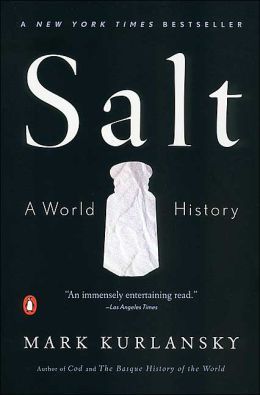
The paradox is almost absurd. Salt is everywhere. The oceans are filled with it. Mountains are made of it. The human body cannot survive without it. And yet, for most of recorded history, people fought over it, taxed it, hoarded it, and died for it. Kurlansky's book, *Salt: A World History*, traces this strange journey from ancient China to modern America, showing how a simple mineral shaped the course of civilization.
Why did something so abundant become so powerful? The answer lies not in scarcity, but in necessity. Salt is essential for life. Humans need it to survive—estimates range from two-thirds of a pound to more than sixteen pounds per year, depending on how much a person sweats. But more than that, salt preserves food. Before refrigeration, before canning, before freezing, salt was the only reliable way to keep meat and fish from rotting. Armies needed it. Cities needed it. Empires depended on it.
The book opens with a simple question: why has humanity been so obsessed with salt? A Welsh psychologist named Ernest Jones thought the answer was sexual. He argued that salt was associated with fertility—saltwater fish have more offspring than land animals, so the connection made sense to him. In the Pyrenees, bridal couples carried salt in their left pockets to guard against impotence. Egyptians, Hebrews, Japanese, and Apache all developed salt rituals tied to sex and marriage.
But Kurlansky offers a simpler explanation. Salt has over 14,000 known uses. It melts ice, dyes textiles, softens water, and preserves everything from fish to human bodies. The Egyptians used it for mummification. The Hebrews saw it as a symbol of God's covenant because it prevents decay. In Japan, people sprinkled salt on doorways to keep evil spirits away.
The book then launches into history. And the scope is staggering. Kurlansky takes readers from the first known saltworks in China, dating to 6000 B.C., through the Roman Empire, the Venetian monopoly, the French Revolution, the American Civil War, and Gandhi's Salt March. Each chapter reveals another layer of salt's hidden power.
The Chinese were among the first to understand salt's value. By 252 B.C., Governor Li Bing had drilled the first salt wells in Sichuan, using bamboo piping that would later inspire irrigation and plumbing systems. The Qin dynasty established the first state-controlled monopoly on a vital commodity—salt. Philosophers debated whether government should profit from something so essential. The legalists said yes. The Confucians said no. The debate continues today.
In Egypt, salt preserved the dead. Mummification required vast quantities of natron, a salt mixture that dried bodies and prevented decay. But salt also preserved the living. Egyptians cured meat and fish on a massive scale, preparing for years of famine. They pickled vegetables, softened olives, and traded salted food across the Mediterranean.
The Celts, often dismissed as barbarians, were skilled salt miners. Perfectly preserved bodies found in Austrian salt mines revealed their advanced clothing and trade networks. When Rome conquered them, the empire absorbed their technology and expanded salt production to a scale never seen before.
The Romans built the Via Salaria—the Salt Road—to transport salt across Italy. Soldiers were paid in salt, which is why we say someone is "worth his salt" and why the word "salary" comes from the Latin *sal*. Salt was so central to Roman life that the government controlled its price and used salt taxes to fund wars.
Venice took salt manipulation to new heights. The city destroyed competitors' saltworks, banned local production, and forced expensive imports. Venetian merchants made more money buying and selling salt than producing it. The salt trade paid for public buildings, hydraulic systems, and the naval fleets that dominated the Mediterranean.
The Basques became the first commercial whale hunters and cod fishermen. Salted cod fed European armies and navies for centuries. The demand for preserved fish drove exploration, with Basque fishermen possibly reaching North America before Columbus. Salt made long voyages possible. Without it, the Age of Exploration might never have happened.
In France, the hated salt tax called the *gabelle* became a symbol of government tyranny. By the late 18th century, over 3,000 French men, women, and children had been sentenced to prison or death for salt-related crimes. The *gabelle* was a direct cause of the French Revolution. It was abolished, then reinstated by Napoleon, and finally ended in 1946.
In America, salt shortages crippled the Continental Army during the Revolution. British blockades left George Washington's troops without salt for their soldiers, horses, and medical supplies. The new nation was born with a bitter memory of depending on others for salt. During the Civil War, the Union systematically destroyed Southern saltworks, leading to starvation and Robert E. Lee's surrender.
Gandhi made salt the centerpiece of his campaign for Indian independence. The British salt tax was thirty times higher than in England. In 1930, Gandhi marched 240 miles to the sea, where he illegally scraped salt from the shore. The act sparked a nationwide movement and eventually led to Indian independence.
Today, most salt isn't used for food. In the United States, over 51 percent goes to deicing roads. The U.S. produces over 40 million metric tons of salt each year, earning more than $1 billion in sales revenue. The Morton Salt Company, founded on a transportation idea, dominates the industry through volume and innovation.
But the story isn't over. Scientists still debate how much salt humans need. Estimates range wildly. The health effects remain controversial. And Kurlansky's central question—why has something so abundant been treated as precious?—still echoes.
He writes: "The search for love and the search for wealth are always the two best stories. But while a love story is timeless, the story of a quest for wealth, given enough time, will always seem like the vain pursuit of a mirage."
The pink rock on Kurlansky's windowsill never gets smaller. It sweats, it changes, but it endures. And that's the mystery at the heart of this book. How did something so ordinary, so common, so seemingly insignificant, become the rock that built civilizations?
What if the most powerful forces in history are not gold, oil, or diamonds—but the things we take for granted?
About the Book
From ancient China to Gandhi's Salt March, this book reveals how a simple mineral—salt—drove human civilization. Kurlansky traces salt's role in building empires, funding wars, and sparking revolutions, showing how this everyday substance shaped economies, cuisines, and global power struggles. A fascinating journey through 8,000 years of hidden history.
Key Takeaways
The most ordinary things often hold the greatest power.
Salt, a mineral so common and cheap that we barely notice it, once built empires, sparked revolutions, and drove explorers across oceans, proving that the forces shaping history are not always gold or oil but the everyday necessities we take for granted.
Control over a necessity is control over civilization itself.
From ancient China's state monopoly to Venice's destruction of rival saltworks, whoever controlled salt controlled the economy, the military, and the people, revealing that power lies not in scarcity but in command of what is essential for survival.
A simple act of defiance can topple an empire.
Gandhi's Salt March—a 240-mile walk to pick up a handful of salt from the sea—united millions across divides and broke British rule, showing that the most profound revolutions often begin with the smallest, most symbolic gestures.
What we value reveals our deepest fears and desires.
Salt was treasured not for its beauty but for its ability to preserve life against decay, famine, and death, reflecting humanity's timeless struggle against mortality and our relentless drive to control the future.
Injustice in small things breeds the largest rebellions.
The French salt tax, the *gabelle*, was not the heaviest burden, but its cruelty and inequality—condemning thousands to death for smuggling salt—made it the symbol of tyranny that ignited the French Revolution.
Technology born of necessity reshapes the world in unexpected ways.
The bamboo piping used to drill ancient Chinese salt wells later enabled irrigation, plumbing, and natural gas pipelines, while salt prospecting led to the discovery of oil, proving that innovations for survival often become foundations of modern civilization.
The quest for wealth is a mirage, but the search for meaning endures.
Kurlansky notes that while the pursuit of riches always seems vain in hindsight, the story of salt reveals that what truly drives history is not wealth itself but the human need to preserve, connect, and survive—a timeless search that outlasts any empire.
Freedom is often measured by what we are allowed to take for granted.
The American Revolution and Civil War were both shaped by salt blockades, and Indian independence was sparked by a salt tax, reminding us that the most basic freedoms—like access to a mineral essential for life—are the ones worth fighting for.
Who Should Listen?
History buffs who love surprising, unconventional narratives that connect ancient events to modern life.
Food enthusiasts curious about how food preservation shaped exploration, trade, and global cuisines.
Economics and political science readers interested in how control of a single commodity built empires and sparked revolutions.
Anyone who enjoys narrative nonfiction that reveals the hidden stories behind everyday objects.