Book Summaries
Hosts: Ethan
Timeline
Summary Preview
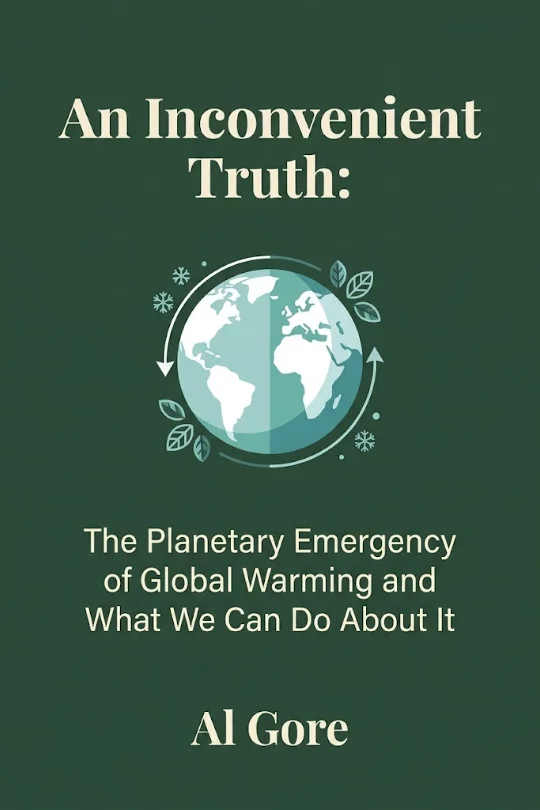
The Chinese symbol for "crisis" is composed of two characters placed side by side. The first character means "danger." The second means "opportunity." Al Gore opens his book with this ancient insight, and it frames everything that follows. This is not just a book about melting glaciers and rising seas. It is a book about a choice.
Gore writes with urgency from the very first page. The climate crisis, he insists, is a true planetary emergency. The evidence is overwhelming. The consequences of inaction are catastrophic. But he refuses to let the story end in despair. The same crisis that threatens civilization also offers something rare: a chance to build something better, to harness the sun and the wind, to stop wasting energy, to use coal without heating the planet. The danger is real. So is the opportunity.
The book combines hard scientific evidence with deeply personal stories. Gore does not simply present data and walk away. He tells you why this matters to him, why it should matter to you, and why it must matter to anyone who cares about the future. He writes about his own journey from a young student sitting in a Harvard classroom to a former vice president standing before audiences around the world, trying to wake people up to what is happening.
The science comes first. Gore explains the basic mechanism of global warming in clear, accessible terms. The sun heats the Earth. The atmosphere traps some of that heat, keeping the planet livable. But human activities—burning fossil fuels, cutting down forests, running factories—release greenhouse gases that thicken the atmosphere. Too much heat gets trapped. The planet warms. This is not complicated. This is physics.
But Gore knows that facts alone do not move people. He knows that information without emotion rarely changes behavior. So he weaves his personal story throughout the scientific narrative. He talks about the professor who first opened his eyes to the danger, the son whose accident forced him to reconsider what truly matters, the father who taught him a moral obligation to care for the land. These stories humanize the crisis. They make it real.
The tone shifts between fear and hope, sometimes within the same paragraph. Gore does not apologize for this. He believes both emotions are necessary. Fear alerts us to danger. Hope gives us the courage to act. Without fear, we remain complacent. Without hope, we surrender to despair.
The book is structured like a legal case. Gore presents the evidence piece by piece: melting glaciers, rising temperatures, stronger storms, disappearing species. He shows photographs taken years apart, side by side. The before and after images are stark. Glaciers that once filled entire valleys have shrunk to shadows of themselves. Ice shelves the size of small countries have cracked and fallen into the sea. The evidence accumulates. The conclusion becomes inescapable.
But Gore also anticipates the objections. He knows that powerful interests have spent millions of dollars casting doubt on the science. He knows that politicians have stalled, that corporations have obfuscated, that ordinary people have looked away because the problem feels too big to solve. He addresses these barriers directly. He compares the tactics of climate change deniers to the strategies of tobacco companies, who spent decades hiding the truth about smoking. The pattern is the same. Create doubt. Delay action. Protect profits.
Yet Gore remains optimistic. He reminds readers that humanity has faced seemingly impossible challenges before and won. Americans abolished slavery, landed on the moon, passed civil rights legislation. The world came together to close the hole in the ozone layer. These victories seemed impossible at the time. They happened because people refused to accept that nothing could be done.
The book ends with practical steps. Save energy at home. Drive less. Eat less meat. Vote. Become a catalyst for change. These actions may seem small, but Gore insists they matter. Each choice sends a signal. Each decision shifts the culture. The goal is not perfection. The goal is momentum.
Throughout the book, Gore returns to that Chinese symbol. Crisis as danger and opportunity. He wants readers to hold both ideas in their minds at once. The danger is real. The window for action is closing. But the opportunity is equally real. We can build clean engines. We can harness the sun and the wind. We can stop wasting energy. We can use our planet's resources without destroying the planet itself.
The question is whether we will.
Gore does not pretend to have all the answers. He does not claim that the path forward is easy. But he makes a compelling case that the path exists. It requires political will. It requires moral courage. It requires ordinary people to demand change from their leaders and from themselves.
This is a book about science, but it is also a book about values. Gore believes that protecting the planet for future generations is not just a policy choice. It is a moral obligation. The wealthy nations of the world, the ones that have benefited most from fossil fuels, have a special responsibility to lead the way. The United States, as the largest emitter of greenhouse gases, must take the first step.
The book is designed to inform. It is also designed to inspire. Gore wants readers to finish the last page feeling not overwhelmed, but empowered. He wants them to understand the scale of the crisis without being paralyzed by it. He wants them to see the danger clearly and then choose to act.
This is the central paradox of the book. Fear and hope. Danger and opportunity. Crisis and possibility. Gore refuses to choose between them. He insists that both are true, and that both must be held together if we are to find our way forward.
What kind of world will we leave to our children and grandchildren? That question hangs over every page. Gore believes the answer is still unwritten. The future depends on the choices we make now. The crisis is real. The opportunity is real. The only question that remains is whether we will rise to meet it.
The evidence is laid out before us. The stories have been told. The call has been issued. What happens next depends entirely on us.
About the Book
Al Gore presents the climate crisis as both a planetary emergency and a historic opportunity. Blending hard science with personal stories of loss and purpose, he reveals how human activity is warming the planet—and why we can still act. This is a call to see the danger clearly, confront the lies of denial, and choose a future worth fighting for.
Key Takeaways
Crisis is a crossroads of danger and opportunity
The Chinese symbol for crisis combines the characters for danger and opportunity, reminding us that the climate emergency is not just a threat but a rare chance to build a cleaner, more sustainable world.
Personal love can awaken moral purpose
Gore’s son’s near-fatal accident transformed his perspective, showing that the fierce urgency of protecting a loved one can be channeled into a lifelong commitment to safeguard the planet for all future generations.
The Earth’s frozen regions are our early warning system
Melting ice caps, thawing permafrost, and shifting seasons in the Arctic and Antarctic are not remote curiosities—they are canaries in the coal mine, signaling accelerating feedback loops that will reshape the entire planet.
Doubt is a manufactured product, not a scientific position
The fossil fuel industry deliberately sowed confusion about climate science using the same tactics tobacco companies used to hide the link between smoking and cancer, turning uncertainty into a weapon against action.
Gradual change blinds us to creeping catastrophe
Like a frog slowly boiled alive, humans are wired to ignore slow-moving threats; the incremental rise in temperature and sea levels makes the crisis invisible until it is too late to reverse.
The economy and the environment are not enemies
The false choice between jobs and the planet is a dangerous lie—investing in clean technology and renewable energy creates new markets, innovation, and prosperity while protecting the Earth.
Humanity has solved global crises before and can do so again
The Montreal Protocol proved that nations can unite to heal the ozone layer; this victory demonstrates that collective will, science-based policy, and international cooperation can overcome seemingly impossible environmental threats.
Individual action is a catalyst, not a cure-all
Small daily choices—conserving energy, driving less, eating sustainably—send signals that shift culture and build momentum, but real change requires citizens to become catalysts who demand political and corporate accountability.
Who Should Listen?
A concerned parent who lies awake worrying about what kind of world their children will inherit and wants a clear, science-backed explanation of the crisis.
A politically frustrated voter who feels paralyzed by misinformation and wants to understand how industry denial tactics mirror the tobacco playbook.
An environmental science student or educator looking for a compelling, narrative-driven synthesis of climate data and its human consequences.
A sustainability-minded professional who already recycles and drives a hybrid but needs a deeper moral framework to become a catalyst for systemic change.