

“Eradicate chronic back pain by rebuilding the body's true foundation: the posterior chain, not the abdominal wall.”
Key Takeaways
- 1Shift your core definition from front to back. The true anatomical core comprises the posterior chain—glutes, hamstrings, and spinal erectors—not just the abdominal muscles. Strengthening this foundation corrects posture and alleviates pain.
- 2Address mechanical imbalances through integrated movement. Poor movement patterns from sedentary life weaken the posterior chain. Foundation exercises re-educate the body to engage the correct muscles for lifting, bending, and standing.
- 3Use bodyweight isometrics to build foundational strength. Holding specific, equipment-free poses like 'The Founder' creates deep muscular endurance and stability, teaching the nervous system to recruit neglected posterior muscles.
- 4Correct posture by decompressing the spine. The exercises actively lengthen the spine and open the hip joints, counteracting the compressive effects of prolonged sitting and reducing pressure on discs and nerves.
- 5Prioritize consistency over intensity for rehabilitation. Daily, disciplined practice of the basic movements yields greater long-term relief than sporadic, intense workouts, allowing damaged tissues to heal and strengthen progressively.
- 6Understand pain as a signal of muscular neglect. Chronic back pain often stems from underused posterior muscles forcing smaller, compensatory muscles to bear unsustainable loads, leading to fatigue and injury.
Description
Foundation Training presents a paradigm shift in physical rehabilitation and fitness, arguing that society's obsession with abdominal strength is fundamentally misplaced. Dr. Eric Goodman and Peter Park posit that the human body's true core—its foundational support system—resides in the posterior chain: the glutes, hamstrings, and deep spinal muscles. This network, evolutionarily designed for locomotion and load-bearing, has been systematically weakened by modern sedentary postures, leading to the epidemic of chronic back pain.
The methodology is built on a series of deceptively simple, equipment-free isometric holds, most notably 'The Founder.' This foundational pose teaches the practitioner to hinge at the hips, engage the glutes and hamstrings, and actively lengthen the spine, thereby decompressing the lumbar vertebrae. The program progresses through structured phases, first targeting acute pain relief, then chronic pain management, and finally advancing to strength and prevention. It operates on the principle of neuromuscular re-education, training the body to abandon inefficient, pain-inducing movement patterns in favor of integrated, posterior-driven mechanics.
Beyond mere exercise, the book provides a thorough anatomical education, illustrating how muscular imbalances directly create spinal compression and disc issues. It makes a compelling case that many diagnoses like degenerative disc disease are not irreversible sentences but often the result of correctable mechanical failures. The program has garnered a dedicated following from elite athletes to chronic pain sufferers, serving as both a rehabilitative tool and a performance enhancer.
Its broader significance lies in offering an accessible, self-directed alternative to passive treatments. The book empowers individuals to become active participants in their spinal health, proposing that sustained relief and confident movement are achievable through disciplined practice of these foundational principles, effectively rebuilding the body from the ground up.
Community Verdict
The consensus among readers is one of transformative efficacy, particularly for those plagued by chronic, treatment-resistant back pain. A significant cohort reports life-altering relief from conditions like herniated discs, spinal stenosis, and degenerative issues, often after exhausting conventional options like physical therapy, chiropractic care, and medication. They praise the program's logical focus on the posterior chain and its ability to deliver tangible strength and postural improvement within weeks.
Criticism centers on the presentation and scope. Some experienced trainers and physiotherapists find the core redefinition less revolutionary than claimed, viewing the exercises as intelligent derivatives of yoga and Pilates. Others critique the book's structure, noting excessive testimonials and sparse exercise variety, arguing it functions better as an introductory primer than a comprehensive lifelong system. A minor but pointed dissent warns that the extreme lumbar extension in some poses could aggravate certain impingements, highlighting the need for precise form, sometimes requiring a coach's eye.
Hot Topics
- 1The dramatic, life-changing relief from chronic back pain after traditional medicine failed, with many users avoiding surgery.
- 2Debate over whether the 'posterior chain as core' concept is a genuine paradigm shift or a repackaging of established yoga and Pilates principles.
- 3The critical importance of perfect form and the challenge of self-correction, leading to discussions about needing a coach or supplemental videos.
- 4The program's demanding nature and the necessity of daily, disciplined consistency to achieve and maintain results.
- 5Comparisons and integrations with other modalities like yoga, weight training, and the Esther Gokhale posture method for a holistic approach.
- 6Analysis of the book's composition, with criticism of fluff and testimonials versus praise for its clear illustrations and anatomical explanations.
Related Matches





Popular Books

Harry Potter and the Deathly Hallows (Harry Potter, #7)
J.K. Rowling, Mary GrandPre

The Body Keeps the Score: Brain, Mind, and Body in the Healing of Trauma
Bessel A. van der Kolk

The House of Hades (The Heroes of Olympus, #4)
Rick Riordan

Never Split the Difference: Negotiating As If Your Life Depended On It
Chris Voss, Tahl Raz

The Hobbit: Graphic Novel
Chuck Dixon, J.R.R. Tolkien, David Wenzel, Sean Deming

Harry Potter and the Order of the Phoenix (Harry Potter, #5)
J.K. Rowling, Mary GrandPre

We Should All Be Feminists
Chimamanda Ngozi Adichie

Evicted: Poverty and Profit in the American City
Matthew Desmond

A Game of Thrones (A Song of Ice and Fire, #1)
George R.R. Martin

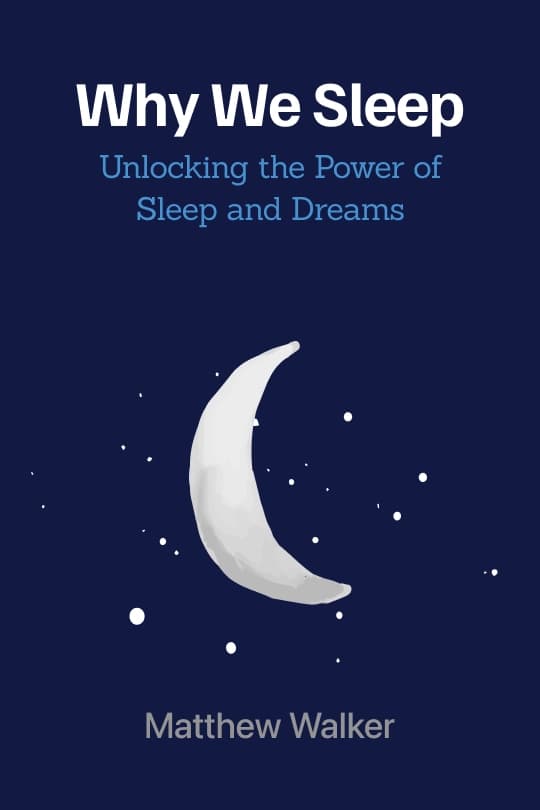
Why We Sleep: Unlocking the Power of Sleep and Dreams
Matthew Walker

Unbroken: A World War II Story of Survival, Resilience, and Redemption
Laura Hillenbrand

A Monster Calls
Patrick Ness, Jim Kay, Siobhan Dowd
Browse by Genres
History
Business
Leadership
Marketing
Management
Innovation
Economics
Productivity
Psychology
Mindset
Communication
Philosophy
Biography
Science
Technology
Society
Health
Parenting
Self-Help
Wealth
Investment
Relationship
Startups
Sales
Money
Fitness
Nutrition
Sleep
Wellness
Spirituality
AI
Future
Nature
Politics
Classics
Sci-Fiction
Fantasy
Thriller
Mystery
Romance
Literary
Historical
Religion
Law
Crime
Arts
Habits
Creativity