

Harry Potter and the Order of the Phoenix (Harry Potter, #5)
by J.K. Rowling, Mary GrandPre
“A teenager's righteous fury ignites a secret rebellion against a corrupt ministry and its insidious new regime at Hogwarts.”
Key Takeaways
- 1Institutional corruption is a more insidious enemy than outright evil. The Ministry of Magic's denial and bureaucratic oppression, embodied by Dolores Umbridge, creates a pervasive, sanctioned threat that is harder to fight than open villainy.
- 2Adolescent anger is a legitimate response to trauma and betrayal. Harry's volatile emotions stem from witnessing death, adult failure, and systemic gaslighting, marking a necessary departure from childhood innocence.
- 3Found family and peer solidarity are potent forms of resistance. Dumbledore's Army demonstrates that self-organized education and mutual support can effectively counter state-sanctioned ignorance and oppression.
- 4Heroic idols are inevitably flawed and human. The narrative shatters idealized images of James Potter, Sirius Black, and even Dumbledore, forcing a reckoning with complex, imperfect guardianship.
- 5Grief and loss are transformative, not redemptive. Sirius Black's sudden, futile death denies narrative catharsis, teaching that profound sorrow is a permanent part of coming of age in a war.
- 6Political propaganda weaponizes public opinion against truth-tellers. The Daily Prophet's smear campaign shows how media can isolate and discredit individuals who challenge an official, comforting narrative.
Description
The wizarding world enters a state of corrosive denial following Lord Voldemort's return. Isolated at Privet Drive and deliberately kept in the dark by the Order of the Phoenix, a fifteen-year-old Harry Potter simmers with frustration and anger. His forced return to a grim, secret headquarters at 12 Grimmauld Place introduces him to a clandestine resistance movement, but does little to quell his sense of uselessness.
Hogwarts itself becomes a battleground of a different kind. The Ministry of Magic, personified by the vile Dolores Umbridge, installs itself within the school to suppress the truth and dismantle Dumbledore's authority. Her educational decrees and cruel punishments create an atmosphere of stifling tyranny. In response, Harry, Hermione, and Ron form Dumbledore's Army, a secret student society dedicated to learning real defensive magic, forging a powerful bond of rebellion among their peers.
This year is defined by internal and external sieges. Harry grapples with a deepening, painful psychic connection to Voldemort, undergoes bitterly hostile Occlumency lessons with Snape, and receives devastating glimpses into his father's flawed past. The pressure builds towards a catastrophic climax in the Department of Mysteries, where a trap exploiting Harry's love and guilt leads to a fatal confrontation with Death Eaters and a shattering personal loss.
The novel marks the series' definitive turn into young adulthood, trading whimsy for political allegory and psychological realism. It explores themes of bureaucratic evil, the trauma of being disbelieved, and the painful dissolution of childhood's black-and-white moral certainties, setting a darker, more complex stage for the war to come.
Community Verdict
The consensus holds this as the series' most emotionally potent and divisive installment. Readers universally laud the masterful creation of Dolores Umbridge, a villain whose petty, bureaucratic evil often surpasses Voldemort in generating visceral hatred. The depth of character development—particularly for Neville, Luna, and the Weasley twins—is celebrated for adding rich layers to the world.
However, Harry's sustained anger and angst polarize the audience. Many defend it as a psychologically authentic portrayal of a traumatized teenager, while others find his temperament grating over the book's considerable length. The sprawling narrative is criticized by some for pacing issues, yet praised by most for its ambitious world-building and the thrilling payoff of the Department of Mysteries battle. The devastating, unresolved death of Sirius Black is acknowledged as a narrative gut-punch that elevates the stakes and forever darkens the series' tone.
Hot Topics
- 1The intense, often polarizing hatred for Dolores Umbridge and her psychologically cruel punishments, such as the blood quill.
- 2Debates over the justification and realism of Harry Potter's prolonged anger and teenage angst throughout the narrative.
- 3The profound emotional impact and narrative necessity of Sirius Black's sudden, futile death at the Ministry.
- 4Appreciation for the complex character development of Neville Longbottom and the introduction of the quirky Luna Lovegood.
- 5The triumphant, rebellious spirit of Dumbledore's Army and the secret student-led defense lessons.
- 6Frustration with Dumbledore's deliberate distance from Harry and the adult characters' failure to communicate critical information.
Related Matches



Popular Books

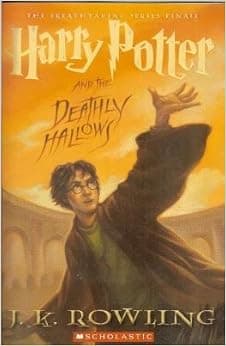
Harry Potter and the Deathly Hallows (Harry Potter, #7)
J.K. Rowling, Mary GrandPre

The Body Keeps the Score: Brain, Mind, and Body in the Healing of Trauma
Bessel A. van der Kolk

The House of Hades (The Heroes of Olympus, #4)
Rick Riordan

Never Split the Difference: Negotiating As If Your Life Depended On It
Chris Voss, Tahl Raz

The Hobbit: Graphic Novel
Chuck Dixon, J.R.R. Tolkien, David Wenzel, Sean Deming
Harry Potter and the Order of the Phoenix (Harry Potter, #5)
J.K. Rowling, Mary GrandPre

We Should All Be Feminists
Chimamanda Ngozi Adichie

Evicted: Poverty and Profit in the American City
Matthew Desmond

A Game of Thrones (A Song of Ice and Fire, #1)
George R.R. Martin

Why We Sleep: Unlocking the Power of Sleep and Dreams
Matthew Walker

Unbroken: A World War II Story of Survival, Resilience, and Redemption
Laura Hillenbrand

A Monster Calls
Patrick Ness, Jim Kay, Siobhan Dowd
Browse by Genres
History
Business
Leadership
Marketing
Management
Innovation
Economics
Productivity
Psychology
Mindset
Communication
Philosophy
Biography
Science
Technology
Society
Health
Parenting
Self-Help
Wealth
Investment
Relationship
Startups
Sales
Money
Fitness
Nutrition
Sleep
Wellness
Spirituality
AI
Future
Nature
Politics
Classics
Sci-Fiction
Fantasy
Thriller
Mystery
Romance
Literary
Historical
Religion
Law
Crime
Arts
Habits
Creativity