
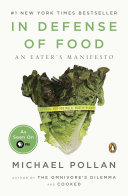
In Defense of Food: An Eater's Manifesto
"Reject the Western diet of processed food-like substances and reclaim the simple, ancient wisdom of eating real food."
- 1[object Object]
- 2[object Object]
- 3[object Object]
- 4[object Object]
- 5[object Object]
- 6[object Object]
In Defense of Food: An Eater's Manifesto is Michael Pollan's direct and elegant polemic against the modern Western diet and the reductive scientific ideology he terms "nutritionism." Pollan argues that decades of focusing on individual nutrients—good fats, bad carbs, antioxidants—has not made us healthier but has instead created a nation of anxious, confused eaters, all while enabling the food industry to sell ever more processed "food-like substances." The quest for the perfect nutrient has led us away from the simple, time-tested wisdom of eating whole foods.
Pollan meticulously deconstructs how nutritional science, with its inherent limitations and susceptibility to industry influence, and the industrialization of our food supply have conspired to create a public health crisis. He traces the rise of chronic diseases like obesity and type II diabetes not to any single nutrient but to the overall shift toward a diet of refined grains, added sugars, and processed fats. The book serves as a field guide to navigating a supermarket landscape filled with misleading health claims, teaching readers how to identify real food amidst the edible simulacra.
The manifesto culminates in Pollan's now-famous, seven-word prescription: "Eat food. Not too much. Mostly plants." This deceptively simple rule is unpacked into a set of practical, culturally resonant eating principles. He advocates for eating only what your ancestors would recognize as food, favoring plants over animal products, cooking for oneself, and savoring meals communally. These acts are framed not as a restrictive diet but as a form of liberation from marketing and bad science.
Ultimately, the book is a call to reclaim eating as a conscious, pleasurable, and deeply human activity. It targets anyone bewildered by conflicting dietary advice, offering a return to foundational principles. Pollan’s work transcends mere nutrition advice, positioning our food choices as acts with profound personal, ethical, and ecological consequences, urging a realignment of our relationship with what we eat.
The consensus celebrates Pollan's clear, actionable framework as a lifeline out of dietary confusion, with his seven-word mantra hailed as transformative. Readers praise the compelling historical and scientific critique of "nutritionism" and the food industry. Criticisms focus on the perceived lack of novelty for the already health-conscious and the practical challenges and cost of following his advice for many. The book is widely deemed essential, accessible reading that fundamentally shifts one's perspective on food.
- 1The transformative power and memorability of the core mantra, 'Eat food. Not too much. Mostly plants,' as a guiding principle.
- 2Debate over the book's practicality and accessibility, given the higher cost and effort required to source and prepare whole foods.
- 3Discussion of Pollan's compelling critique of 'nutritionism' and the flawed science behind ever-changing dietary guidelines.
- 4The challenge of implementing the advice in a modern lifestyle dominated by convenience and processed food options.
The Psychology of Money: Timeless Lessons on Wealth, Greed, and Happiness
Morgan Housel

The Intelligent Investor
Benjamin Graham
Stumbling on Happiness
Daniel Gilbert

Out of Control
Kevin Kelly
The Norwegian Method
Brad Culp
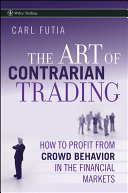
The Art of Contrarian Trading
Carl Futia
Outliers: The Story of Success
Malcolm Gladwell
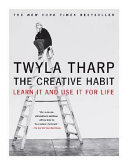
The Creative Habit
Twyla Tharp, Mark Reiter

Chip War: The Quest to Dominate the World's Most Critical Technology
Chris Miller
Sapiens: A Brief History of Humankind
Yuval Noah Harari

The Artist's Way
Julia Cameron
Breath: The New Science of a Lost Art
James Nestor