
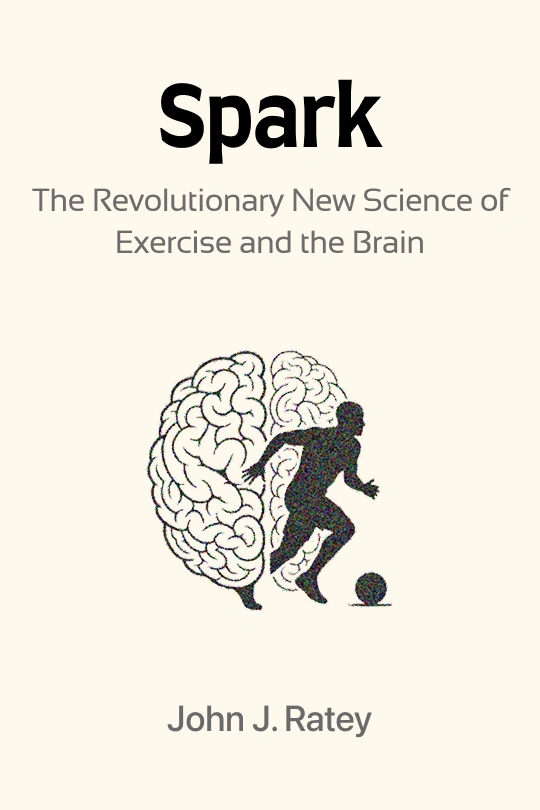
Spark: The Revolutionary New Science of Exercise and the Brain
"Exercise is not merely for the body; it is the most potent, non-negotiable catalyst for cognitive optimization and mental resilience."
- 1Exercise physically remodels the brain for peak performance. Aerobic activity triggers neurogenesis, enhances synaptic plasticity, and fortifies neural networks, fundamentally altering the brain's architecture to improve learning, memory, and executive function.
- 2Treat exercise as a first-line defense against mental illness. Physical activity regulates neurotransmitters, dampens the stress response, and elevates mood with an efficacy that rivals or surpasses pharmaceutical interventions for depression, anxiety, and ADHD.
- 3Prioritize movement to combat cognitive decline and aging. Exercise boosts levels of brain-derived neurotrophic factor (BDNF), a crucial protein that protects neurons and enhances synaptic health, serving as a powerful deterrent against Alzheimer's and age-related decay.
- 4Reconceive physical education as foundational academic training. The book's case studies demonstrate that rigorous, daily aerobic exercise in schools directly correlates with dramatic improvements in test scores, discipline, and overall cognitive readiness.
- 5Understand the evolutionary imperative for constant movement. The human brain evolved under conditions of constant physical exertion; our modern sedentary existence creates a mismatch that undermines our neurological and psychological well-being.
- 6Integrate complex nutrition with an exercise regimen for brain health. The brain requires steady glucose from complex carbohydrates and healthy fats to function optimally; poor nutrition can negate the cognitive benefits of physical activity.
In Spark, psychiatrist John J. Ratey presents a compelling synthesis of neuroscience and physiology, arguing that physical exercise is the single most transformative tool we possess for enhancing brain function. The book dismantles the antiquated notion of a rigid mind-body divide, positioning the brain not as a passive beneficiary of fitness but as its primary target—an organ dynamically sculpted by movement.
Ratey meticulously charts the biochemical cascade triggered by aerobic exertion, where increased heart rate pumps more oxygen-rich blood to the brain and elevates critical neurotransmitters like dopamine, serotonin, and norepinephrine. This process, he explains, stimulates the production of Brain-Derived Neurotrophic Factor (BDNF), a protein he memorably dubs "Miracle-Gro for the brain." BDNF nourishes neurons, encourages the formation of new synaptic connections, and strengthens the hippocampus, the center for learning and memory. The narrative is anchored in vivid case studies, most notably the revolutionary fitness program in Naperville, Illinois, which propelled its students to top global science scores.
The book's central chapters function as a clinical manifesto, applying this foundational science to a spectrum of conditions: exercise is framed as a potent antidote to stress, a stabilizer for mood disorders, a non-pharmaceutical strategy for managing ADHD, a shield against addiction's pull, and a mitigator of hormonal changes. Ratey extends the argument to neurodegeneration, detailing how consistent physical activity builds a cognitive reserve that delays the onset of Alzheimer's disease and preserves mental acuity.
Ultimately, Spark is a work of profound public health significance, aimed at educators, medical professionals, and any individual seeking agency over their mental destiny. It recasts exercise from a voluntary pursuit of vanity into an essential, non-negotiable component of cognitive maintenance and psychological resilience, offering a scientifically robust blueprint for a sharper, healthier, and more balanced mind.
The consensus positions this book as a paradigm-shifting and motivational catalyst. Readers overwhelmingly praise its compelling synthesis of complex science into accessible, actionable prose, crediting it with permanently altering their perception of exercise from a physical chore to a mental necessity. Criticisms are minor, focusing occasionally on a desire for more prescriptive workout details or noting that the nutritional asides, while insightful, feel tangential to the core neurological thesis. The work is universally deemed accessible to a non-specialist audience.
- 1The revolutionary Naperville school case study and its implications for mandatory physical education reform.
- 2Exercise as a viable, first-line treatment for ADHD, depression, and anxiety compared to medication.
- 3The science of BDNF ('Miracle-Gro for the brain') and its role in neurogenesis and combating cognitive decline.
- 4Debates on the book's nutritional advice and its integration with the primary exercise-focused thesis.
- 5The motivational impact of the book, with many citing it as a life-changing catalyst for consistent exercise habits.

The Almanack of Naval Ravikant
Naval Ravikant, Eric Jorgenson

Code: The Hidden Language of Computer Hardware and Software
Charles Petzold
Stumbling on Happiness
Daniel Gilbert
The Creative Habit
Twyla Tharp, Mark Reiter

Permanent Record
Edward Snowden

The Intelligent Investor
Benjamin Graham
The Essays of Warren Buffett: Lessons for Corporate America
Lawrence A. Cunningham, Warren Buffett

The Norwegian Method
Brad Culp

Outliers: The Story of Success
Malcolm Gladwell
The Crash Course
Chris Martenson
Breath: The New Science of a Lost Art
James Nestor
The Psychology of Money: Timeless Lessons on Wealth, Greed, and Happiness
Morgan Housel