
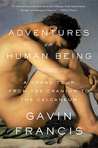
Adventures in Human Being: A Grand Tour from the Cranium to the Calcaneum
"A poetic journey through the body, revealing how its physical marvels shape our deepest human experiences."
- 1View the body as a landscape of stories and history. The book reframes anatomy not as sterile science but as a narrative terrain, where each organ carries echoes of medical history, personal anecdote, and cultural lore, enriching our understanding of our physical form.
- 2Appreciate medicine as an art as much as a science. Clinical practice is portrayed as a deeply humanistic endeavor, where diagnosis and treatment are interwoven with empathy, philosophical reflection, and the lyrical observations of a sensitive physician.
- 3Find profound connections between physiology and folklore. Francis deftly links biological functions to myths and literature, demonstrating how our ancient stories about the body, from the Iliad to fairy tales, often contain enduring anatomical truths.
- 4Cultivate awe for the body's resilience and vulnerability. The narrative inspires a respectful wonder for the body's capacities—like the liver's regeneration—while honestly confronting its fragility in sickness and injury, fostering a balanced perspective on human health.
- 5Understand medical knowledge as an evolving human project. By recounting historical beliefs, such as outdated theories of conception, the book frames our current anatomical understanding as a chapter in a continuous, often surprising, story of discovery.
Adventures in Human Being is a lyrical exploration that re-maps the familiar territory of the human body as an uncharted continent of wonder and narrative. Gavin Francis, a physician with a surgeon’s precision and a poet’s eye, eschews the textbook approach for a grand tour that begins at the brain and concludes at the feet. This journey is less about comprehensive anatomy and more about uncovering the profound stories—medical, historical, and personal—that are written in our bones, blood, and tissue.
Drawing from his rich experiences in emergency rooms, surgical theaters, and family clinics, Francis illuminates each body part with a blend of clinical insight and literary allusion. A chapter on the heart considers its symbolic weight alongside its electrophysiology; a discussion of the liver touches on its mythical associations and its unique regenerative power. The book acts as a cabinet of curiosities, where surprising facts—like the historical belief in the necessity of simultaneous orgasm for conception—sit beside poignant patient encounters, creating a tapestry that connects the mechanical to the metaphysical.
The narrative consistently bridges the gap between science and the humanities, demonstrating how our physical form has been perceived through the lenses of art, philosophy, and folklore. Francis finds anatomical accuracy in the wounds described in Homer’s Iliad and sees the peril of sepsis reflected in the poisoned spindle of Sleeping Beauty. This methodology argues that to truly know the body, one must appreciate it as a site of cultural meaning as much as biological function.
Ultimately, this work is a meditation on the human condition itself, targeted at readers of narrative nonfiction who seek to understand themselves more deeply. It leaves a legacy not of clinical diagrams, but of a renewed sense of awe—a recognition that within the commonplace machinery of our selves lies a universe of resilience, vulnerability, and exquisite, interconnected stories.
The critical consensus celebrates the book's exceptional literary quality and accessible, engaging prose, which transforms complex anatomy into a series of captivating essays. Readers universally praise its poetic sensibility, the surprising historical anecdotes, and the author's empathetic, humanistic perspective as a physician. A recurring critique notes the work's deliberate lack of systematic depth, positioning it as a lyrical introduction rather than a definitive guide, but this is largely forgiven for the beauty and insight of the journey.
- 1The book's poetic and lyrical prose style, which elevates medical writing into a form of literature.
- 2The effectiveness of blending personal medical anecdotes with history and folklore to explain anatomy.
- 3Debate over the book's depth, with some desiring more comprehensive science and others valuing its accessible, essayistic approach.
- 4Appreciation for the surprising historical facts and literary connections that illuminate bodily functions.
- 5The author's unique perspective as a sensitive and philosophically-minded clinician, which defines the book's tone.

How to Win Friends & Influence People
Dale Carnegie
The Psychology of Money: Timeless Lessons on Wealth, Greed, and Happiness
Morgan Housel
Transformation in Christ
Dietrich Von Hildebrand
Stumbling on Happiness
Daniel Gilbert

The Almanack of Naval Ravikant
Naval Ravikant, Eric Jorgenson

Permanent Record
Edward Snowden
The Book of Basketball: The NBA According to The Sports Guy
Bill Simmons
Breath: The New Science of a Lost Art
James Nestor
Outliers: The Story of Success
Malcolm Gladwell

The Essays of Warren Buffett: Lessons for Corporate America
Lawrence A. Cunningham, Warren Buffett
The Crash Course
Chris Martenson
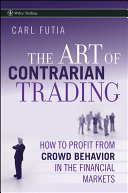
The Art of Contrarian Trading
Carl Futia