
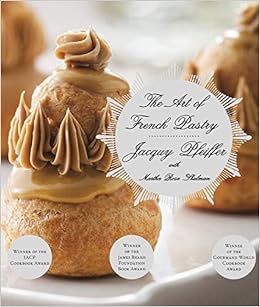
“Master the foundational science and technique of French pastry to transform precise ingredients into exquisite, classic desserts.”
Key Takeaways
- 1Master the foundational doughs and creams first. Success in complex recipes depends on perfecting core components like pâte à choux, pastry cream, and pâte sablée, which serve as universal building blocks.
- 2Precision in measurement is non-negotiable. Weighing ingredients in grams ensures chemical consistency and predictable results, as volume measurements introduce too much variability for delicate pastries.
- 3Understand the science behind ingredient interactions. Knowing how butter, flour, eggs, and moisture behave under different conditions allows for intelligent troubleshooting and recipe adaptation.
- 4Embrace the required time commitment and process. Authentic results often demand multi-day procedures for fermentation, resting, and assembly, reflecting the craft's traditional, unhurried nature.
- 5Prioritize ingredient quality, especially butter and chocolate. Using high-fat European-style butter and premium chocolate is critical for achieving the correct texture, flavor, and structural integrity.
- 6Learn the diagnostic cues for each stage of a recipe. Visual and tactile markers—like dough consistency or sugar temperature—provide real-time feedback far more reliably than timers alone.
Description
The Art of French Pastry dismantles the intimidation surrounding classic desserts by returning to first principles. It posits that flawless execution stems not from rote recipe-following, but from a deep, almost scientific understanding of foundational techniques and ingredient behavior. Chef Jacquy Pfeiffer, drawing from his Alsatian heritage and pedagogical experience, structures the book as a progressive curriculum, beginning with elemental doughs, creams, and meringues before advancing to their orchestration in finished pastries.
This methodological approach is the book's core argument. Each recipe is a lesson in the 'why,' explaining the function of every step and component. The text meticulously details the creation of brioche, croissants, pâte à choux, and various tarts, while also exploring Alsatian specialties like Kougelhof and Tarte Flambée. Pfeiffer supplements instructions with empirical data—charts, weight conversions, environmental notes—transforming the kitchen into a laboratory where precision yields artistry.
The book's significance lies in its dual role as a master reference and an accessible treatise. It demystifies the craft for the dedicated home baker, offering the rigor of a professional pastry school education. Simultaneously, it serves as a cultural archive, weaving personal narrative and historical context into the recipes, ensuring the reader appreciates the centuries of tradition embedded in each delicate, buttery layer.
Community Verdict
The critical consensus positions this volume as a seminal educational text, transcending the typical cookbook to function as a rigorous, master-level course. Readers universally praise its unparalleled clarity, exhaustive technical explanations, and the author's anticipatory guidance on avoiding common pitfalls. The pedagogical depth—explaining the science behind each step—empowers bakers to move beyond imitation toward genuine understanding and self-correction.
However, the book demands a significant commitment. Its audience is the serious, patient baker willing to invest in premium ingredients, precise equipment, and multi-day processes. A minority of experienced practitioners note occasional recipe inconsistencies regarding measurements or rising times, suggesting that even this meticulous guide sometimes requires a baker's intuition to perfect. The focus remains overwhelmingly on technique and intellectual mastery over quick results.
Hot Topics
- 1The transformative clarity of the book's pedagogical approach, which explains the 'why' behind each technique for both novices and professionals.
- 2Debates over recipe precision, with some users reporting issues with ingredient measurements or rising times requiring adaptation.
- 3The necessity of using European-style high-fat butter and a digital scale for authentic results, emphasized as non-negotiable.
- 4The book's value as a comprehensive substitute for formal pastry school education for the dedicated home baker.
- 5Appreciation for the inclusion of Alsatian regional specialties alongside classic French pastries.
- 6Discussions on the significant time investment required, with many recipes spanning multiple days for optimal outcomes.
Related Matches






Popular Books

Last Stand of Dead Men (Skulduggery Pleasant, #8)
Derek Landy

A Court of Mist and Fury (A Court of Thorns and Roses, #2)
Sarah J. Maas

Divine Direction: 7 Decisions That Will Change Your Life
Craig Groeschel

Holy Bible: The Narrated Bible NIV
Anonymous

The Complete Maus: A Survivor's Tale (Maus, #1-2)
Art Spiegelman

O. Winston Link: Life Along the Line: A Photographic Portrait of America's Last Great Steam Railroad
Tony Reevy, O. Winston Link, Conway Link, Scott Lothes
100 Days to Brave: Devotions for Unlocking Your Most Courageous Self
Annie F. Downs
The Information Diet
Clay Johnson

Puppy Money - Kira and a Dog named Money
Bodo Schäfer
The Conscience of a Liberal
Paul Krugman
Walking with God through Pain and Suffering
Timothy J. Keller
The Body Keeps the Score: Brain, Mind, and Body in the Healing of Trauma
Bessel A. van der Kolk
Browse by Genres
History
Business
Leadership
Marketing
Management
Innovation
Economics
Productivity
Psychology
Mindset
Communication
Philosophy
Biography
Science
Technology
Society
Health
Parenting
Self-Help
Wealth
Investment
Relationship
Startups
Sales
Money
Fitness
Nutrition
Sleep
Wellness
Spirituality
AI
Future
Nature
Politics
Classics
Sci-Fiction
Fantasy
Thriller
Mystery
Romance
Literary
Historical
Religion
Law
Crime
Arts
Habits
Creativity