
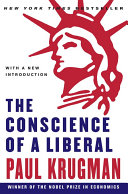
The Conscience of a Liberal
"A historical autopsy of America's middle class, diagnosing the political assault that resurrected Gilded Age inequality."
- 1The New Deal created a durable middle-class society. Post-war prosperity and reduced inequality were not accidental but the direct result of deliberate policies like Social Security and strong unions, which constrained capital and broadened wealth distribution.
- 2Movement conservatism is a deliberate project to undo that society. Beginning in the 1970s, an organized coalition used race, religion, and anti-government rhetoric to dismantle the social contract, deliberately engineering the return of extreme economic inequality.
- 3Political polarization is a consequence, not a cause, of inequality. As the economic interests of the elite diverged from those of the majority, politics became a bitter fight to preserve or restore privilege, making bipartisan compromise structurally impossible.
- 4Universal healthcare is the linchpin for a new social contract. Just as Social Security anchored the New Deal order, achieving guaranteed healthcare is presented as the essential, tangible policy to restore public faith in collective action and government efficacy.
- 5Race-baiting is a central tactic of conservative strategy. The exploitation of racial resentment has been a powerful tool to persuade working-class whites to vote against their own economic interests, sustaining a coalition that benefits the wealthy.
- 6A new New Deal is both economically feasible and politically necessary. The book argues that the resources and policy blueprints exist to rebuild a more equitable society; the primary barrier is political will, not economic capacity.
Paul Krugman’s The Conscience of a Liberal is a work of political economy that traces the arc of American inequality across the twentieth century and into the twenty-first. It posits a "Long Gilded Age" stretching from the late nineteenth century through the 1920s, characterized by vast wealth disparities and minimal social protections. This era was decisively interrupted not by impersonal market forces, but by the political triumph of the New Deal, which Krugman argues forged a "Great Compression" of income and created a stable, broad-based middle class that lasted for a generation.
The book’s core analytical thrust is to dismantle the myth that this middle-class society eroded naturally due to globalization or technology. Instead, Krugman meticulously details the rise of "movement conservatism"—a disciplined, well-funded political project that, from the 1970s onward, systematically worked to roll back New Deal achievements. This movement, he argues, weaponized social issues like race and religion to achieve its primary economic goal: tax cuts for the wealthy, deregulation of industry, and the erosion of labor power, thereby deliberately re-engineering the high inequality of a new Gilded Age.
Krugman weaves together economic data, political history, and sociological observation to demonstrate how this engineered inequality then fueled intense political polarization. The book is ultimately a call to action, arguing that the path forward requires understanding this history not as destiny but as the result of political choices. He frames the pursuit of universal healthcare not merely as a policy goal, but as the potential cornerstone for a "new New Deal," a tangible demonstration of government’s capacity to improve lives and a catalyst for rebuilding a liberal consensus.
The work is aimed at readers seeking to understand the roots of contemporary political strife and economic anxiety. It stands as Krugman’s most explicitly political and historical volume, an attempt to provide a coherent narrative for the Democratic Party and a policy roadmap for reversing what he sees as a decades-long, ideologically-driven assault on the American middle class.
Readers respect Krugman’s lucid economic history and forceful thesis but find the 2007 publication date severely dates its political prognostication. The consensus holds that the book’s diagnosis of rising inequality remains prescient and powerfully argued, yet its optimistic predictions about the imminent decline of movement conservatism and race-baiting politics have been undermined by subsequent events. Many note a poignant, even sad, disconnect between its hopeful roadmap and the more turbulent political reality that followed.
- 1The accuracy of Krugman's 2007 prediction that movement conservatism and race-baiting were in terminal decline.
- 2The role of the Affordable Care Act (Obamacare) versus the book's call for a transformative, consensus-forging universal healthcare program.
- 3The enduring relevance of the book's core historical analysis of the New Deal and the Great Compression in explaining modern inequality.
- 4The book's value as a historical artifact versus a viable policy guide for contemporary political struggles.
Radical Markets: Uprooting Capitalism and Democracy for a Just Society
Eric A. Posner, E. Glen Weyl
Bad Samaritans
Ha-Joon Chang
The Creative Habit
Twyla Tharp, Mark Reiter

The Almanack of Naval Ravikant
Naval Ravikant, Eric Jorgenson

Amusing Ourselves to Death: Public Discourse in the Age of Show Business
Neil Postman

Code: The Hidden Language of Computer Hardware and Software
Charles Petzold
The Crash Course
Chris Martenson
Out of Control
Kevin Kelly

Just Listen: Discover the Secret to Getting Through to Absolutely Anyone
Mark Goulston
The Psychology of Money: Timeless Lessons on Wealth, Greed, and Happiness
Morgan Housel
The Intelligent Investor
Benjamin Graham
The Essays of Warren Buffett: Lessons for Corporate America
Lawrence A. Cunningham, Warren Buffett