
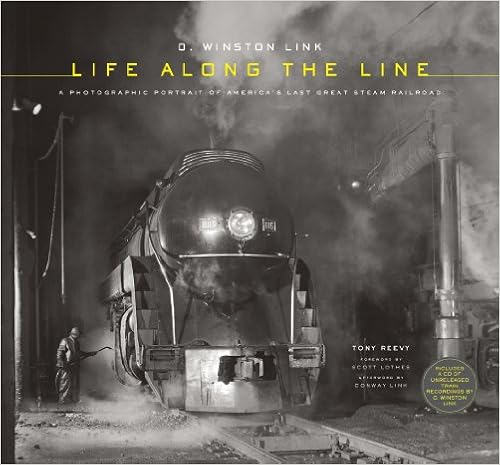
“A monumental photographic elegy that captures the final breath of steam railroading and the vanishing small-town America it sustained.”
Key Takeaways
- 1Document technological transition as cultural archaeology. Link’s project transcends trainspotting; it is a deliberate record of a society undergoing irreversible change from steam to diesel, and from rail-centric life to automobile dominance.
- 2Master technical ingenuity to achieve artistic vision. The photographs required pioneering, complex lighting rigs and custom-engineered equipment, proving that profound artistry is often rooted in meticulous technical problem-solving.
- 3Elevate subjects from anonymous workers to dignified portraits. Link consistently framed railroad employees and local residents within their environment, granting them individual identity and honoring their craft within the industrial landscape.
- 4Utilize the nocturnal canvas for controlled narrative drama. Shooting primarily at night allowed Link to sculpt light with precision, isolating subjects and creating scenes of haunting, theatrical beauty impossible in daylight.
- 5Synthesize multimedia to create an immersive historical record. The accompanying audio CD of locomotive sounds and field recordings adds a vital sonic dimension, making the archival project a multisensory experience.
- 6Frame infrastructure as an integral part of community life. The photographs illustrate how the railroad’s tracks, stations, and trains were woven into the daily fabric of homes, businesses, and recreation.
Description
O. Winston Link’s ambitious project stands as one of the most significant documentary endeavors in American photography, targeting the Norfolk and Western Railway during its final years of steam operation in the 1950s. More than a collection of train images, it constitutes a systematic portrait of a pivotal moment—the forced transition from steam to diesel power—and the corresponding erosion of a distinct, rail-dependent way of life in the Appalachian region. Link approached his subject with the rigor of an engineer and the eye of a classic pictorialist, treating the massive locomotives not as isolated machines but as central characters in a broader human drama.
His methodology was famously arduous, involving the strategic placement of dozens of flashbulbs across vast scenes to illuminate night shots with stunning clarity. This technical mastery allowed him to compose images of remarkable depth and narrative tension, where the sleek, powerful form of a steam engine might slice through a quiet small-town street or a drive-in movie lot. The work captures the gritty reality of coal miners, engineers, and station agents, but also the unselfconscious leisure of families living literally in the shadow of the rails, presenting an unsentimental yet deeply empathetic view of mid-century industrial America.
Beyond the iconic locomotives, the portfolio delves into the social and economic ecosystem the railroad supported. General stores, swimming holes, and modest homesteads are documented with the same formal care as the machinery, revealing a symbiotic relationship between community and infrastructure. The inclusion of Link’s own field recordings on a companion CD further enriches this record, adding the visceral roar and whistle of steam to the visual testimony.
The book’s enduring significance lies in its dual legacy: as a peerless technical achievement in photography and as an invaluable historical archive. It appeals not only to rail enthusiasts but to anyone interested in the transformation of the American landscape, the aesthetics of industrial decay, and the power of an artist to preserve a world on the cusp of disappearance.
Community Verdict
The critical consensus positions this volume as the definitive and most comprehensive retrospective of Link’s career, surpassing his earlier publications. Readers unanimously praise the superb reproduction quality, the heavyweight matte paper that avoids glare, and the inclusion of numerous previously unpublished images and alternate takes. The technical deep-dive into Link’s elaborate lighting setups and custom equipment is celebrated as a masterclass for photographers, illuminating the profound ingenuity behind the seemingly effortless nocturnal scenes.
There is a powerful emotional response to the work’s historical and anthropological value. Reviewers describe it as a moving elegy, capable of evoking a palpable sense of loss for an era defined by mechanical grandeur and close-knit, rail-centered communities. The accompanying audio CD is frequently highlighted as a uniquely immersive bonus that completes the sensory experience. While a minor note suggests some desire for more full-page reproductions, this is overshadowed by the overwhelming appreciation for the book’s depth, curation, and its success in contextualizing Link’s life and obsessive artistic process.
Hot Topics
- 1The technical mastery and complex lighting rigs Link engineered for his iconic night photography, described as a mind-boggling achievement for the 1950s.
- 2The profound historical and anthropological value of documenting a vanishing way of life centered on steam railroading and small-town America.
- 3The emotional impact of the work as a moving elegy, evoking nostalgia and a sense of loss for an era of industrial grandeur and community.
- 4The superior quality of the book's production, including its matte paper, image reproduction, and the inclusion of a companion audio CD of field recordings.
- 5The depth of the biographical and behind-the-scenes content, which provides new context about Link's personal life, methods, and previously unseen images.
- 6The portrayal of railroad workers and local residents with dignity and individuality, moving beyond simple machinery documentation to humanistic portraiture.
Related Matches








Popular Books

Silent Spring
Rachel Carson

Radical Markets: Uprooting Capitalism and Democracy for a Just Society
Eric A. Posner, Eric Glen Weyl

One Direction: Who We Are: Our Official Autobiography
One Direction

The Lessons of History
Will Durant, Ariel Durant

The Limpopo Academy of Private Detection
Alexander McCall Smith

The War of Art: Break Through the Blocks & Win Your Inner Creative Battles
Steven Pressfield, Robert McKee

The Campaigns of Napoleon
David G. Chandler

Amusing Ourselves to Death: Public Discourse in the Age of Show Business
Neil Postman, Andrew Postman

Tea Time for the Traditionally Built
Alexander McCall Smith

Radio Silence
Alice Oseman
Going Clear: Scientology, Hollywood, and the Prison of Belief
Lawrence Wright

Dead Wake: The Last Crossing of the Lusitania
Erik Larson
Browse by Genres
History
Business
Leadership
Marketing
Management
Innovation
Economics
Productivity
Psychology
Mindset
Communication
Philosophy
Biography
Science
Technology
Society
Health
Parenting
Self-Help
Wealth
Investment
Relationship
Startups
Sales
Money
Fitness
Nutrition
Sleep
Wellness
Spirituality
AI
Future
Nature
Politics
Classics
Sci-Fiction
Fantasy
Thriller
Mystery
Romance
Literary
Historical
Religion
Law
Crime
Arts
Habits
Creativity