
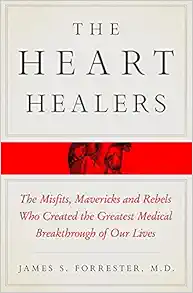
“A gripping chronicle of the defiant pioneers who transformed heart disease from a death sentence into a manageable condition through audacious experimentation.”
Key Takeaways
- 1Breakthroughs often begin with defiant, solitary acts of courage. Medical progress was driven by individuals who risked their careers and lives, performing radical self-experimentation to prove concepts their peers deemed impossible.
- 2Serendipity and failure are inseparable from monumental discovery. Many pivotal advances, like safe coronary angiography, emerged from accidental observations during procedures that were initially considered catastrophic mistakes.
- 3Cardiac surgery evolved from battlefield desperation to routine precision. Techniques for suturing heart wounds, pioneered on soldiers, laid the foundational courage necessary for the development of open-heart and bypass surgeries.
- 4The true target of prevention is arterial plaque rupture, not just blockage. Modern cardiology focuses on stabilizing inflammatory plaques within artery walls, a shift in understanding that redefined preventive heart disease strategies.
- 5Technological innovation required parallel development of supportive systems. Breakthroughs like the heart-lung machine were useless without the concurrent creation of specialized surgical teams and intensive care units.
- 6The human element of trust between doctor and patient was paramount. Pioneers succeeded not only through skill but by convincing desperate patients to place faith in procedures that had never before been attempted.
Description
The Heart Healers charts the harrowing and heroic century-long campaign to conquer humanity's most formidable killer: heart disease. Beginning in an era when the beating heart was considered an inviolable sanctuary, the narrative traces the first tentative, often brutal, surgical forays. It reconstructs the pivotal moments where mavericks like Ludwig Rehn, Werner Forssman, and Dwight Harken defied medical dogma, proving the heart could not only be touched but repaired, thereby birthing the fields of cardiac surgery and invasive cardiology.
The book meticulously details the technological and conceptual arms race that followed, from the perilous development of the heart-lung machine to the accidental discovery of coronary angiography and the revolutionary advent of balloon angioplasty and stents. Forrester, writing from within this history, illuminates the complex interplay of brilliant insight, stubborn perseverance, and sheer luck that characterized each leap forward. The narrative does not shy away from the high human cost of this progress, documenting the patients who paid the price for experimental procedures on medicine's bleeding edge.
Ultimately, this is the story of a medical revolution that moved from desperate, last-ditch interventions to sophisticated preventive care. It explains how our understanding shifted from merely bypassing blockages to managing the inflammatory biology of atherosclerosis. The chronicle captures the transformation of cardiology from a discipline of helplessness to one of profound capability, fundamentally altering human life expectancy. The book serves as both a definitive history for medical professionals and a compelling human drama for the lay reader, demystifying the miracles now taken for granted in every modern cardiac care unit.
Community Verdict
The consensus positions this work as a masterclass in scientific storytelling, achieving the rare feat of being both intellectually rigorous and profoundly accessible. Readers are unanimously captivated by the narrative's propulsion and the vivid, humanizing portraits of the pioneers, which transform complex medical history into a saga of personality and peril. The author's insider perspective, having known many of the figures profiled, lends the account an authoritative and intimate texture that is widely praised.
Criticism is minimal and focused on substance, with a minority of readers noting the technical depth in later chapters can become challenging for those without a scientific background. However, this is overwhelmingly overshadowed by admiration for Forrester's lucid explanatory power. The book is celebrated not just as a historical record but as an inspirational testament, leaving readers with a deepened appreciation for modern medicine and a palpable sense of awe at the courage that built it.
Hot Topics
- 1The astonishing courage and recklessness of early self-experimentation, such as Forssman's catheterization of his own heart.
- 2How serendipity and accidental discoveries played a crucial role in major advancements like coronary angiography.
- 3The ethical and human costs of experimental surgery on early, desperate patients during cardiology's pioneering era.
- 4The clear and impactful explanation that bypass surgery treats symptoms, not the underlying inflammatory cause of heart attacks.
- 5The author's unique narrative authority and engaging prose style, making dense medical history read like a thriller.
- 6The book's effectiveness in translating complex cardiology for a lay audience without sacrificing scientific accuracy.
Related Matches








Popular Books

Going Clear: Scientology, Hollywood, and the Prison of Belief
Lawrence Wright
Radio Silence
Alice Oseman

Dead Wake: The Last Crossing of the Lusitania
Erik Larson

The Big Short: Inside the Doomsday Machine
Michael Lewis

Tea Time for the Traditionally Built
Alexander McCall Smith

O. Winston Link: Life Along the Line: A Photographic Portrait of America's Last Great Steam Railroad
Tony Reevy, O. Winston Link, Conway Link, Scott Lothes

The Limpopo Academy of Private Detection
Alexander McCall Smith
The Lessons of History
Will Durant, Ariel Durant

The War of Art: Break Through the Blocks & Win Your Inner Creative Battles
Steven Pressfield, Robert McKee

One Direction: Who We Are: Our Official Autobiography
One Direction

A Court of Mist and Fury (A Court of Thorns and Roses, #2)
Sarah J. Maas

The Campaigns of Napoleon
David G. Chandler
Browse by Genres
History
Business
Leadership
Marketing
Management
Innovation
Economics
Productivity
Psychology
Mindset
Communication
Philosophy
Biography
Science
Technology
Society
Health
Parenting
Self-Help
Wealth
Investment
Relationship
Startups
Sales
Money
Fitness
Nutrition
Sleep
Wellness
Spirituality
AI
Future
Nature
Politics
Classics
Sci-Fiction
Fantasy
Thriller
Mystery
Romance
Literary
Historical
Religion
Law
Crime
Arts
Habits
Creativity