
Premium
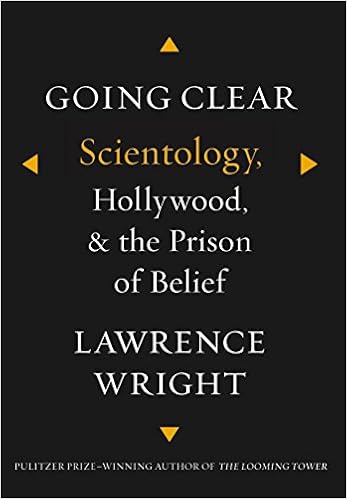
Going Clear: Scientology, Hollywood, and the Prison of Belief
by Lawrence Wright
“A masterful investigation into how a science-fiction writer's paranoid vision became a tax-exempt empire of coercion and celebrity worship.”
Key Takeaways
- 1Understand the charismatic pathology of L. Ron Hubbard. Hubbard was a prolific pulp writer whose genius for narrative and self-mythologizing allowed him to construct a religion from whole cloth, blending self-help with science-fiction cosmology.
- 2Recognize the systematic architecture of belief control. Scientology employs a graduated system of secret knowledge and expensive auditing, incrementally isolating adherents from critical thought and binding them through financial and psychological investment.
- 3Examine the strategic weaponization of celebrity influence. The church deliberately courts Hollywood figures, using their fame for legitimacy and recruitment while insulating them from the harsh realities imposed on the rank-and-file membership.
- 4Confront the institutionalization of abuse and paranoia. Under David Miscavige, the church's inner circle operates through intimidation, violence, and punitive labor, treating dissent as heresy and critics as enemies to be destroyed.
- 5Interrogate the legal definition of a religion. Scientology's victory over the IRS forces a reckoning with what constitutional protections a belief system deserves when its practices include alleged human rights abuses.
- 6Analyze the mechanism of gradual ideological surrender. Commitment often begins with genuine self-improvement, then escalates through peer pressure and sunk costs until members rationalize even the most absurd or abusive doctrines.
Description
Lawrence Wright’s Pulitzer-caliber investigation dismantles the opaque edifice of the Church of Scientology, tracing its lineage from the febrile imagination of its founder, L. Ron Hubbard. A failed naval officer and prodigiously prolific science-fiction writer, Hubbard transmuted the post-war appetite for self-help into Dianetics, and later, a full-fledged religion with its own cosmology, language, and legal army. The book meticulously reconstructs Hubbard’s life of grandiose fabrication and personal cruelty, revealing how his paranoia and narrative genius became embedded in the church’s DNA.
Wright then charts the organization’s turbulent evolution after Hubbard’s death, as control passed to the fiercely combative David Miscavige. This section details the church’s relentless campaigns against perceived enemies—including the U.S. government—through litigation and harassment, culminating in its controversial tax-exempt status. The narrative exposes the stark dichotomy within Scientology: the opulent, celebrity-studded world of figures like Tom Cruise and John Travolta, and the grim reality of the Sea Org, where devotees sign billion-year contracts and labor under conditions resembling indentured servitude.
The work is anchored by the testimonies of high-profile defectors, most notably Oscar-winning screenwriter Paul Haggis, whose three-decade journey within and eventual break from the church provides a compelling through-line. Wright dissects the auditing process, the secretive Operating Thetan levels, and the policy of “disconnection” that severs families, illustrating the psychological machinery that sustains belief.
Ultimately, *Going Clear* transcends mere exposé to pose profound questions about the nature of faith itself. Wright places Scientology within the broader history of new religious movements, asking what separates a cult from a religion and how the human need for meaning can be harnessed, manipulated, and imprisoned by institutional power. It is a definitive study of one of the most secretive and influential organizations of the modern era.
Community Verdict
The critical consensus views Wright’s work as a monumental feat of investigative journalism, both horrifying and utterly compelling in its detail. Readers are unanimously gripped by the sheer audacity of L. Ron Hubbard’s fabrication and the subsequent brutality of David Miscavige’s regime, with the accounts of physical abuse, forced labor, and psychological manipulation leaving a profound sense of moral outrage.
While the depth of research is praised, a significant minority finds the middle sections, particularly the exhaustive focus on Hollywood celebrities like Tom Cruise, to be repetitive or tabloid-adjacent, diluting the more substantive investigative thrust. The narrative’s heavy reliance on defectors’ testimony is noted, though most concede that the church’s blanket denials and litigious history make alternative sourcing nearly impossible. The book is ultimately celebrated not just as a story about Scientology, but as a chilling case study in the mechanics of belief, power, and institutional corruption.
Hot Topics
- 1The credibility of L. Ron Hubbard's fabricated military and academic history, which forms the foundational mythos of Scientology and its claims of healing.
- 2The alleged culture of physical violence and psychological abuse under David Miscavige's leadership, including beatings and imprisonment of high-ranking executives.
- 3The stark disparity between the luxurious treatment of celebrity Scientologists and the exploitative conditions endured by members of the Sea Org.
- 4The church's aggressive, legally-predatory tactics to silence critics and defectors, creating an atmosphere of fear for those who speak out.
- 5The ethical and legal implications of Scientology's tax-exempt religious status, given its alleged human rights abuses and profit-driven structure.
- 6The psychological process of gradual indoctrination and the 'prison of belief' that keeps intelligent people committed to an increasingly absurd doctrine.
Related Matches







Popular Books
Radio Silence
Alice Oseman
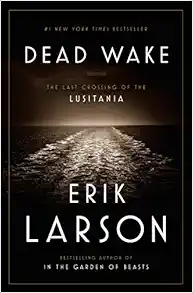
Dead Wake: The Last Crossing of the Lusitania
Erik Larson

The Campaigns of Napoleon
David G. Chandler
The Lessons of History
Will Durant, Ariel Durant

The Limpopo Academy of Private Detection
Alexander McCall Smith

A Court of Mist and Fury (A Court of Thorns and Roses, #2)
Sarah J. Maas

The War of Art: Break Through the Blocks & Win Your Inner Creative Battles
Steven Pressfield, Robert McKee
100 Days to Brave: Devotions for Unlocking Your Most Courageous Self
Annie F. Downs
The Big Short: Inside the Doomsday Machine
Michael Lewis

Tea Time for the Traditionally Built
Alexander McCall Smith

One Direction: Who We Are: Our Official Autobiography
One Direction

The Sibley Guide to Birds; Second Edition, Revised and Enlarged
David Allen Sibley
Browse by Genres
History
Business
Leadership
Marketing
Management
Innovation
Economics
Productivity
Psychology
Mindset
Communication
Philosophy
Biography
Science
Technology
Society
Health
Parenting
Self-Help
Wealth
Investment
Relationship
Startups
Sales
Money
Fitness
Nutrition
Sleep
Wellness
Spirituality
AI
Future
Nature
Politics
Classics
Sci-Fiction
Fantasy
Thriller
Mystery
Romance
Literary
Historical
Religion
Law
Crime
Arts
Habits
Creativity