

Premium
The War of Art: Break Through the Blocks & Win Your Inner Creative Battles
by Steven Pressfield, Robert McKee
“Identify and defeat the universal force of Resistance to unlock your creative potential and fulfill your calling.”
Key Takeaways
- 1Personify and confront Resistance as your primary enemy. Resistance is the internal, self-sabotaging force of fear and procrastination that opposes any meaningful creative or life-enhancing act.
- 2Transition from an amateur mindset to a professional discipline. A professional shows up daily, commits to the work regardless of inspiration, and separates their identity from the outcome of their labor.
- 3Do not identify personally with your creative work. Detachment allows you to accept criticism objectively and persist through failure, treating your craft as a job rather than a reflection of self-worth.
- 4Recognize that fear signals the importance of your endeavor. The magnitude of your internal Resistance is directly proportional to the significance of the work you are called to do.
- 5Cultivate a territorial, not hierarchical, approach to your work. Find satisfaction in the work itself and the domain you control, rather than in external validation, rank, or comparison to others.
- 6Invoke the Muse through consistent, disciplined action. Inspiration is not a prerequisite for work but a reward for it; by laboring faithfully, you attract the assistance of a higher creative force.
Description
Steven Pressfield’s *The War of Art* is a trenchant manifesto that reframes the creative struggle not as a romantic mystery but as a frontline battle against a universal, insidious enemy: Resistance. This internal force, born of fear, manifests as procrastination, self-doubt, addiction, and the myriad excuses that prevent individuals from pursuing their most important work, whether that be writing a novel, starting a business, or achieving personal fitness.
Pressfield structures his argument as a strategic campaign. The first section meticulously defines Resistance, cataloging its infinite guises and its singular goal: to keep us from doing the work we are called to do. He posits that Resistance is most potent when the stakes are highest, making it a perverse but reliable compass for identifying one’s true calling. The second section outlines the counteroffensive: turning pro. Here, professionalism is a mindset, not an income level. It is the daily, no-excuses commitment to the craft, the willingness to endure adversity, and the humility to accept both praise and blame without letting either define you.
The final section ventures into the metaphysical terrain that underpins the struggle. Pressfield suggests that when we commit to the work, we align with forces greater than our ego—whether termed the Muse, angels, or the creative unconscious. This alliance is what transforms labor into inspired art. The battle is ultimately framed as a spiritual one, between the stasis-loving Ego and the growth-oriented Self, with our creative output as the prize.
*The War of Art* is less a technical manual and more a philosophical call to arms. Its enduring power lies in giving a name and a face to the diffuse anxieties that plague every creator, transforming a vague sense of blockage into a definable adversary that can be met, fought, and defeated through sheer will and daily discipline.
Community Verdict
The critical consensus is sharply polarized, reflecting a book that commands intense admiration and profound irritation in equal measure. A dominant faction of readers, often creatives and entrepreneurs, hail it as a transformative, essential text. They find immense value in Pressfield’s personification of Resistance, crediting it with providing a tangible enemy to combat and a powerful framework for building professional discipline. His blunt, marine-like prose is celebrated as a necessary “kick in the pants” that cuts through self-help platitudes.
Conversely, a significant and vocal cohort condemns the book as pretentious, dogmatic, and intellectually reckless. They take fierce issue with Pressfield’s sweeping, unsupported assertions—particularly his controversial claims regarding mental illness, medical conditions, and historical figures—which they find offensive and dangerously simplistic. This group criticizes the repetitive structure, the absolutist tone that brooks no nuance, and the final section’s spiritual musings, which some dismiss as “woo-woo” nonsense. The book’s very brevity and aphoristic style are seen by its detractors as evidence of a thin concept stretched to fill pages.
Hot Topics
- 1The utility of personifying procrastination and fear as a monolithic enemy called 'Resistance' versus critiquing it as an oversimplified, unscientific metaphor.
- 2The controversial and widely criticized claims linking illness, mental health disorders, and societal ills directly to a failure to overcome creative Resistance.
- 3The divisive 'Turn Pro' philosophy, praised for its disciplinary rigor but attacked for promoting a joyless, unbalanced, and judgmental approach to creative work.
- 4The effectiveness of Pressfield's blunt, militaristic tone as motivational tough love versus its reception as condescending, bullying, and alienating.
- 5The spiritual and metaphysical arguments in the final section, ranging from appreciation for the concept of the Muse to rejection of it as New Age nonsense.
- 6The book's repetitive, aphoristic structure and significant white space, seen either as a focused, punchy format or as padding for a scant idea.
Related Matches




Popular Books
Radio Silence
Alice Oseman
Going Clear: Scientology, Hollywood, and the Prison of Belief
Lawrence Wright

One Direction: Who We Are: Our Official Autobiography
One Direction

The Campaigns of Napoleon
David G. Chandler
The Big Short: Inside the Doomsday Machine
Michael Lewis
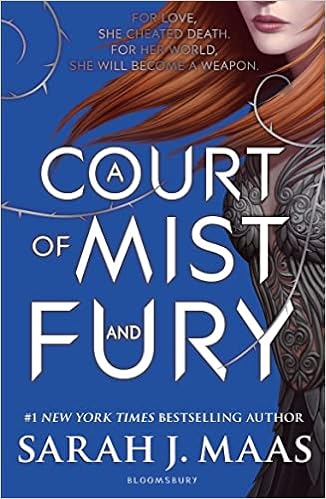
A Court of Mist and Fury (A Court of Thorns and Roses, #2)
Sarah J. Maas
The Lessons of History
Will Durant, Ariel Durant
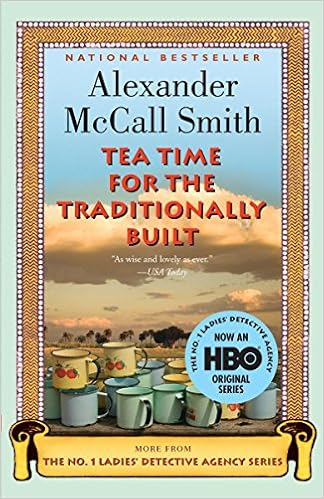
Tea Time for the Traditionally Built
Alexander McCall Smith
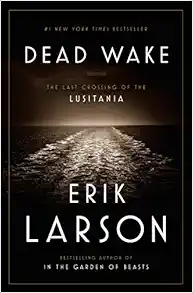
Dead Wake: The Last Crossing of the Lusitania
Erik Larson
100 Days to Brave: Devotions for Unlocking Your Most Courageous Self
Annie F. Downs
O. Winston Link: Life Along the Line: A Photographic Portrait of America's Last Great Steam Railroad
Tony Reevy, O. Winston Link, Conway Link, Scott Lothes

The Limpopo Academy of Private Detection
Alexander McCall Smith
Browse by Genres
History
Business
Leadership
Marketing
Management
Innovation
Economics
Productivity
Psychology
Mindset
Communication
Philosophy
Biography
Science
Technology
Society
Health
Parenting
Self-Help
Wealth
Investment
Relationship
Startups
Sales
Money
Fitness
Nutrition
Sleep
Wellness
Spirituality
AI
Future
Nature
Politics
Classics
Sci-Fiction
Fantasy
Thriller
Mystery
Romance
Literary
Historical
Religion
Law
Crime
Arts
Habits
Creativity