
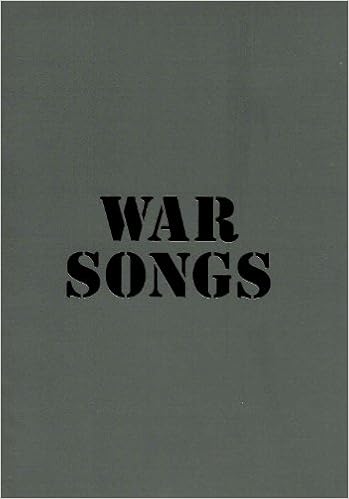
“A battlefield surgeon's sparse, haunting poetry and companion clay vessels transmute the horror of Vietnam into a shared, healing elegy.”
Key Takeaways
- 1Art serves as a vital mechanism for processing trauma. The creative act of writing and sculpting provided a necessary refuge, allowing the artist to metabolize overwhelming experiences that defied ordinary language.
- 2War's true cost is measured in permanent psychic wounds. The physical carnage is immediate, but the enduring legacy is a profound, generational scarring of the human spirit that outlasts the conflict.
- 3Detachment is a survival strategy with profound emotional consequences. The clinical distance required to function amidst atrocity systematically numbs the capacity to feel, creating a secondary, internal conflict.
- 4Brevity and restraint can amplify emotional power. The poems' minimalist style, avoiding explicit graphic detail, forces the reader's subconscious to complete the horrific picture, creating a deeper, more personal resonance.
- 5Healing requires the communal sharing of burden. The collaboration between poet and sculptor, and the book's reception, demonstrates that articulating private pain can forge connection and alleviate collective suffering.
- 6The perspective of a healer in war is uniquely agonizing. The surgeon witnesses the destruction not as an abstract combatant but through the intimate, futile struggle to repair what war has meticulously broken.
Description
War Songs emerges from the crucible of the Vietnam War, a collaborative artifact born from the dual vocations of healer and artist. Its core is a sequence of twenty spare, numbered poems scribbled by Battalion Surgeon Grady Harp during the 1968-69 Tet Offensive, a raw and immediate testament composed in the lulls between treating the mangled and the dying. These are not grand narratives of strategy or heroism, but stark, crystalline fragments capturing the surreal intimacy of war: a shared beer, a bloated body pulled from a river, the grim deception of maintaining an IV for a dead soldier to comfort the living.
The poems operate with surgical precision, each word chosen to evoke rather than describe, leaving haunting white space for the reader's psyche to inhabit. This literary minimalism finds its visual counterpart in Stephen Freedman's accompanying clay vessels—sculptural forms that physically embody the poems' metaphors. The book itself is the catalogue for their traveling exhibition, marrying text and image into a unified memorial. The vessels, often inscribed with Harp's verses, serve as funerary urns for memories, transforming written anguish into tactile, enduring form.
This synthesis represents a deliberate act of post-traumatic meaning-making. The project, undertaken decades after the war, became a conduit for processing unresolved grief and guilt, a way to externalize the internal wreckage. It moves beyond personal catharsis to create a portable monument, offering a form of solace to other veterans and their families by giving shape to the inarticulate.
The book's significance lies in its unique intersection of documentary witness, poetic form, and plastic art. It provides an unflinching yet artistically refined portal into the specific hell of Vietnam, while its themes of trauma, memory, and the search for healing resonate universally across all conflicts. It is essential reading for anyone seeking to comprehend war's enduring shadow on the human soul.
Community Verdict
The critical consensus positions this work as a profound and essential artistic document of war's psychological reality. Readers universally praise its emotional potency, describing the poetry as stark, elegant, and devastatingly effective in conveying horror through restraint. The collaborative fusion with Freedman's clay sculptures is celebrated as a masterstroke, deepening the visceral impact and creating a complete sensory memorial.
Its primary achievement is perceived as forging a direct, heart-to-heart connection that fosters empathy and understanding, particularly for those separated from the military experience. The book is repeatedly hailed not just as art, but as a therapeutic instrument—for the creator, for veterans, and for their families—facilitating a communal healing process. The most common critique is a desire for more; some find the collection's brevity and deliberate emotional detachment leave them craving a broader, deeper exploration, though many acknowledge this leanness is central to its power.
Hot Topics
- 1The book's unique power as a healing tool for veterans and their families, facilitating understanding of unspoken trauma.
- 2The effectiveness of the minimalist, restrained poetic style in conveying the unspeakable horrors of war.
- 3The profound synergy between Harp's sparse poetry and Freedman's metaphorical clay vessels as a complete artistic statement.
- 4The visceral emotional impact of the poems, frequently described as reducing readers to tears and leaving lasting psychic marks.
- 5The unique and agonizing perspective offered by a battlefield surgeon, a healer amidst destruction.
- 6Debates on the book's brevity, with some readers wishing for a longer collection versus those who see its concision as its strength.
Related Matches





Popular Books
Tea Time for the Traditionally Built
Alexander McCall Smith
A Court of Mist and Fury (A Court of Thorns and Roses, #2)
Sarah J. Maas
The Big Short: Inside the Doomsday Machine
Michael Lewis
The Lessons of History
Will Durant, Ariel Durant
Going Clear: Scientology, Hollywood, and the Prison of Belief
Lawrence Wright
Radio Silence
Alice Oseman

The Campaigns of Napoleon
David G. Chandler
One Direction: Who We Are: Our Official Autobiography
One Direction
The Limpopo Academy of Private Detection
Alexander McCall Smith

The War of Art: Break Through the Blocks & Win Your Inner Creative Battles
Steven Pressfield, Robert McKee
Dead Wake: The Last Crossing of the Lusitania
Erik Larson

The Sibley Guide to Birds; Second Edition, Revised and Enlarged
David Allen Sibley
Browse by Genres
History
Business
Leadership
Marketing
Management
Innovation
Economics
Productivity
Psychology
Mindset
Communication
Philosophy
Biography
Science
Technology
Society
Health
Parenting
Self-Help
Wealth
Investment
Relationship
Startups
Sales
Money
Fitness
Nutrition
Sleep
Wellness
Spirituality
AI
Future
Nature
Politics
Classics
Sci-Fiction
Fantasy
Thriller
Mystery
Romance
Literary
Historical
Religion
Law
Crime
Arts
Habits
Creativity