
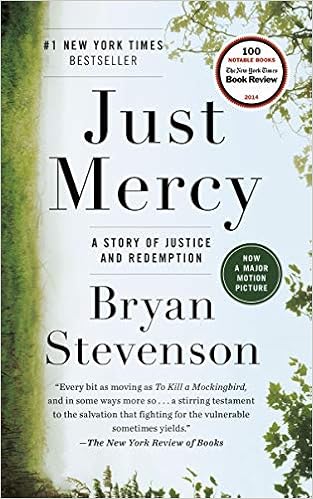
“A searing indictment of America's broken justice system, arguing that true justice is inseparable from radical mercy for the condemned.”
Key Takeaways
- 1The criminal justice system treats the rich and guilty better than the poor and innocent. Wealth and race are primary determinants of legal outcomes, not guilt or innocence. Inadequate representation and prosecutorial misconduct systematically disadvantage the marginalized.
- 2Each person is more than the worst thing they have ever done. Human dignity and potential for redemption must be central to justice. Defining individuals solely by their crimes perpetuates a cycle of dehumanization and vengeance.
- 3Proximity to suffering is essential for understanding and enacting justice. True reform requires moving beyond abstract principles to engage directly with the lives of the incarcerated, the poor, and the condemned.
- 4The death penalty is irrevocable and fatally compromised by error and bias. A system that has wrongfully condemned scores of innocent people to death forfeits its moral authority to execute anyone.
- 5Children are categorically different from adults and should not be sentenced to die in prison. Neuroscience and developmental psychology confirm that juveniles lack maturity and a fully formed sense of responsibility, making life-without-parole sentences cruel and unusual.
- 6Mercy is most powerful when extended to the undeserving. Compassion directed at those who have not earned it breaks cycles of retribution and acknowledges our shared, broken humanity.
- 7Fear and anger corrupt justice into vengeance. A punitive culture, driven by political rhetoric and media sensationalism, leads to extreme sentencing and the abandonment of rehabilitation.
- 8Confront the legacy of racial terror to understand contemporary mass incarceration. The evolution from slavery to lynching to Jim Crow to today's prison-industrial complex reveals a continuous thread of racialized social control.
Description
Bryan Stevenson’s memoir is a profound and harrowing journey into the heart of America’s penal system, framed by his founding of the Equal Justice Initiative in Alabama. The narrative’s spine is the six-year legal battle to free Walter McMillian, a black pulpwood worker wrongly convicted and sentenced to death for the murder of a young white woman in Monroeville—the hometown of Harper Lee. McMillian’s case, built on perjured testimony and prosecutorial malice, exposes a justice apparatus where racism and indifference conspire to destroy innocent lives.
Stevenson interweaves McMillian’s saga with other landmark fights from his docket: defending children sentenced to life without parole, mentally ill prisoners condemned to execution, and impoverished women criminalized for trauma. These parallel narratives illustrate the systemic failures that target the poor, the mentally ill, and people of color, revealing how legal technicalities and a thirst for punishment override truth and humanity. The book meticulously details the legal strategies, from grassroots investigation to Supreme Court advocacy, used to challenge excessive sentencing and wrongful convictions.
Beyond individual cases, Stevenson situates this modern carceral crisis within America’s unbroken history of racial subjugation. He draws a direct line from slavery and lynching to contemporary mass incarceration, arguing that the nation has yet to achieve a truthful reckoning with this past. The work is both a legal thriller and a moral treatise, documenting the psychological toll on those fighting within a hostile system and the resilience of those trapped by it.
The book’s ultimate significance lies in its redefinition of justice as a project requiring mercy, humility, and proximity to suffering. It is an essential document for understanding the moral and practical failures of the death penalty and extreme sentencing, serving as a clarion call for a more compassionate and equitable legal system. Stevenson’s argument is that we are all implicated in, and broken by, a system that chooses vengeance over restoration.
Community Verdict
The critical consensus hails *Just Mercy* as a transformative, essential, and devastatingly powerful work. Readers are universally gripped by Stevenson’s narrative skill, which renders complex legal battles with the urgency of a thriller while grounding them in profound human empathy. The portrayal of Walter McMillian’s case is singled out as a masterful and infuriating exposé of systemic corruption and racial animus, leaving a permanent impression of injustice.
While the overwhelming majority praise the book’s moral clarity and Stevenson’s heroic dedication, a vocal minority of critics challenge its perspective. They argue the narrative is one-sided advocacy, presenting an unrelentingly bleak and selective portrait that, in their view, ignores victim perspectives, downplays personal accountability, and applies a broad brush of racism to complex situations. This faction perceives the tone as overly polemical, suggesting it prioritizes emotional persuasion over balanced analysis. Nonetheless, even skeptical readers often concede the book successfully forces a necessary confrontation with the system’s flaws.
Hot Topics
- 1The shocking injustice and racial bias in the wrongful conviction of Walter McMillian, highlighting prosecutorial misconduct and a corrupt local system.
- 2The ethical and legal arguments against sentencing children to life imprisonment without parole, and the Supreme Court battles to end the practice.
- 3Debate over the book's perceived bias: whether it is a necessary exposé of systemic failure or a one-sided narrative that ignores victim's rights and personal responsibility.
- 4The moral imperative of the death penalty in light of proven wrongful convictions and its disproportionate application against the poor and minorities.
- 5Stevenson's personal journey and the founding of the Equal Justice Initiative as a model for compassionate, tireless legal advocacy for the condemned.
- 6The book's power to change readers' perspectives on justice, race, and mercy, often described as a life-altering or essential reading experience.
Related Matches









Popular Books

One Direction: Who We Are: Our Official Autobiography
One Direction
Radio Silence
Alice Oseman

Tea Time for the Traditionally Built
Alexander McCall Smith
O. Winston Link: Life Along the Line: A Photographic Portrait of America's Last Great Steam Railroad
Tony Reevy, O. Winston Link, Conway Link, Scott Lothes

The Campaigns of Napoleon
David G. Chandler

The Big Short: Inside the Doomsday Machine
Michael Lewis

Dead Wake: The Last Crossing of the Lusitania
Erik Larson

The War of Art: Break Through the Blocks & Win Your Inner Creative Battles
Steven Pressfield, Robert McKee
The Lessons of History
Will Durant, Ariel Durant

The Limpopo Academy of Private Detection
Alexander McCall Smith
Going Clear: Scientology, Hollywood, and the Prison of Belief
Lawrence Wright
100 Days to Brave: Devotions for Unlocking Your Most Courageous Self
Annie F. Downs
Browse by Genres
History
Business
Leadership
Marketing
Management
Innovation
Economics
Productivity
Psychology
Mindset
Communication
Philosophy
Biography
Science
Technology
Society
Health
Parenting
Self-Help
Wealth
Investment
Relationship
Startups
Sales
Money
Fitness
Nutrition
Sleep
Wellness
Spirituality
AI
Future
Nature
Politics
Classics
Sci-Fiction
Fantasy
Thriller
Mystery
Romance
Literary
Historical
Religion
Law
Crime
Arts
Habits
Creativity