
Premium
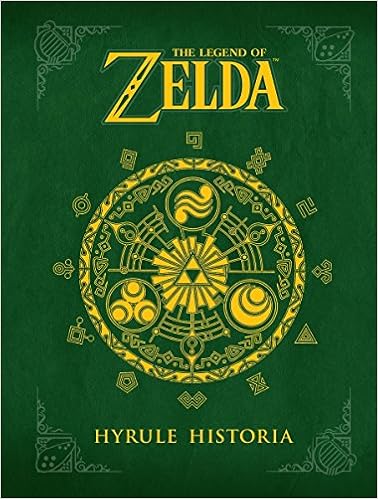
The Legend of Zelda: Hyrule Historia
by Nintendo, Everett Patterson, Shigeru Miyamoto
“The definitive archive that maps the sprawling mythology of Hyrule, from its divine origins to its splintered timelines.”
Key Takeaways
- 1Establish the official three-branch timeline from Ocarina of Time. The chronology resolves fan debates by splitting into three distinct realities based on the hero's victory or defeat, creating a coherent multiverse.
- 2Treat Skyward Sword as the foundational origin story. The book positions this game as the canonical beginning, explaining the creation of Hyrule, the Master Sword, and the eternal Link-Zelda-Ganon cycle.
- 3Decipher the Hylian alphabets used across the games. It provides translation keys for the in-game scripts, transforming environmental text from decorative runes into readable lore.
- 4Study character evolution through discarded concept art. Early designs reveal alternative visions for iconic characters, showcasing the iterative creative process behind their final forms.
- 5Recognize the thematic constancy of courage, wisdom, and power. Despite narrative variations, every legend reinforces the core Triforce virtues, binding the disparate eras into a unified philosophical whole.
- 6Appreciate the artistic shift from pixel sketches to painterly concepts. The visual documentation traces the series' aesthetic journey, reflecting both technological advancement and evolving artistic ambition.
Description
The Legend of Zelda: Hyrule Historia is not merely an art book; it is the canonical scripture of one of gaming's most revered mythologies. Commissioned for the franchise's 25th anniversary, this tome functions as an official archive, curated by the creators themselves. It seeks to impose order upon a decades-spanning saga, transforming a collection of beloved but seemingly disconnected adventures into a grand, interconnected chronicle.
Its primary revelation is the establishment of an official chronology, a long-requested framework that places every core game within a coherent historical narrative. The timeline famously diverges into three distinct branches following the events of Ocarina of Time, creating a multiverse of possibilities—one where the hero triumphs as an adult, one where he returns to childhood, and one where he fails. This structure allows the often contradictory lore of the series to coexist, weaving individual legends into a sprawling epic that begins with the divine war depicted in Skyward Sword.
A significant portion of the volume is dedicated to this origin point, Skyward Sword, detailing its conception through lavish concept art, character design iterations, and developer commentary. It then expands to document the creative footprints of the entire series, showcasing the evolution of art from the original NES title through to Twilight Princess and The Wind Waker. The book is punctuated by insights from Shigeru Miyamoto and Eiji Aonuma, and concludes with an exclusive manga by Akira Himekawa that dramatizes the ancient war preceding Skyward Sword.
As a whole, Hyrule Historia serves a dual purpose: it is both a celebratory art book for enthusiasts and a foundational text that legitimizes the series' internal lore. It provides the skeleton upon which the flesh of Hyrule's history hangs, offering definitive answers while inviting deeper contemplation of the legends. It is an essential artifact for understanding the narrative ambition and artistic heritage of The Legend of Zelda.
Community Verdict
The consensus among dedicated fans is one of profound gratitude mixed with specific critiques of balance. The book is universally hailed as an essential, beautifully produced cornerstone of any Zelda collection, finally delivering the long-sought official timeline. This revelation is met with intellectual fascination, even when the three-branch solution prompts debate.
However, a significant and repeated criticism centers on the disproportionate focus given to Skyward Sword, which occupies roughly the first third of the content. While many acknowledge its importance as the chronological starting point, others feel this comes at the expense of deeper exploration into the classic, pre-Nintendo 64 era games, which receive comparatively scant attention. The included manga is generally praised for its art and supplemental story, though some find its canonical status ambiguous. Ultimately, the community views it as a foundational, if imperfect, document—a necessary compendium that prioritizes the series' modern era while still satisfying the core desire for an authoritative historical map.
Hot Topics
- 1The revelation and debate over the official three-branch timeline stemming from Ocarina of Time's conclusion.
- 2Criticism over the disproportionate amount of content dedicated to Skyward Sword versus older titles in the series.
- 3The value and analysis of the extensive concept art and developer notes for character and world design.
- 4Appreciation for the translation and presentation of the various Hylian alphabets found throughout the games.
- 5Discussion on the canonical validity and narrative merit of the exclusive Skyward Sword prequel manga by Akira Himekawa.
- 6The perceived tension between the book's role as a celebratory art collection and its function as a definitive historical chronology.
Related Matches





Popular Books
A Gospel Primer for Christians: Learning to See the Glories of God's Love
Milton Vincent

The Art of French Pastry
Jacquy Pfeiffer, Martha Rose Shulman
A Court of Mist and Fury (A Court of Thorns and Roses, #2)
Sarah J. Maas

The Heart Healers: The Misfits, Mavericks, and Rebels Who Created the Greatest Medical Breakthrough of Our Lives
James S. Forrester

O. Winston Link: Life Along the Line: A Photographic Portrait of America's Last Great Steam Railroad
Tony Reevy, O. Winston Link, Conway Link, Scott Lothes
Walking with God through Pain and Suffering
Timothy J. Keller

Last Stand of Dead Men (Skulduggery Pleasant, #8)
Derek Landy

Code: The Hidden Language of Computer Hardware and Software
Charles Petzold

Birds of Europe
Lars Svensson, Dan Zetterstrom, Killian Mullarney

One Direction: Who We Are: Our Official Autobiography
One Direction
Holy Bible: The Narrated Bible NIV
Anonymous

Screaming Goat Kit
Running Press
Browse by Genres
History
Business
Leadership
Marketing
Management
Innovation
Economics
Productivity
Psychology
Mindset
Communication
Philosophy
Biography
Science
Technology
Society
Health
Parenting
Self-Help
Wealth
Investment
Relationship
Startups
Sales
Money
Fitness
Nutrition
Sleep
Wellness
Spirituality
AI
Future
Nature
Politics
Classics
Sci-Fiction
Fantasy
Thriller
Mystery
Romance
Literary
Historical
Religion
Law
Crime
Arts
Habits
Creativity