
Code: The Hidden Language of Computer Hardware and Software
"It demystifies the computer by tracing its evolution from simple circuits to complex logic, revealing the elegant foundations of our digital world."
- 1Understand computation as an extension of human communication. The book frames the computer not as a magical box but as the latest iteration in humanity's ancient drive to encode and transmit meaning, connecting Morse code to machine language.
- 2Grasp how simple relays construct logic and memory. By patiently assembling telegraph relays into logic gates and flip-flops, Petzold demonstrates how physical switches orchestrate electricity to perform reasoning and retain information.
- 3See the seamless link between abstract logic and physical hardware. The narrative meticulously bridges Boolean algebra with electronic circuits, showing how mathematical abstractions are materially instantiated in silicon, forming a computer's intellectual architecture.
- 4Appreciate the historical continuity of technological innovation. Progress is depicted not as sudden leaps but as a cumulative layering of concepts, from mechanical calculators to microprocessors, each building upon prior ingenuity.
- 5Acquire a foundational context for modern digital systems. By understanding the core principles of how a CPU functions from the ground up, one gains an indispensable framework for navigating today's complex ecosystem of software and networks.
Charles Petzold's 'Code' performs a remarkable act of literary archaeology, excavating the conceptual foundations of the digital age from beneath the accumulated layers of abstraction and jargon. It begins not with silicon, but with the fundamental human impulse to communicate, using childhood examples like flashlights, Braille, and Morse code to establish the core concept of encoding meaning into signals. This historical and intuitive grounding reframes the computer as the ultimate communication device, a logical culmination of a centuries-old endeavor rather than a disruptive technological anomaly.
The narrative then meticulously constructs the modern computer, piece by piece, from first principles. Petzold introduces the telegraph relay as a fundamental building block, demonstrating how these simple electromagnetic switches can be combined to create logic gates—the AND, OR, and NOT operations of Boolean algebra. He then assembles these gates into more complex circuits capable of arithmetic and, crucially, memory. This section is a masterclass in clarity, rendering the seemingly magical capabilities of a processor into a series of comprehensible, mechanical steps. The reader witnesses the birth of a central processing unit from the orchestrated flow of electricity through these purpose-built pathways.
Having established a working model of a rudimentary computer, the book ascends through layers of abstraction. It explains how machine language instructions control the hardware, how assemblers translate symbolic code, and how high-level programming languages are ultimately compiled down to these basic electrical operations. Petzold traces key architectural developments, from punch cards and batch processing to the advent of graphical user interfaces and the internet, always connecting these advancements back to the foundational hardware logic established earlier.
'Code' is ultimately a work of profound synthesis, offering a coherent and complete mental model of computing. It is targeted not at aspiring engineers alone, but at any curious mind—the programmer who knows the 'how' but not the 'why,' the historian of technology, or the general reader seeking to comprehend the defining machinery of our era. Its legacy is a deep, enduring literacy, replacing opaque mystery with the satisfying clarity of understood mechanism.
The critical consensus celebrates the book as a seminal work of technical exposition, achieving near-mythic status for its unparalleled clarity in demystifying computing's deepest foundations. Readers universally praise its patient, historical narrative that builds complexity from intuitive first principles, often describing it as transformative for their understanding. The primary critique, noted by a minority, is that the final sections on modern architectures feel comparatively rushed after the meticulous groundwork. It is deemed highly accessible to the determined non-specialist, rewarding careful reading with profound conceptual payoff.
- 1The book's unique pedagogical power in building a complete mental model from basic electricity to a functional CPU.
- 2The philosophical musings on electricity as an 'alien' force humanity has harnessed, prompting reflection on technological debt.
- 3Its effectiveness as foundational reading for software developers seeking deeper hardware context beyond high-level languages.

Chip War: The Quest to Dominate the World's Most Critical Technology
Chris Miller
Stumbling on Happiness
Daniel Gilbert

The Artist's Way
Julia Cameron

Just Listen: Discover the Secret to Getting Through to Absolutely Anyone
Mark Goulston

Permanent Record
Edward Snowden
Sapiens: A Brief History of Humankind
Yuval Noah Harari

The Intelligent Investor
Benjamin Graham

Breakthrough: The Quest for Life-Changing Medicines
Dr William Pao
Breath: The New Science of a Lost Art
James Nestor
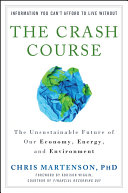
The Crash Course
Chris Martenson
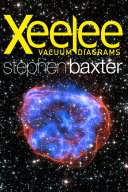
Vacuum Diagrams (Xeelee Sequence, #5)
Stephen Baxter
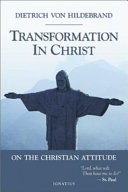
Transformation in Christ
Dietrich Von Hildebrand