Book Summaries
Hosts: Ethan
Timeline
Summary Preview
For centuries, a legend had haunted Honduras. Deep in the impenetrable jungles of La Mosquitia, they said, lay a magnificent city built of white stone. It was called the White City, the Ciudad Blanca, the Lost City of the Monkey God. Anyone who entered it would die of sickness or be killed by the devil. The city was cursed, forbidden, a place of death.
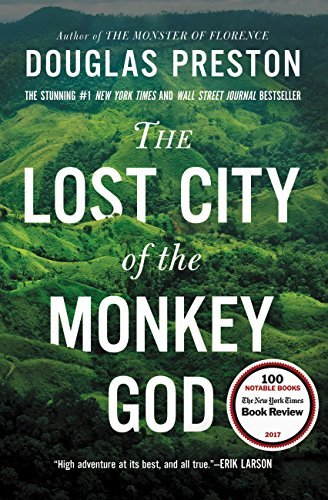
This is the story Douglas Preston sets out to tell in *The Lost City of the Monkey God: A True Story*. But what makes the book remarkable is not the legend itself—it's what happens when the legend collides with science.
Preston, a journalist and novelist, first heard about the lost city in 1996 while working on an aerial radar project in Cambodia. A NASA scientist named Ron Blom hinted that he was helping search for a legendary city in Central America. The project was secret, but Blom's employer eventually contacted Preston: a documentary producer named Steve Elkins, who had made finding the White City his life's mission.
The book follows Elkins's journey from failed amateur explorer to the leader of a cutting-edge archaeological survey. But it also traces the history of the legend itself, from Hernán Cortés's 1520s letter describing a city richer than Tenochtitlan, through the frauds and charlatans who claimed to have found it, to the modern obsession that finally cracked the mystery.
At the heart of the book lies a profound contrast. The legend spoke of a single, cursed city—a place of white stone and golden treasure, hidden in the jungle, guarded by supernatural forces. What the team actually found was something far more interesting, and far more human.
Using lidar technology—lasers fired from a small plane that can penetrate the jungle canopy and map the ground below—the team scanned three target areas in La Mosquitia. The results were stunning. The lidar revealed not one lost city, but two massive archaeological sites in separate valleys. They called them T1 and T3. These were not the legendary White City. They were something better: evidence of a largely unknown, advanced civilization that had flourished in the region for centuries.
The discovery shattered the old myth. There was no single cursed city. There were many cities. The legend, it turned out, was a distorted memory of a real people—a sophisticated culture that had built plazas, pyramids, and reservoirs; that had traded across vast distances; that had created exquisite stone sculptures. And then, around 1500 AD, they had vanished.
Preston structures the book as an adventure story that transforms into a scientific investigation. The first half builds suspense, tracing the history of the legend and recounting the dangerous expeditions that sought the city. The second half replaces myth with reality, using archaeology to uncover the true story of the Mosquitia people.
The book's themes are woven through this narrative. Danger is constant: the jungle is filled with venomous snakes, parasitic diseases, drug cartels, and political violence. The threat of looting and deforestation hangs over every discovery. And disease—both ancient and modern—emerges as the book's central argument. Preston contends that European-introduced pandemics, not supernatural curses, destroyed the Mosquitia civilization. The legend of the cursed White City was born from the greatest human catastrophe in history: the decimation of New World populations by Old World diseases.
This is not a story about finding treasure. It's a story about finding truth. The lidar discovery of T1 and T3 didn't confirm the legend—it replaced it with something more complex, more sobering, and ultimately more important. The lost city was never lost. It was abandoned by people who had watched their world collapse around them, who had left their sacred objects in ritual termination deposits, who had walked away from their homes and never returned.
Preston's book asks us to consider: what happens when a civilization falls? What happens when disease wipes out ninety percent of a population? What stories do survivors tell to make sense of such horror? And what might our own civilization learn from their fate?
The legend of the Lost City of the Monkey God was wrong in almost every detail. But it pointed toward a truth more profound than any myth: the memory of a real people, a real civilization, a real catastrophe. Science didn't destroy the mystery. It revealed a deeper one.
What happened to these people? Why did they abandon their cities? And what does their story have to tell us about our own?
About the Book
For centuries, a cursed White City in Honduras lured explorers to their doom. Journalist Douglas Preston joins a high-tech expedition using laser mapping to uncover not one, but two forgotten cities. But the real discovery is darker: a civilization annihilated by pandemic, a warning from the past that echoes today. Adventure meets archaeology in this true story of survival and science.
Key Takeaways
Legends are distorted memories of real catastrophes.
The myth of a cursed city guarded by a monkey god was not a fantasy but a cultural memory of a real pandemic that wiped out 90% of the Mosquitia people, showing how trauma becomes supernatural story.
Technology can strip away myth to reveal deeper truth.
Lidar lasers from a small plane found not one but two lost cities in days, replacing a legend of a single cursed place with evidence of an entire unknown civilization.
The greatest conqueror in history is invisible.
European-introduced diseases like smallpox killed more indigenous people than all swords and guns combined, proving that microbes, not armies, destroyed the New World's civilizations.
Civilizations can vanish without war or conquest.
The Mosquitia people performed ritual termination ceremonies, broke their sacred objects, and walked away from their cities—a deliberate abandonment born of biological catastrophe, not defeat.
Discovery has a price that the discoverer must pay.
The expedition team contracted leishmaniasis from sand flies, enduring toxic treatments and lifelong relapses, illustrating that the jungle's dangers are not mythical but biological and enduring.
The First World ignores Third World diseases at its own peril.
Leishmaniasis and other neglected tropical diseases are spreading into wealthy nations through climate change, proving that microbial threats do not respect economic borders.
Every civilization believes it is exempt from collapse.
The abandoned cities of Mosquitia stand as a warning that no society—ancient or modern—is immune to the forces of disease, inequality, and environmental stress that have toppled all previous empires.
Science does not destroy mystery; it reveals a deeper one.
The lidar discovery replaced a simple legend with complex questions about who these people were, how they lived, and what their fate says about our own civilization's vulnerability.
Who Should Listen?
Adventure readers who loved *The Lost City of Z* or *Into the Wild* and crave a true story of jungle exploration and danger.
History buffs fascinated by pre-Columbian civilizations and the untold story of the Mosquitia people.
Science and technology enthusiasts eager to learn how lidar and remote sensing revolutionize archaeology.
Public health and epidemiology readers interested in a gripping case study of how pandemics have shaped human history.