
Premium
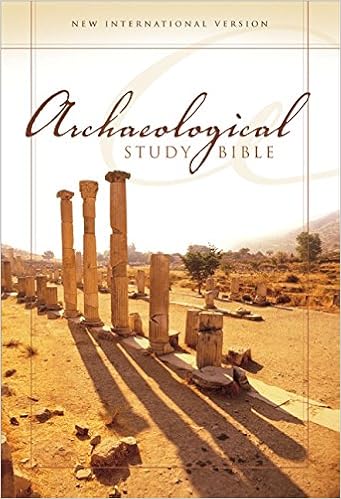
NIV, Archaeological Study Bible: An Illustrated Walk Through Biblical History and Culture
by Anonymous, Duane A. Garrett, Walter C. Kaiser Jr.
“It grounds the scriptural narrative in the tangible evidence of ancient sites, artifacts, and cultures, transforming reading into an act of historical discovery.”
Key Takeaways
- 1Context is the indispensable key to interpretation. The book argues that understanding the historical, cultural, and geographical milieu is essential for accurately grasping the meaning and intent of biblical passages.
- 2Archaeology provides a tangible bridge to the ancient world. Photographs of artifacts, sites, and landscapes visually connect the reader to the material reality behind the biblical text, making history concrete.
- 3The Bible's historical reliability is supported by external evidence. Numerous articles and notes correlate biblical accounts with archaeological discoveries, presenting a case for the scripture's historical foundation.
- 4Understand ancient peoples and lands to illuminate the narrative. Insights into the empires, customs, and daily life of contemporaneous civilizations provide crucial background for the stories and prophecies.
- 5Engage with scholarly debates surrounding biblical authorship and events. The study notes present multiple perspectives on controversies, such as the authorship of the Pentateuch, encouraging informed critical engagement.
- 6Prioritize the synthesis of text and artifact for deeper study. The volume models an integrative methodology, where scripture and archaeological record are examined in concert for a fuller picture.
Description
The NIV Archaeological Study Bible represents a significant scholarly endeavor to situate the biblical text firmly within its ancient Near Eastern context. It moves beyond theological commentary to construct a historical framework, using archaeology as its primary lens. From Genesis to Revelation, the project aims to illuminate the world of the Bible through the physical remnants of its cultures.
This is achieved through a comprehensive apparatus of over five hundred articles, interspersed full-color photographs, detailed book introductions, and in-text maps. The content is organized into key categories: Archaeological Sites, Cultural and Historical Notes, Ancient Peoples and Lands, the Reliability of the Bible, and Ancient Texts and Artifacts. Bottom-of-page study notes directly link specific verses to relevant archaeological findings or cultural explanations, creating a continuous dialogue between scripture and material history.
The Bible adopts a generally conservative, orthodox perspective in its interpretive framework, often presenting archaeological evidence as corroborative of the biblical record. It addresses longstanding questions and controversies—from the nature of the Genesis flood to the historicity of certain figures—typically offering arguments that affirm traditional understandings while acknowledging alternative scholarly viewpoints.
Its ultimate impact is to serve as a singular reference that functions as both scripture and illustrated historical encyclopedia. It is targeted at serious students, educators, and lay readers who seek to deepen their understanding not just of the Bible's spiritual message, but of the tangible, dusty world from which it emerged, arguing that such knowledge enriches and clarifies faith.
Community Verdict
The consensus positions this volume as an indispensable and intellectually stimulating resource for serious biblical study, praised overwhelmingly for its rich integration of historical and archaeological context. Readers celebrate its ability to make scripture vivid and understandable, with the profusion of articles, photographs, and maps frequently described as fascinating and transformative to their engagement with the text.
Criticism is sharply focused on two substantive points. First, a significant contingent of users expresses profound dissatisfaction with the choice of the NIV translation, deeming it a less scholarly or precise base text compared to formal-equivalent versions like the ESV or KJV, which they argue would better match the work's academic aspirations. Second, despite appreciating the content, many find the small font size and the physical heft of the volume a serious impediment to prolonged study, impacting its practicality. The editorial perspective is noted as conservative, which some find reassuringly faithful while others view as occasionally slanted in its treatment of controversies.
Hot Topics
- 1The debate over the suitability of the NIV translation as the base text for a scholarly archaeological reference, with many advocating for more literal alternatives.
- 2Widespread criticism of the uncomfortably small font size, which is seen as a major flaw that hinders readability and extended study sessions.
- 3Appreciation for the conservative, orthodox editorial perspective that uses archaeology to affirm the Bible's historical reliability.
- 4Discussions about the volume's treatment of biblical controversies, such as the authorship of the Pentateuch, and whether all viewpoints are presented fairly.
- 5The high value placed on the extensive photographic evidence and cultural notes that bring ancient biblical settings to life.
- 6Requests for the inclusion of the Apocrypha to provide a more complete archaeological and historical context for the intertestamental period.
Related Matches








Popular Books
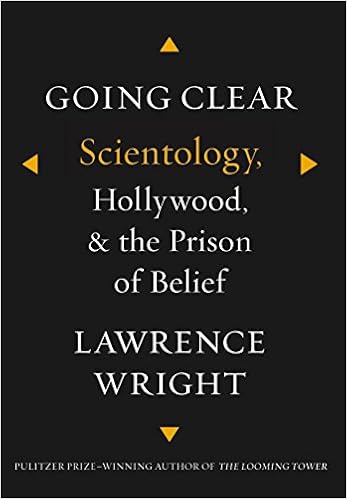
Going Clear: Scientology, Hollywood, and the Prison of Belief
Lawrence Wright
Tea Time for the Traditionally Built
Alexander McCall Smith

One Direction: Who We Are: Our Official Autobiography
One Direction

Radio Silence
Alice Oseman
The Lessons of History
Will Durant, Ariel Durant

Dead Wake: The Last Crossing of the Lusitania
Erik Larson
100 Days to Brave: Devotions for Unlocking Your Most Courageous Self
Annie F. Downs

The Limpopo Academy of Private Detection
Alexander McCall Smith

The Campaigns of Napoleon
David G. Chandler

O. Winston Link: Life Along the Line: A Photographic Portrait of America's Last Great Steam Railroad
Tony Reevy, O. Winston Link, Conway Link, Scott Lothes
The Big Short: Inside the Doomsday Machine
Michael Lewis

The War of Art: Break Through the Blocks & Win Your Inner Creative Battles
Steven Pressfield, Robert McKee
Browse by Genres
History
Business
Leadership
Marketing
Management
Innovation
Economics
Productivity
Psychology
Mindset
Communication
Philosophy
Biography
Science
Technology
Society
Health
Parenting
Self-Help
Wealth
Investment
Relationship
Startups
Sales
Money
Fitness
Nutrition
Sleep
Wellness
Spirituality
AI
Future
Nature
Politics
Classics
Sci-Fiction
Fantasy
Thriller
Mystery
Romance
Literary
Historical
Religion
Law
Crime
Arts
Habits
Creativity