

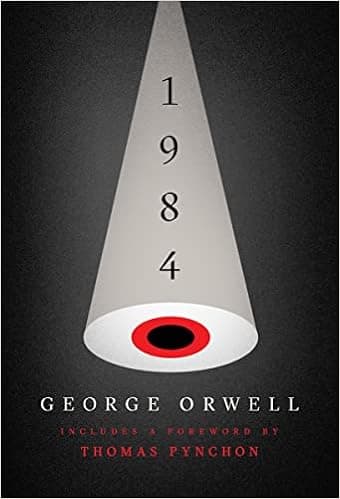
1984
by George Orwell, George Orwell, Erich Fromm
“A chilling prophecy of totalitarian control, where reality is rewritten, thought is policed, and the human spirit is systematically broken.”
Key Takeaways
- 1Power is an end in itself, not a means. The totalitarian state seeks power purely for its own sake, to dominate and dehumanize, not to achieve any ideological or material goal.
- 2Control the past to command the future. By systematically altering historical records and memories, a regime destroys objective truth and dictates the only permissible reality.
- 3Language is the primary tool of thought control. Newspeak aims to narrow the range of thought by eliminating words, making dissent and complex ideas linguistically impossible.
- 4Doublethink is the foundation of ideological obedience. The ability to hold two contradictory beliefs simultaneously and accept both is required to maintain loyalty to a regime built on lies.
- 5Individuality and intimacy are existential threats to power. The state must destroy private loyalties, love, and sexual pleasure to ensure all emotional energy is directed toward the Party and Big Brother.
- 6Perpetual war sustains internal peace and hierarchy. A continuous, low-level conflict with shifting enemies consumes surplus resources and unifies the populace through fear and hatred.
- 7The ultimate goal is to dominate the human mind. The final victory is not just outward compliance, but making the individual love their oppressor, sacrificing their own sanity and soul.
Description
George Orwell's 1984 presents a harrowing vision of a totalitarian future where the world is perpetually divided into three superstates at war. The narrative unfolds in Oceania, a society governed by the omnipresent Party and its symbolic leader, Big Brother. The state exerts absolute control through the Thought Police, ubiquitous surveillance telescreens, and the systematic alteration of history by the Ministry of Truth. Individuality is a crime, personal loyalty is forbidden, and language itself is being methodically reduced to Newspeak, designed to eradicate unorthodox thought.
Winston Smith, a low-ranking Party member working at the Ministry of Truth, secretly harbors hatred for the regime and yearns for intellectual freedom. His rebellion begins with the forbidden act of keeping a diary. He then enters into a clandestine, illicit affair with Julia, a fellow Party member, finding in their relationship a fragile pocket of humanity and defiance. Believing he has found a kindred spirit in the Inner Party member O'Brien, Winston seeks to join the mythical Brotherhood, a resistance movement led by the traitor Emmanuel Goldstein.
This quest leads Winston and Julia to read Goldstein's subversive treatise, which analyzes the Party's true motives: the pursuit of power for its own sake. The book-within-a-book explains the mechanics of IngSoc (English Socialism), detailing how perpetual war, poverty, and historical revisionism are deliberate tools to maintain a rigid, unchallengeable hierarchy. The Party's ultimate aim is not to build a better world but to achieve total dominion over reality and the human mind itself.
The novel's devastating final act reveals the absolute power of the state. Winston and Julia are betrayed, arrested, and subjected to brutal psychological and physical torture in the Ministry of Love. O'Brien, far from a rebel, is the Party's chief interrogator. He systematically dismantles Winston's mind, forcing him to betray Julia and accept that reality is whatever the Party declares it to be—even that two plus two can equal five. The story concludes not with heroic resistance, but with Winston's complete, soul-crushing capitulation, a love for Big Brother forged in the crucible of utter despair.
Community Verdict
The consensus holds 1984 as a monumental, terrifying, and essential work of literature. Readers are universally struck by its prophetic and enduring relevance, finding chilling parallels to modern surveillance, propaganda, and the manipulation of language and truth. The novel's oppressive atmosphere and meticulous world-building are praised for creating a deeply immersive and believable dystopia.
However, the intellectual and emotional experience is often described as grueling. The middle section featuring Goldstein's lengthy political treatise is frequently cited as a dense, difficult slog that tests the reader's endurance. The characters, particularly Winston and Julia, are acknowledged as vehicles for Orwell's ideas rather than deeply fleshed-out individuals, which can create a sense of emotional distance. Ultimately, the book is revered not for its narrative elegance but for the sheer, brutal power of its ideas and its unforgettable, soul-crushing climax, which leaves a permanent mark on the reader's consciousness.
Hot Topics
- 1The terrifying accuracy of Orwell's predictions regarding surveillance, propaganda, and 'alternative facts' in the modern era.
- 2The psychological horror and profound despair evoked by Winston's complete mental breakdown and forced love for Big Brother.
- 3Debates on the novel's literary merits versus its ideological power, including critiques of its didactic tone and character development.
- 4The function and horror of Newspeak and Doublethink as mechanisms for ultimate thought control and reality manipulation.
- 5The intense, divisive reaction to the lengthy political treatise within 'The Book' and its impact on the novel's pacing.
- 6Comparisons between Orwell's dystopia and other classics, particularly Aldous Huxley's 'Brave New World', regarding which vision is more prescient.
Related Matches




Popular Books

Harry Potter and the Deathly Hallows (Harry Potter, #7)
J.K. Rowling, Mary GrandPre

The Body Keeps the Score: Brain, Mind, and Body in the Healing of Trauma
Bessel A. van der Kolk

The House of Hades (The Heroes of Olympus, #4)
Rick Riordan

Never Split the Difference: Negotiating As If Your Life Depended On It
Chris Voss, Tahl Raz

The Hobbit: Graphic Novel
Chuck Dixon, J.R.R. Tolkien, David Wenzel, Sean Deming

Harry Potter and the Order of the Phoenix (Harry Potter, #5)
J.K. Rowling, Mary GrandPre

We Should All Be Feminists
Chimamanda Ngozi Adichie

Evicted: Poverty and Profit in the American City
Matthew Desmond

A Game of Thrones (A Song of Ice and Fire, #1)
George R.R. Martin

Why We Sleep: Unlocking the Power of Sleep and Dreams
Matthew Walker

Unbroken: A World War II Story of Survival, Resilience, and Redemption
Laura Hillenbrand

A Monster Calls
Patrick Ness, Jim Kay, Siobhan Dowd
Browse by Genres
History
Business
Leadership
Marketing
Management
Innovation
Economics
Productivity
Psychology
Mindset
Communication
Philosophy
Biography
Science
Technology
Society
Health
Parenting
Self-Help
Wealth
Investment
Relationship
Startups
Sales
Money
Fitness
Nutrition
Sleep
Wellness
Spirituality
AI
Future
Nature
Politics
Classics
Sci-Fiction
Fantasy
Thriller
Mystery
Romance
Literary
Historical
Religion
Law
Crime
Arts
Habits
Creativity