

Ready Player One
by Ernest Cline
“A virtual treasure hunt through 1980s pop culture becomes a battle for the soul of humanity's last refuge.”
Key Takeaways
- 1Escape into virtuality to cope with a broken reality. The OASIS offers a utopian digital sanctuary from a dystopian world of poverty, energy crisis, and social collapse, becoming humanity's primary social fabric.
- 2Mastery of nostalgia is a form of cultural capital. The contest elevates encyclopedic knowledge of 1980s films, games, and music into the ultimate strategic weapon and a measure of worth.
- 3Online identities liberate and conceal in equal measure. Avatars allow individuals to transcend physical limitations and prejudices, yet create barriers to genuine human connection and trust.
- 4Corporate control threatens open, creative digital spaces. The quest is a defense against monetizing and commodifying a free virtual universe, framing access as a fundamental public good.
- 5True connection requires confronting the physical world. The narrative argues that authentic relationships and happiness are rooted in unmediated reality, despite its flaws and dangers.
- 6Collaboration triumphs over solitary genius. Ultimate victory depends on trust, shared purpose, and the combined strengths of a community, not just individual brilliance.
Description
In the bleak landscape of 2044, where economic collapse and environmental decay have stacked humanity into vertical slums, the only escape is the OASIS. This sprawling virtual reality, created by the reclusive genius James Halliday, has evolved into the primary platform for work, education, and social life. Upon his death, Halliday unleashes an unprecedented contest: his vast fortune and control of the OASIS itself will go to the first person to find a hidden Easter egg, launching a global obsession.
Halliday’s contest is a labyrinthine puzzle box built from his obsession with 1980s pop culture. For years, "gunters"—egg hunters—immerse themselves in the arcana of vintage video games, cult films, and geek ephemera, searching for the three hidden keys that unlock three gates. The protagonist, Wade Watts, is a impoverished teenager who finds the first key, catapulting him from anonymity into a deadly spotlight. His rivals are not just fellow gunters, but the monolithic IOI corporation, which employs an army of mercenary players to win the contest and transform the free OASIS into a pay-to-play dystopia.
The hunt unfolds as a series of elaborate recreations and challenges drawn from Halliday’s personal canon, from perfect runs of classic arcade games to role-playing through iconic movie scenes. Wade, under his avatar Parzival, forms fragile alliances with other top gunters—Art3mis, Aech, Daito, and Shoto—navigating both the perils of the game and IOI’s willingness to extend its violence into the real world. The contest becomes a race for survival and a fight for the ideological future of the OASIS.
Ultimately, the narrative explores the tension between the seductive perfection of virtual existence and the messy necessity of the real. It is a foundational text of contemporary geek culture, a parable about the dangers of unchecked corporate power in digital spaces, and a love letter to the formative power of popular art. The story targets anyone who has ever sought refuge in a fictional world, while questioning the cost of staying there too long.
Community Verdict
The critical consensus is sharply divided, forming a chasm between adoration and profound disappointment. Admirers celebrate the novel as a thrilling, immersive love letter to 1980s geek culture, praising its breakneck pacing, inventive world-building, and the visceral joy of its nostalgic deep cuts. They find Wade a relatable underdog and the OASIS a compelling vision of a virtual future. For this camp, the book is pure, unapologetic fun—a "nerdgasm" of wish-fulfillment.
Detractors, however, condemn it as a shallow, elitist exercise in nostalgia pandering. They criticize the flat, archetypal characters, Wade's status as a Mary Sue, and the relentless, often gratuitous barrage of pop-culture references that substitute for substantive plotting or character development. The prose is frequently labeled as workmanlike and laden with clumsy info-dumps, while the central moral—that reality is ultimately preferable to fantasy—is seen as simplistic and unearned. The debate hinges entirely on whether one views the references as the book's vibrant core or its fatal flaw.
Hot Topics
- 1The overwhelming reliance on 1980s pop culture references as both the story's engine and its primary substance, debated as either brilliant homage or lazy narrative crutch.
- 2The characterization of protagonist Wade Watts as a power-fantasy 'Mary Sue' whose expertise and victories feel unearned and lacking in genuine struggle.
- 3The perceived elitism and gatekeeping within the novel's logic, where encyclopedic trivia knowledge is framed as a marker of superior intellect and moral worth.
- 4The book's conflicting identity as a young adult adventure with a premise and reference pool squarely aimed at Gen X adults.
- 5The simplistic portrayal of the dystopian real world and the evil IOI corporation as one-dimensional, mustache-twirling villains.
- 6The treatment of the romance subplot and the reveal of Art3mis's 'flaw,' which many found to be a contrived and unsatisfying narrative element.
Related Matches


Popular Books

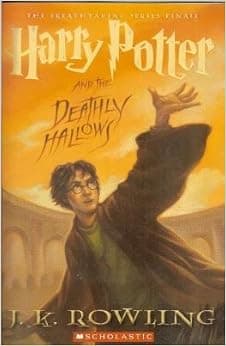
Harry Potter and the Deathly Hallows (Harry Potter, #7)
J.K. Rowling, Mary GrandPre

The Body Keeps the Score: Brain, Mind, and Body in the Healing of Trauma
Bessel A. van der Kolk

The House of Hades (The Heroes of Olympus, #4)
Rick Riordan

Never Split the Difference: Negotiating As If Your Life Depended On It
Chris Voss, Tahl Raz

The Hobbit: Graphic Novel
Chuck Dixon, J.R.R. Tolkien, David Wenzel, Sean Deming

Harry Potter and the Order of the Phoenix (Harry Potter, #5)
J.K. Rowling, Mary GrandPre

We Should All Be Feminists
Chimamanda Ngozi Adichie

Evicted: Poverty and Profit in the American City
Matthew Desmond

A Game of Thrones (A Song of Ice and Fire, #1)
George R.R. Martin

Why We Sleep: Unlocking the Power of Sleep and Dreams
Matthew Walker

Unbroken: A World War II Story of Survival, Resilience, and Redemption
Laura Hillenbrand

A Monster Calls
Patrick Ness, Jim Kay, Siobhan Dowd
Browse by Genres
History
Business
Leadership
Marketing
Management
Innovation
Economics
Productivity
Psychology
Mindset
Communication
Philosophy
Biography
Science
Technology
Society
Health
Parenting
Self-Help
Wealth
Investment
Relationship
Startups
Sales
Money
Fitness
Nutrition
Sleep
Wellness
Spirituality
AI
Future
Nature
Politics
Classics
Sci-Fiction
Fantasy
Thriller
Mystery
Romance
Literary
Historical
Religion
Law
Crime
Arts
Habits
Creativity