

Eve & Adam (Eve & Adam, #1)
by Michael Grant, Katherine Applegate
“A teenage girl, recovering from a horrific accident, is tasked with designing the perfect boy—only to discover the terrifying genetic manipulations that made her own survival possible.”
Key Takeaways
- 1Perfection is a flawed and ultimately undesirable concept. The novel argues that human flaws and imperfections are essential for genuine connection and interest, rendering a genetically 'perfect' being emotionally sterile.
- 2Scientific ambition must be tempered by ethical boundaries. The story serves as a cautionary tale about the moral hazards of unchecked genetic engineering and playing god with human biology.
- 3Appearances and corporate narratives are often deceptive. Characters must learn to see beyond surface-level presentations of benevolence to uncover hidden, often disturbing, truths about power and experimentation.
- 4The creator does not always love the creation. It subverts the Pygmalion myth by questioning whether a designed, perfect partner can fulfill the complex, messy needs of a real human relationship.
- 5Healing and humanity can be technologically engineered. The book explores a world where advanced biotechnology can regenerate limbs and create life, blurring the line between miracle and monstrous science.
- 6Parental legacy is a burden to be decoded and confronted. The protagonists' journeys are fundamentally about unraveling the secrets and sins of their parents' generation, particularly within the realm of science.
Description
Evening "Eve" Spiker’s life fractures in an instant when a streetcar severs her leg. Instead of a standard hospital, she is whisked away by a mysterious boy named Solo to Spiker Biopharmaceuticals, the formidable research facility owned by her cold, brilliant mother, Terra. There, Eve’s recovery is unnervingly rapid, her body healing with impossible speed. To stave off boredom, Terra assigns her a project: use a cutting-edge genetic simulation to design the perfect human being.
Eve immerses herself in the creation of "Adam," manipulating DNA sequences to build her ideal boy from the ground up. Meanwhile, Solo, who lives at the facility under Terra’s guardianship, harbors a deep-seated vendetta and secrets about Spiker’s true operations. He reveals to Eve that her miraculous healing is no accident—she is a "Mod," a genetically modified human, a product of her mother’s controversial experiments. The facility’s polished exterior conceals a sub-basement of chilling genetic aberrations.
The narrative accelerates as Eve, Solo, and Eve’s troubled best friend Aislin are forced to flee, pursued by rogue scientists within Spiker. The line between simulation and reality dissolves when Adam manifests as a living, breathing person—a paragon of physical and intellectual perfection. Eve must then confront the ultimate question posed by her creation: is a designed, flawless companion what she truly desires, or does her future lie with the imperfect, real boy who helped unveil a terrifying truth?
Set against a backdrop of corporate espionage and bioethical dilemmas, the novel is a brisk fusion of science fiction thriller and coming-of-age story. It targets readers seeking a fast-paced entry into speculative fiction, using its genetic engineering premise to explore timeless themes of identity, autonomy, and the dangerous allure of playing god.
Community Verdict
The critical consensus finds this a sharply divisive work. Its champions praise the propulsive, entertaining pace and the clever, humorous dialogue that renders it a consummate page-turner. They appreciate the subversion of the expected creator-creation romance and the thought-provoking, if lightly handled, exploration of genetic ethics.
Detractors, however, criticize the novel for its paper-thin character development and overreliance on familiar YA tropes, including insta-love and a distracting subplot involving a friend's drug-dealer boyfriend. The prose, while brisk, is often deemed simplistic, and the plot's logical leaps—particularly the rushed, neatly bow-tied ending—frustrate readers seeking narrative depth or rigorous scientific plausibility. The character of Adam is widely seen as underutilized, appearing too late to justify his titular prominence.
Hot Topics
- 1The underutilization and late introduction of Adam, the titular character, who feels more like a plot device than a fully realized person.
- 2Frustration with the insta-love romance between Eve and Solo, which lacks sufficient development and chemistry to feel earned.
- 3Criticism of the distracting and poorly resolved subplot involving Aislin's drug-dealing boyfriend and associated gangsters.
- 4Debate over the novel's pacing, which many find too fast and superficial, sacrificing character depth and logical plot development.
- 5Praise for the book's humorous, snappy dialogue and its function as a quick, entertaining read despite its flaws.
- 6Discussion about the ethical questions of genetic manipulation and 'playing God,' though some wish these ideas were explored more deeply.
Related Matches



Popular Books

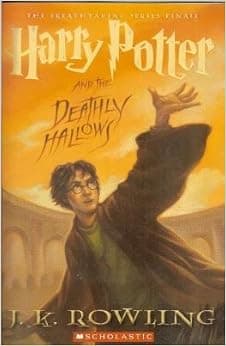
Harry Potter and the Deathly Hallows (Harry Potter, #7)
J.K. Rowling, Mary GrandPre

The Body Keeps the Score: Brain, Mind, and Body in the Healing of Trauma
Bessel A. van der Kolk

The House of Hades (The Heroes of Olympus, #4)
Rick Riordan

Never Split the Difference: Negotiating As If Your Life Depended On It
Chris Voss, Tahl Raz

The Hobbit: Graphic Novel
Chuck Dixon, J.R.R. Tolkien, David Wenzel, Sean Deming

Harry Potter and the Order of the Phoenix (Harry Potter, #5)
J.K. Rowling, Mary GrandPre

We Should All Be Feminists
Chimamanda Ngozi Adichie

Evicted: Poverty and Profit in the American City
Matthew Desmond

A Game of Thrones (A Song of Ice and Fire, #1)
George R.R. Martin

Why We Sleep: Unlocking the Power of Sleep and Dreams
Matthew Walker

Unbroken: A World War II Story of Survival, Resilience, and Redemption
Laura Hillenbrand

A Monster Calls
Patrick Ness, Jim Kay, Siobhan Dowd
Browse by Genres
History
Business
Leadership
Marketing
Management
Innovation
Economics
Productivity
Psychology
Mindset
Communication
Philosophy
Biography
Science
Technology
Society
Health
Parenting
Self-Help
Wealth
Investment
Relationship
Startups
Sales
Money
Fitness
Nutrition
Sleep
Wellness
Spirituality
AI
Future
Nature
Politics
Classics
Sci-Fiction
Fantasy
Thriller
Mystery
Romance
Literary
Historical
Religion
Law
Crime
Arts
Habits
Creativity