

Perelandra (Space Trilogy, #2)
by C.S. Lewis
“A cosmic reimagining of Eden where one man must physically and philosophically battle evil to prevent a second fall.”
Key Takeaways
- 1Evil manifests as a seductive, irrational force. The tempter operates not through crude villainy but through a terrifying, whole-hearted corruption that mimics innocence, making reason an insufficient defense.
- 2Obedience is the highest form of freedom in paradise. Unfallen beings experience joy through immediate acceptance of each given good, never clinging to expectation or self-willed desire.
- 3The physical world is a direct expression of spiritual reality. Lewis's Venus, with its floating islands and radiant ecology, embodies a tangible, unfallen ontology where matter perfectly reflects divine goodness.
- 4Sometimes violence becomes a necessary spiritual weapon. When philosophical argument fails against embodied, irrational evil, physical combat emerges as a tragic but required act of defense.
- 5Gender is a fundamental cosmic polarity beyond biological sex. Masculine and feminine principles represent distinct spiritual modes of being, which biological males and females only partially and faintly reflect.
- 6A world without the Fall offers a glimpse of redeemed humanity. The successful resistance to temptation allows Lewis to speculate on an alternate trajectory for creation, stewardship, and divine relationship.
Description
Perelandra transports the philologist Dr. Elwin Ransom to a young, oceanic Venus, a world of staggering beauty and innocence. He arrives not as an explorer but as an agent of the celestial Oyarsa, though his precise mission remains shrouded. The planet is a paradisiacal archipelago of floating, undulating lands, inhabited by fantastical creatures and bathed in unearthly light. Here, Ransom encounters the Green Lady, a humanoid being of prelapsarian purity who lives in perfect, joyful obedience to Maleldil, the creator.
This nascent Eden is invaded by Ransom’s old adversary, the physicist Weston, whose body has become a vessel for a malevolent spiritual force. Weston assumes the role of the serpent, embarking on a relentless campaign to tempt the Green Lady into disobeying Maleldil’s single prohibition. Ransom realizes he is not merely an observer but the appointed champion, thrust into a protracted battle of wits and wills. He must counter Weston’s sophisticated, perverse arguments, which twist curiosity, heroism, and even piety into instruments of rebellion.
The conflict escalates from a war of ideas into a visceral, physical struggle. Ransom confronts the horrifying realization that reason alone cannot defeat a being dedicated to irrational evil, forcing him to take direct and brutal action to preserve Perelandra’s innocence. The victory prevents a second Fall, allowing the King and Queen of Venus to "step up" where humanity fell.
In its triumphant conclusion, the novel shifts from conflict to contemplation. Ransom witnesses the glorified state of Perelandra’s rulers and the planetary intelligences, offering a profound vision of what unfallen existence—and by extension, humanity’s potential destiny—might entail. The book stands as a theological thought experiment, a work of philosophical science fiction, and a poetic meditation on obedience, temptation, and cosmic grace.
Community Verdict
The critical consensus positions Perelandra as a work of profound but divisive genius. Readers universally praise Lewis's magnificent world-building, describing the floating islands and alien ecology with terms like "lush," "poetic," and "startlingly beautiful." The philosophical and theological core—a deliberate re-enactment of the Edenic temptation—is celebrated for its intellectual depth and the chilling, effective portrayal of evil through the "Un-man."
However, this very strength fractures the audience. For many, the book is a masterpiece, Lewis's finest fiction, offering a gripping spiritual adventure and transformative insights into innocence and corruption. For others, the overt allegory feels heavy-handed and didactic, slowing the narrative with protracted theological debate. Criticisms focus on a perceived preachiness, a slow pace in the early and final sections, and a resolution some find jarringly physical after so much cerebral combat. The book's success hinges entirely on the reader's engagement with its core metaphysical argument.
Hot Topics
- 1The effectiveness and horror of Lewis's portrayal of evil through the 'Un-man,' a being of pure, innocent-seeming corruption.
- 2Debate over whether the book's overt Christian allegory enhances its depth or renders it preachy and unsubtle.
- 3The philosophical battle between Ransom and Weston regarding reason, obedience, and the nature of temptation.
- 4The stunning and imaginative world-building of Perelandra's floating islands and alien ecosystem.
- 5The controversial shift from intellectual debate to physical violence as the solution to the central conflict.
- 6Speculation on the nature of an unfallen world and what humanity lost in the original Eden.
Related Matches

Popular Books

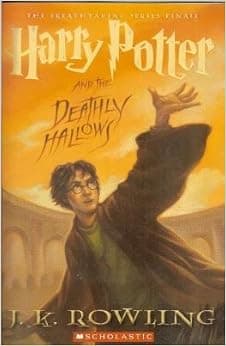
Harry Potter and the Deathly Hallows (Harry Potter, #7)
J.K. Rowling, Mary GrandPre

The Body Keeps the Score: Brain, Mind, and Body in the Healing of Trauma
Bessel A. van der Kolk

The House of Hades (The Heroes of Olympus, #4)
Rick Riordan

Never Split the Difference: Negotiating As If Your Life Depended On It
Chris Voss, Tahl Raz

The Hobbit: Graphic Novel
Chuck Dixon, J.R.R. Tolkien, David Wenzel, Sean Deming

Harry Potter and the Order of the Phoenix (Harry Potter, #5)
J.K. Rowling, Mary GrandPre

We Should All Be Feminists
Chimamanda Ngozi Adichie

Evicted: Poverty and Profit in the American City
Matthew Desmond

A Game of Thrones (A Song of Ice and Fire, #1)
George R.R. Martin

Why We Sleep: Unlocking the Power of Sleep and Dreams
Matthew Walker

Unbroken: A World War II Story of Survival, Resilience, and Redemption
Laura Hillenbrand

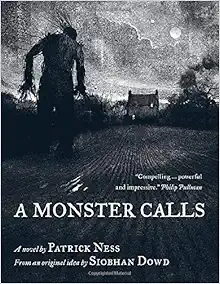
A Monster Calls
Patrick Ness, Jim Kay, Siobhan Dowd
Browse by Genres
History
Business
Leadership
Marketing
Management
Innovation
Economics
Productivity
Psychology
Mindset
Communication
Philosophy
Biography
Science
Technology
Society
Health
Parenting
Self-Help
Wealth
Investment
Relationship
Startups
Sales
Money
Fitness
Nutrition
Sleep
Wellness
Spirituality
AI
Future
Nature
Politics
Classics
Sci-Fiction
Fantasy
Thriller
Mystery
Romance
Literary
Historical
Religion
Law
Crime
Arts
Habits
Creativity